12 Umbria Attractions Worth Planning a Trip Around
A frescoed chapel before breakfast, a glass of Sagrantino overlooking vines at lunchtime, and a medieval lane lit gold at sunset: the best Umbria attractions reward travelers who leave room between appointments. This is a region where major monuments sit close to olive groves, and where a short drive can take you from an Etruscan well to a hill town that still feels shaped by its medieval guilds.
The most rewarding way to visit is not to race through every town. Choose a few places that match your interests, then give each one enough time for the details: the painter’s hand in a cathedral chapel, the story behind a city fountain, the local cheese served with a regional wine. An official local guide can add the context that turns a beautiful view into a place you understand.
How to Choose Umbria Attractions for Your Trip
Assisi, Perugia, and Orvieto are the natural starting points for first-time visitors, particularly if art, architecture, and history are high on your list. Each has enough substance for a full day. Smaller towns such as Spello, Bevagna, Montefalco, Gubbio, and Spoleto offer a more intimate pace and work particularly well when paired with food, wine, walking, or a scenic drive.
The trade-off is simple: trying to cover too much of Umbria can mean spending your vacation parking and checking maps instead of enjoying its towns. Base yourself centrally, combine nearby destinations, and reserve the longer journeys for the places that matter most to you. Assisi and Spello make a natural pairing; Montefalco and Bevagna are ideal for a wine-focused day; Perugia can be enjoyed with an easy visit to nearby countryside.
12 Umbria Attractions That Tell the Region’s Story
1. The Basilica of St. Francis in Assisi
The Basilica of St. Francis is not simply Assisi’s principal landmark. It is one of Italy’s great artistic and spiritual experiences. Its soaring upper church and quieter lower church hold cycles of frescoes that changed the course of Western painting, while the tomb of St. Francis draws pilgrims from around the world.
Allow time to look beyond the famous names. The basilica’s light, color, architecture, and narrative scenes reveal different things when explained in context. Assisi itself is best explored on foot, with the basilica as one part of a wider historic center shaped by Roman, medieval, and Franciscan history.
2. Assisi’s Roman Temple of Minerva
On Piazza del Comune, the remarkably preserved façade of the Temple of Minerva offers a striking reminder that Assisi was important long before St. Francis was born. Its Roman columns stand beside medieval civic buildings, making the square a compact lesson in the town’s many layers.
This is one reason guided walking tours are so valuable in Umbria. A monument that appears to be a handsome backdrop can reveal two thousand years of changing beliefs, power, and urban life.
3. Orvieto Cathedral and the San Brizio Chapel
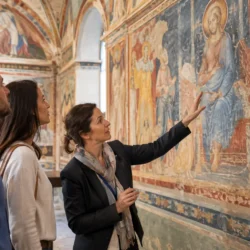
Perched on its volcanic rock plateau, Orvieto makes an immediate impression. Its cathedral is the essential stop, with a dazzling façade of mosaics, carved marble, and glittering detail. Inside, the San Brizio Chapel contains Luca Signorelli’s dramatic frescoes of the Last Judgment, an astonishing work of Renaissance imagination.
Orvieto deserves more than a quick cathedral visit. Wander its lanes, pause in the piazzas, and notice how the city’s position above the surrounding countryside has shaped every approach and view.
4. Orvieto Underground
Beneath Orvieto lies another city: a network of caves, wells, workshops, and passages carved into tufa rock. These underground spaces reveal how residents stored food, managed water, and worked beneath their homes over centuries.
It is an especially good choice for travelers who enjoy archaeology and local life rather than only grand monuments. Temperatures below ground can also make it a welcome addition on a hot summer afternoon.
5. Perugia’s Piazza IV Novembre
Perugia’s historic center is energetic, scholarly, and full of unexpected turns. Piazza IV Novembre is its heart, framed by the Palazzo dei Priori, the cathedral, and the Fontana Maggiore. The fountain’s carved panels were designed to communicate a medieval vision of the world, from the months and seasons to biblical and civic themes.
Perugia rewards curious walkers. The city has layers of Etruscan, Roman, medieval, and modern life, and some of its most memorable passages are hidden behind the main streets or reached by its unusual escalator system through the old Rocca Paolina fortress.
6. The National Gallery of Umbria
Housed in Perugia’s Palazzo dei Priori, the National Gallery of Umbria is a fine destination for anyone drawn to medieval and Renaissance art. Its collections give depth to works you may encounter elsewhere in the region, including panels, altarpieces, sculpture, and decorative arts from Umbrian masters.
Give it time if you love painting. If museums are not your priority, combine a shorter visit with the piazza and a walk through the historic center rather than attempting every gallery room.
7. Spello’s Pinturicchio Frescoes
Spello is one of Umbria’s most graceful towns, known for flower-filled lanes, honey-colored stone, and views across the valley. The real artistic treasure is inside the Baglioni Chapel in Santa Maria Maggiore, where Pinturicchio created luminous Renaissance frescoes rich in architectural fantasy, costume, and color.
It is a small-scale experience compared with the major basilicas of Assisi, which is part of its charm. Spello suits travelers who prefer a slower morning with time for a walk, a coffee, and a long lunch nearby.
8. Montefalco’s Sagrantino Country
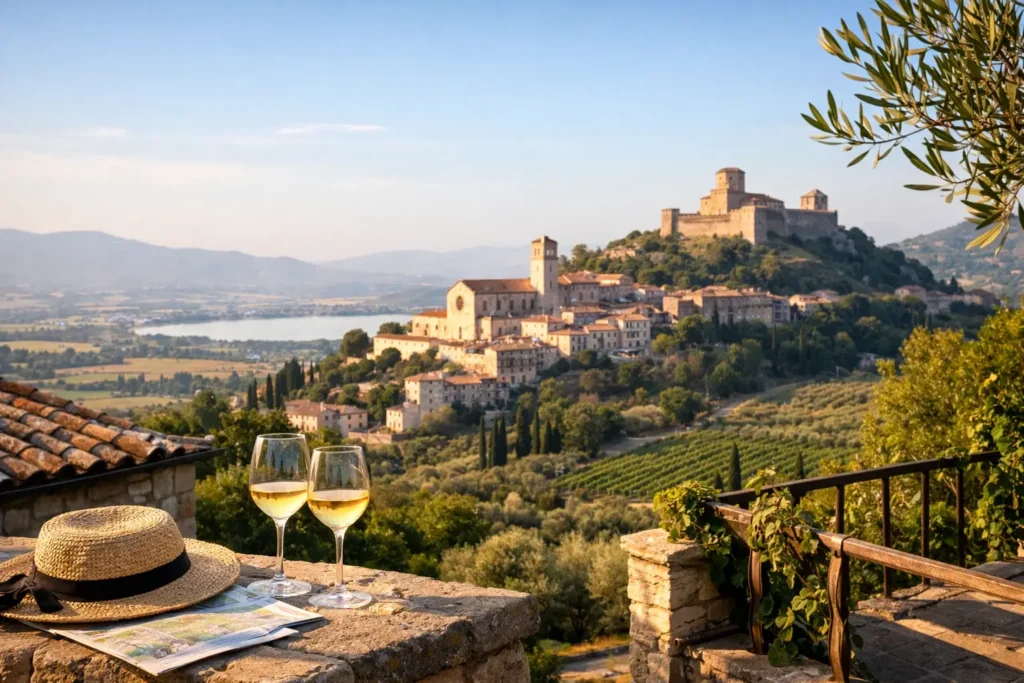
Montefalco rises above vineyards and olive groves in an area celebrated for Sagrantino, one of Umbria’s most distinctive red wines. The town’s central square is lovely, but the wider appeal lies in combining its medieval streets with a visit to a winery or olive mill.
Sagrantino is bold, tannic, and not always an easy first sip, especially for those accustomed to lighter Italian reds. That is precisely why a tasting is worthwhile: local producers can explain the grape, the landscape, and the food that makes its character shine.
9. Bevagna’s Roman and Medieval Center
Bevagna feels wonderfully human in scale. Its town center retains a Roman street plan, while medieval churches, workshops, and small squares create a sense of continuity rather than spectacle. Piazza Silvestri, with its Romanesque churches, is among the most atmospheric squares in the region.
Visit Bevagna for the pleasure of lingering. It pairs naturally with Montefalco, but it should not be treated as a mere stop between wine tastings. The town’s craft traditions and quiet streets are the attraction.
10. Gubbio and the Palazzo dei Consoli
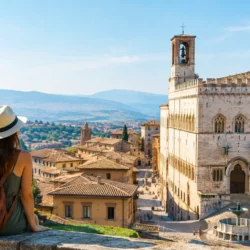
Gubbio climbs the slopes of Mount Ingino in a dramatic arrangement of stone buildings and steep lanes. The Palazzo dei Consoli dominates Piazza Grande, an extraordinary elevated square with views that make clear why Gubbio is one of Umbria’s most memorable medieval towns.
This is a strong choice for travelers who enjoy history with a slightly wilder landscape around it. Gubbio feels less polished than some of the region’s better-known destinations, and that authenticity is part of its appeal.
11. Spoleto’s Roman Theater and Rocca Albornoz
Spoleto brings together Roman remains, a medieval cathedral, a fortress, and a major summer arts tradition. The Roman Theater gives a glimpse of its ancient foundations, while the Rocca Albornoz commands the town from above and offers broad views over roofs, valleys, and hills.
The walk between Spoleto’s principal sights involves some slopes, so comfortable shoes are essential. Take your time and use the town’s moving walkways where helpful, especially in warmer months.
12. The Olive Groves and Mills of Umbria
Some of the finest Umbria attractions are not monuments at all. Olive groves shape the landscape around towns such as Trevi, Spello, and Assisi, and a visit to a working mill brings the region’s food culture into focus. Fresh extra virgin olive oil is intensely green, fragrant, sometimes peppery, and very different from a generic bottle on a supermarket shelf.
Autumn is particularly appealing for olive oil experiences because the harvest brings activity to the countryside. Yet mill visits and tastings can be meaningful throughout the year, especially when led by people who can explain cultivation, pressing, and the regional flavors on your table.
Make Space for the Unexpected
A well-planned Umbria itinerary should include one anchor experience each day, whether that is Assisi’s basilica, Orvieto Cathedral, a Perugia walking tour, or a Montefalco wine tasting. Then leave room for what cannot be scheduled: a ceramics shop in a side street, a festival banner across a piazza, a local recommendation for lunch, or a view that asks you to stop the car.
Umbria.tours can help travelers turn those anchor moments into well-organized private or small-group experiences with official local guides. But the region also asks for something from you: slow down, look up, and allow one place to become more than a pin on an itinerary.