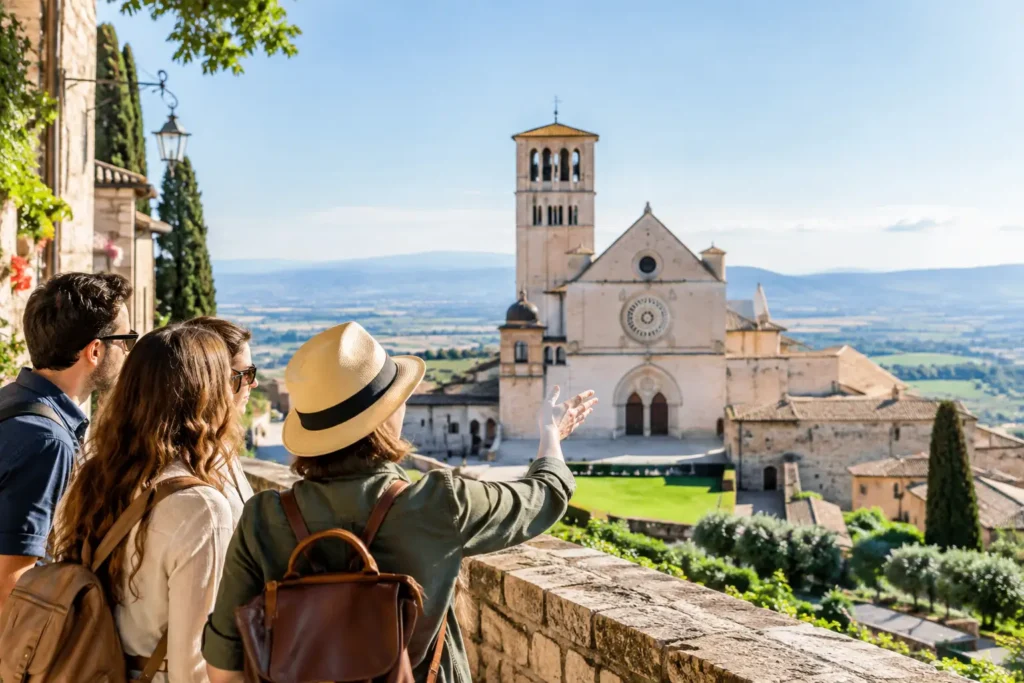
Assisi Art Tours That Reveal the Real City
At the Basilica of St. Francis, many visitors look up, admire the blue skies of Giotto’s frescoes, take a photograph, and move on. Assisi art tours make that first impression the beginning rather than the end. With an official local guide, a wall of painted scenes becomes a vivid account of medieval faith, artistic innovation, civic ambition, and the life of the saint whose message still shapes the town.
Assisi is compact enough to explore on foot, yet its artistic story is remarkably layered. Roman stonework sits beneath medieval houses. Quiet churches hold works by major masters. Frescoes appear in places that can seem modest from the street. A well-planned guided walk helps you see the connections, while leaving room to enjoy the views, narrow lanes, and unmistakable calm of this hill town.
Why Assisi deserves more than a quick visit
Assisi is known around the world as the birthplace of St. Francis, but reducing it to a single religious landmark misses much of its character. The town was a Roman settlement before it became a powerful medieval commune. Its churches, palaces, city gates, and public squares reveal centuries of changing fortunes, artistic patronage, and spiritual life.
The Basilica of St. Francis is the natural starting point for most visitors, and rightly so. Built soon after Francis’s death in 1226, it is both a pilgrimage church and one of Italy’s great artistic landmarks. The two churches that form the basilica, together with the crypt, create a powerful progression from the lower, more intimate spaces to the soaring light of the Upper Basilica.
But Assisi rewards curiosity beyond the basilica. The Cathedral of San Rufino, the Basilica of Santa Chiara, the Roman Temple of Minerva, Piazza del Comune, and the Rocca Maggiore each add a different chapter. A private or small-group tour can shape these places into a clear story instead of a checklist of monuments.
The art at the heart of Assisi art tours
The fresco cycles in the Basilica of St. Francis are often the main reason travelers seek out Assisi art tours. They are extraordinary, but they also need context. Medieval painting was created for a public that understood biblical stories, saints’ lives, symbols, and church rituals in a way modern visitors may not. An experienced guide helps bridge that distance without making the visit feel like a lecture.
Giotto and the life of St. Francis
The Upper Basilica is celebrated for the cycle traditionally associated with Giotto and his workshop, illustrating episodes from the life of St. Francis. Attribution remains a subject of scholarly discussion, which is part of what makes the paintings so fascinating. Rather than presenting simple, fixed answers, a knowledgeable guide can explain what art historians agree on, where debates continue, and why Giotto’s name became so central to the story.
What visitors notice first is the humanity of the scenes. Figures occupy believable spaces. Faces suggest grief, attention, surprise, and tenderness. Architecture and landscape help tell the story. Whether Francis renounces his family wealth, preaches to birds, or meets the Sultan, the scenes feel dramatic and immediate.
That naturalism marked an important shift in Italian art. It would be too simple to say that one artist suddenly changed everything, but the frescoes in Assisi show why the early 14th century became such a turning point. They invite you to look closely: at gestures, clothing, painted buildings, and the way a crowd responds to a sacred event.
Cimabue, color, and fragile beauty
In the Upper Basilica, frescoes connected with Cimabue offer another essential encounter. Their appearance has been profoundly affected by time and by the devastating 1997 earthquake, which damaged parts of the basilica and led to a meticulous restoration effort. The building reopened after an extraordinary conservation campaign, and the experience of seeing it today carries that history with it.
Some frescoes have undergone a chemical alteration that makes once-light tones appear dark and dark tones appear pale. This reversal can initially seem puzzling. Once it is explained, however, it becomes a moving reminder that artworks are not static objects. They survive weather, accidents, technical challenges, and changing ideas about preservation.
The basilica’s visual program also includes artists and workshops active across central Italy. A guided visit can distinguish the major phases of decoration and show how Franciscan ideas traveled through artistic networks reaching far beyond Umbria.
The Lower Basilica and the language of devotion
The Lower Basilica has a different atmosphere. Its darker, more enclosed spaces are richly painted and encourage slower looking. Here, the tomb of St. Francis gives the visit a strong devotional focus, while frescoes by artists including Pietro Lorenzetti and Simone Martini reveal the refinement of 14th-century painting.
This is where art, architecture, and pilgrimage are most closely intertwined. Gold, deep color, expressive figures, and decorative detail were not simply beautiful additions. They shaped the experience of worshippers arriving from across Europe. Your guide can help you recognize the visual choices that directed prayer, emotion, and attention.
Photography rules and access arrangements may vary inside the basilica, especially during religious celebrations. That is one reason it is useful to have a guide who can organize the visit around the rhythm of the site and focus your attention on details that cannot be captured in a picture.
Beyond the Basilica: an artistic walk through town
A complete Assisi experience should continue into the historic center. From the basilica, the climb through town reveals changing perspectives over the Umbrian valley and a sequence of buildings from different eras.
At Piazza del Comune, the Temple of Minerva is one of the finest surviving Roman facades in Italy. Its Corinthian columns have stood at the heart of Assisi for nearly two millennia. The building’s later use as a church is a clear example of how the town adapted its ancient inheritance rather than leaving it behind.
Nearby, the Cathedral of San Rufino carries the memory of Assisi’s early Christian community. Its Romanesque facade is richly carved, and the church is closely connected with both Francis and Clare. The Basilica of Santa Chiara, built in pale pink and white stone, holds the Crucifix of San Damiano, associated with Francis’s spiritual calling. These are not side stops. They bring the Franciscan story out of the museum-like frame and back into the town where it unfolded.
For travelers who enjoy architecture and panoramic views, the Rocca Maggiore adds another perspective. The fortress is more about power, defense, and the strategic position of Assisi than painted masterpieces, yet it helps explain the landscape of rivalry and authority behind the serene image of the town.
Choosing the right guided experience
The best tour depends on what you want from your time in Assisi. A first visit usually benefits from a walking tour that combines the Basilica of St. Francis with the principal landmarks of the center. This gives you a strong grounding in the town’s art, history, and religious heritage without rushing from site to site.
If the basilica is your main priority, a more focused art tour allows time for the frescoes, their artists, and the restoration history. It is particularly rewarding for travelers who already know a little about Giotto or want to understand why Assisi matters in the development of Italian painting.
Private tours work especially well for families, couples, and groups with particular interests. You can move at your own pace, spend longer with the paintings that interest you most, and build in practical needs such as a gentler route, a later start, or time for lunch. Small-group tours offer a sociable alternative and can be an excellent choice for independent travelers seeking expert interpretation at a per-person price.
There are trade-offs. A comprehensive visit takes time, and Assisi’s steep streets can be demanding in summer heat. The basilica alone can occupy well over an hour when viewed carefully. Trying to cover every church, museum, and viewpoint in one afternoon often means remembering less. Choose a tour length that leaves space to look, listen, and absorb the atmosphere.
Practical planning for an art-focused day in Assisi
Morning is often the most comfortable time to visit, particularly from late spring through early fall. The light over the valley is beautiful, and the central streets are generally quieter before the busiest part of the day. Religious services and special events can affect access, so flexibility is valuable.
Wear comfortable shoes with a good grip. Assisi is a walking town with cobbled lanes and noticeable inclines. Modest dress is appropriate for churches, and a light layer is useful inside the basilica even when the day is warm.
Allow time after your tour to wander without an agenda. Pause in a small square, look back toward the basilica from a side street, or enjoy an Umbrian lunch with local wine and olive oil. Umbria.tours can help turn an art visit into a fuller day of local experiences, but Assisi itself should never be hurried.
The greatest gift of Assisi is that its art remains part of a living place. Let the frescoes slow your pace, then carry their stories with you into the streets where Francis and Clare once walked.