Related Posts
A warm slice of torta al testo, a glass of Sagrantino poured in a vineyard village, olive oil fresh from the mill: the best Umbrian towns for food are rarely about one famous dish alone. They are places where the landscape appears on the plate, and where a walk through a medieval center can lead naturally to a family-run trattoria, wine bar, market, or tasting room.
Umbria rewards travelers who slow down. Its food traditions are shaped by forests, vineyards, olive groves, lakes, and small farms, so each town offers a slightly different reason to stop for lunch. Here are nine destinations worth building into a food-focused Umbrian itinerary.
The strongest food destinations combine a distinct local specialty with a place you will genuinely want to explore. A memorable meal in Umbria might follow a guided walk through frescoed churches, Roman streets, or cobbled alleys, rather than a long drive solely for a restaurant reservation.
Season matters, too. Autumn brings truffles, new olive oil, chestnuts, and harvest celebrations. Spring is excellent for fresh greens, pecorino, and lighter lunches outdoors. Summer is ideal for long evenings in lively piazzas, while winter suits Norcia’s cured meats, hearty soups, and red wines. Not every specialty is available in every season, so ask what is at its best when you arrive.
Perugia is Umbria’s most urban food stop, with enough variety to suit travelers who want choice as well as character. The historic center is full of small places for an aperitivo, regional wines, handmade pasta, and traditional dishes such as torta al testo, the griddled flatbread often filled with cured meat, cheese, or greens.
Chocolate is part of the city’s modern identity, and autumn visitors may find special events and tempting shop windows devoted to it. Yet Perugia is not only for sweet teeth. Its central location also makes it a practical base for discovering the wines, olive oils, and farm products of the wider region. Choose it if you enjoy a busier atmosphere and want food woven into a substantial city break.
Norcia is one of Italy’s great names for charcuterie. The word norcineria, used for shops and crafts connected with pork butchery and cured meats, comes from this town. Expect savory displays of salami, prosciutto, sausage, and local cheeses, often accompanied by breads, preserves, and black truffle products.
This is a destination for serious flavor and a powerful mountain setting. The town and surrounding Valnerina have faced a long period of recovery following the 2016 earthquake, and visiting with respect supports local businesses that have continued their traditions. Norcia is particularly rewarding in cooler months, when its rich dishes feel entirely right, though truffle lovers will find reasons to come in several seasons.
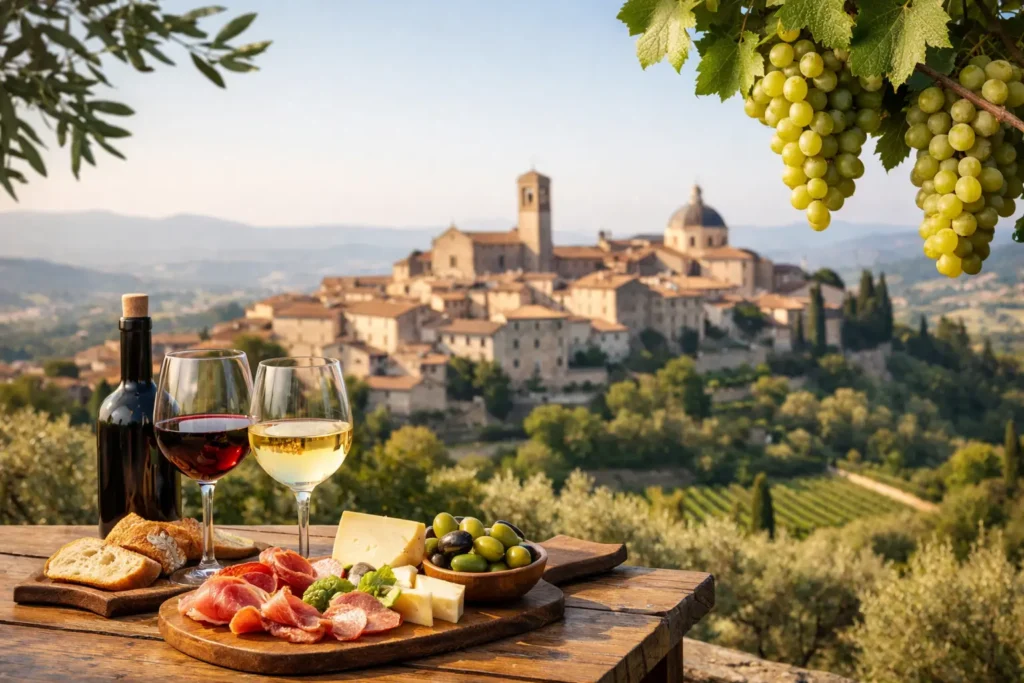
Set above a patchwork of vines and olive trees, Montefalco is the natural choice for wine lovers. Its celebrated Sagrantino is a deeply structured red, often enjoyed with roast meats, aged cheeses, game, and Umbrian salumi. The town also produces Montefalco Rosso, a more approachable blend that can be easier to enjoy over a relaxed lunch.
Food here is inseparable from the countryside. A tasting is best paired with time in the compact historic center, where the views help explain why Montefalco is called the balcony of Umbria. Sagrantino can be bold and tannic, so it is not the best match for every palate. Travelers who prefer lighter wines may enjoy sampling local whites or Montefalco Rosso alongside it.
Bevagna feels made for an unhurried lunch. Its handsome central square, Roman remains, and narrow lanes create a lovely setting for traditional Umbrian cooking, from handmade pasta and seasonal vegetables to grilled meats and local olive oil.
The town sits close to Montefalco, so it is easy to combine the two without turning the day into a rush between tastings. Bevagna is especially appealing for travelers who prefer a smaller, quieter base than Perugia or Assisi. During its medieval festival season, the atmosphere becomes more animated, but outside major events it retains an everyday, village-like rhythm.
Spello is known for stone lanes, Roman traces, and flower-filled corners, but its food story begins with the olive trees on the slopes below Mount Subasio. The area is one of Umbria’s important olive oil zones, and a tasting of extra virgin olive oil can reveal just how peppery, green, and fragrant freshly pressed oil can be.
Look for straightforward dishes that let excellent ingredients speak clearly: bruschetta with new oil, beans, vegetables, cheeses, and pasta dressed simply. The olive harvest, generally in autumn, is the most evocative period for mill visits. Spring brings Spello’s famed floral displays and is beautiful, although it can be busier and requires more advance planning.
Orvieto rises dramatically on a volcanic rock plateau, and its magnificent cathedral makes it one of Umbria’s essential cultural destinations. It also has a long wine tradition centered on Orvieto Classico, a crisp local white that works beautifully with antipasti, fish, vegetable dishes, and fresh cheeses.
The city’s underground caves and cellars hint at the agricultural history beneath the streets. For food-minded travelers, Orvieto offers a satisfying blend of wine, regional pasta, truffles, and dishes influenced by its position near Lazio and Tuscany. It can feel more visited than some smaller Umbrian towns, particularly in high season, but its grand setting and excellent wine culture justify the attention.
Gubbio has a rugged, medieval presence, climbing the lower slopes of Mount Ingino in northern Umbria. Its cooking is equally grounded: think roasted meats, mushrooms, truffles, polenta, beans, and earthy sauces that suit the cooler mountain air.
Look for crescia, a local flatbread that can accompany cheese and cured meat, and seek out seasonal truffle dishes when available. Gubbio is ideal for visitors who want their food experiences to come with a strong sense of history. Its dramatic streets, palaces, and traditions give even a simple lunch the feeling of a proper destination rather than a stop between larger cities.
Spoleto combines a monumental Roman and medieval heritage with the easygoing pleasures of southern Umbrian cooking. The surrounding hills are rich in olive groves, and local oil appears everywhere, from crostini to grilled vegetables and pasta dishes.
This is a good town for travelers who want culture and cuisine in equal measure. After visiting the cathedral, fortress, or Roman theater, settle into a meal of strangozzi pasta, seasonal truffles, local sausage, or roast lamb. During the summer Festival dei Due Mondi, the town is especially lively, but tables and accommodations should be arranged well ahead.
On the shores of Lake Trasimeno, Castiglione del Lago offers something different from the region’s hill-town and vineyard formula. Here, lake fish, beans, olive oil, and wines from the surrounding countryside shape the menu. A meal can be followed by a walk along the lakeside or through the town’s fortress, with broad water views that feel distinctively central Italian.
It is a particularly good choice for families, couples seeking a gentler pace, and travelers arriving from Tuscany. The cuisine may be less immediately famous than Norcia’s salumi or Montefalco’s wine, but that is part of its appeal. It offers a quieter, more local chapter in an Umbrian food journey.
Rather than trying to eat in a different town every few hours, choose two or three bases and leave room for long lunches. Perugia works well for city life and central connections. Montefalco, Bevagna, and Spello make an excellent cluster for wine, olive oil, and village cooking. Orvieto and Spoleto suit a south-Umbrian route, while Gubbio and Norcia deserve time if mountain flavors and truffles are priorities.
Book tastings and guided experiences in advance during harvest periods, weekends, and festival dates. A local guide can add meaning to a food stop by connecting it to the town’s art, trade routes, religious traditions, and landscape. Umbria.tours can help visitors combine official guided walks with olive oil, wine, and culinary experiences, making limited vacation time feel richer rather than over-scheduled.
Leave one meal unplanned. In Umbria, the table you remember most may be the one found after a quiet walk, when a seasonal chalkboard menu and the scent of new olive oil persuade you to stay a little longer.