Related Posts

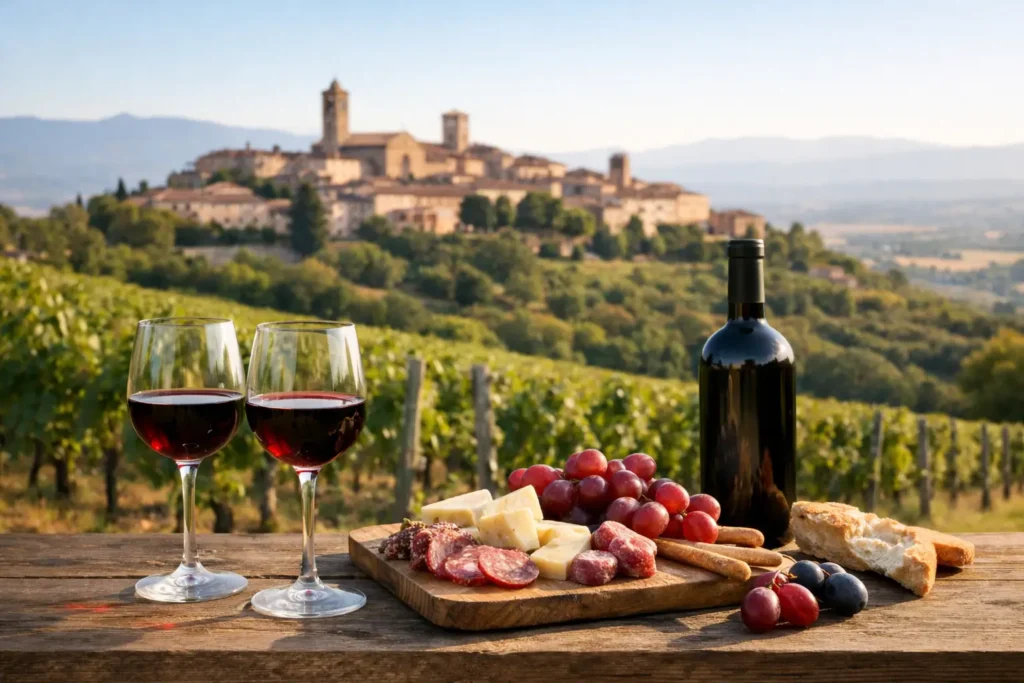
Montefalco wine tasting begins with a striking contrast: a calm medieval hill town surrounded by olive groves and vineyards, and a red wine with enough tannin, spice, and structure to hold your attention long after the last sip. For visitors who want to understand Umbrian food and wine beyond a restaurant list, this is one of the region’s most rewarding stops.
Montefalco sits in the center of Umbria’s wine country, overlooking a broad patchwork of cultivated hills. Its compact historic center, ancient walls, and views toward the Apennines make it appealing in its own right. Yet the town is best known for Sagrantino, a grape that has given this small area a distinctive place on Italy’s wine map.
Sagrantino is not a gentle introduction to Italian red wine. It is naturally high in tannins, deeply colored, and often marked by dark cherry, blackberry, plum, tobacco, balsamic notes, and warm baking spices. A young bottle can feel firm and powerful, especially beside lighter Italian reds. With time in bottle, those tannins soften and the wine develops more complex savory and earthy character.
That intensity is part of the appeal, but it also explains why a guided tasting is so useful. At a winery, you can taste a younger Sagrantino beside a more mature vintage, hear how the producer manages tannin through vineyard work and aging, and see why food is essential to the experience. There is no single “right” style. Some estates favor a more traditional expression with extended aging and pronounced structure, while others aim for brighter fruit and a more approachable texture.
Montefalco Sagrantino DOCG must be made entirely from Sagrantino grapes. It is the area’s flagship wine and generally the bottle to save for a proper meal. Montefalco Rosso DOC offers a different perspective. Usually centered on Sangiovese with Sagrantino contributing depth and character, it is often more immediately drinkable while still carrying the region’s personality.
A thoughtful tasting may also include white wines made from Trebbiano Spoletino, a local variety increasingly appreciated for its fresh citrus character, herbal notes, and capacity to develop with age. It is an excellent reminder that Montefalco is more varied than one famous red grape.
The best tastings in and around Montefalco are personal rather than rushed. You may be welcomed by the winery owner, a family member, an enologist, or a knowledgeable member of the cellar team. In smaller estates, the people pouring the wine may also be involved in the harvest, pruning, and blending decisions. Their stories bring useful context to what is in the glass.
A visit often begins among the vines or with a view over them. The slopes, exposure to the sun, soil composition, and seasonal weather all affect the final wine. Then comes the cellar, where stainless steel tanks, large oak casks, and smaller barrels reveal part of the producer’s approach. Even if you are not a wine specialist, seeing the process makes the tasting more memorable.
Expect to taste three to five wines, usually progressing from white or rosé to Montefalco Rosso and Sagrantino. The pours are designed for tasting, not for finishing quickly. Take time to notice color, aroma, texture, and how each wine changes when paired with food.
Local producers commonly serve bread, extra-virgin olive oil, cured meats, cheeses, or simple Umbrian specialties. These are not decorative additions. Sagrantino’s tannins soften beside rich flavors, while the area’s whites can be especially good with pecorino, vegetables, freshwater fish, or olive-oil-based dishes.
It is worth asking whether the tasting includes both dry and passito Sagrantino. Sagrantino Secco is the dry red for which Montefalco is famous. It is structured, long-lived, and particularly satisfying with grilled meats, game, slow-cooked dishes, and aged cheese.
Sagrantino Passito is made from partially dried grapes and follows an older local tradition. It is rich, concentrated, and sweet, but the grape’s natural tannin keeps it from becoming flat or overly soft. It can be a memorable finish with dark chocolate, dry pastries, blue cheese, or a quiet moment after dinner. Not every winery makes it, so it is best not to assume it will be part of every visit.
The right Montefalco wine tasting depends on the pace and purpose of your day. If your main interest is wine, choose a visit with a vineyard and cellar tour, a seated guided tasting, and enough time to compare several labels. This format suits travelers who want to learn about Sagrantino rather than simply sample it.
If you are planning a broader day out, combine a winery stop with time in Montefalco’s historic center. The town is small enough to explore on foot, with handsome piazzas, quiet lanes, artisan shops, and views that invite an unhurried pause. Visitors interested in art should allow time for the Church of San Francesco, home to remarkable Renaissance frescoes that add another layer to Montefalco’s cultural story.
Private tastings are especially useful for couples, families, and groups with particular interests. A producer can often tailor the selection around fuller-bodied reds, organic farming, older vintages, food pairings, or wines that are easier to enjoy now. Small-group experiences can be a good choice for solo travelers and anyone who enjoys sharing the table with fellow visitors.
It is sensible to book in advance, particularly from late spring through the fall harvest season. Wineries are working farms as well as visitor destinations, and a reservation helps ensure that someone is available to host you properly. Confirm the tasting language, duration, accessibility, what is included with the tasting, and whether purchases can be shipped to your home country.
In Montefalco, wine makes the most sense at the table. The local cuisine has the depth to meet Sagrantino without competing with it. Think of roasted pork, lamb, wild boar ragù, sausages, lentils, mushrooms, truffle dishes, and the region’s excellent sheep’s-milk cheeses. These are flavors with salt, richness, and texture, all of which help bring a firm red into balance.
Montefalco Rosso is often the more flexible lunch wine. It works beautifully with pasta sauces, pizza topped with local meats, grilled vegetables, and everyday trattoria dishes. A crisp Trebbiano Spoletino can be a welcome choice on a warm day, particularly with antipasti, salads, seafood, or soft cheeses.
If you are visiting more than one winery, avoid treating the day as a race through pours. A late-morning tasting followed by lunch is usually more enjoyable than several hurried appointments. Consider a driver or guided experience if you plan to taste seriously. Montefalco’s scenic country roads are part of the pleasure, but they are not the place to test how much wine you can manage.
Spring brings green hills, vineyard activity, and comfortable walking weather. It is a lovely season for travelers who want to combine a tasting with nearby villages such as Bevagna or Spello. Summer offers long bright evenings and an energetic atmosphere, though midday can be hot, making an early visit or later afternoon tasting more comfortable.
Harvest usually takes place from late summer into early fall, depending on the year and the grape variety. This is an exciting time to see the vineyards at work, but availability can be tighter and cellar teams busier. Autumn adds golden vineyards, seasonal food, and the pleasure of tasting fuller wines in cooler weather. Winter is quieter and often ideal for visitors who prefer a more intimate cellar visit, as long as they are comfortable with shorter days.
For a well-organized local day, Umbria.tours can help connect Montefalco’s wine culture with the town’s art, landscape, and nearby food traditions. The most memorable visit is rarely the one with the most bottles. It is the one where a knowledgeable host, a good table, and a glass of Sagrantino make Montefalco feel less like a stop on an itinerary and more like a place you have genuinely come to know.