Related Posts
How to Taste Olive Oil Like an Umbrian Local
19-09-2026
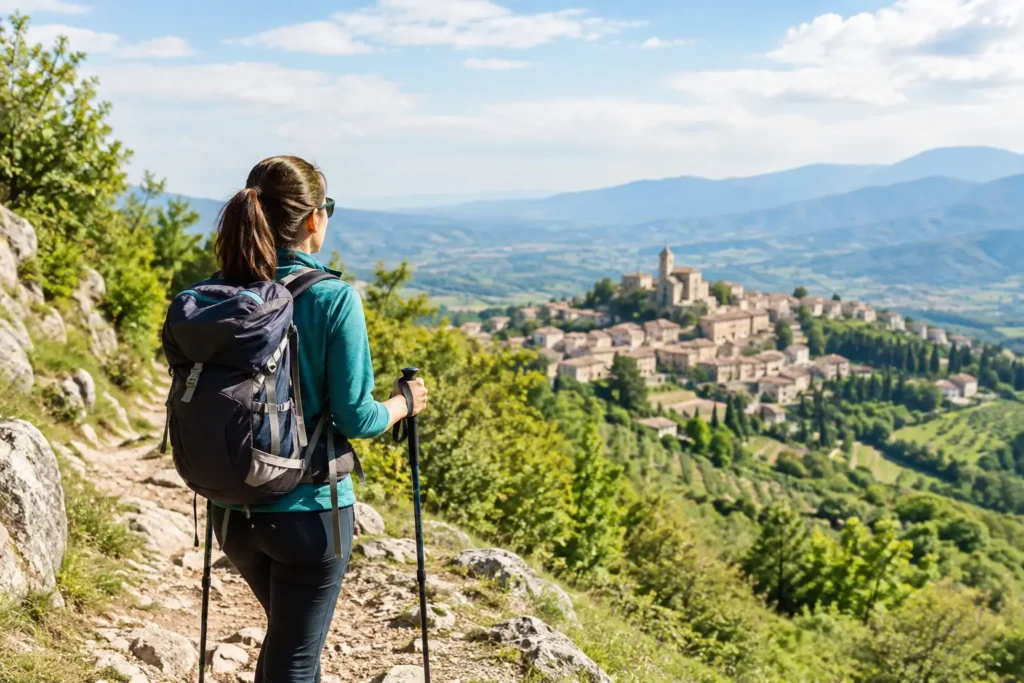
A path leaving Spello may pass silvery olive trees, dry-stone walls, and a view that reaches across the Valle Umbra to Assisi. That is the particular pleasure of Umbria hiking tours: the landscape is never separate from the places, food, and stories that give it meaning. A morning on foot can lead from a medieval gate to a Roman road, from a quiet woodland to a family-run olive mill.
Umbria rewards travelers who prefer to experience Italy at a human pace. It is not a region of theatrical extremes. Its appeal lies in the detail – bell towers above wooded ridges, farm tracks scented with wild fennel, frescoed chapels encountered beyond a village lane, and lunch tables where local wine is part of the landscape rather than an add-on. With the right route and an official local guide, a walk becomes a richer way to understand the green heart of Italy.
The region’s geography makes walking wonderfully varied without requiring every day to be a demanding mountain expedition. The Apennines rise along the eastern edge, offering higher, wilder country around places such as Monte Cucco and the Sibillini foothills. Central Umbria rolls through vineyards, olive groves, oak woods, and cultivated valleys. Here, many of the most rewarding walks connect historic towns whose stone walls have watched over the same paths for centuries.
This variety matters when choosing an itinerary. Some visitors want a proper hike with sustained climbs, uneven trails, and broad ridge views. Others are looking for a relaxed countryside walk that leaves time for Assisi’s basilica, Orvieto’s cathedral, or a wine tasting in Montefalco. Both are valid, but they call for different planning. A knowledgeable guide can match the route to your interests, fitness, available time, and the season rather than treating every traveler as if they were training for a summit.
There is also a cultural layer that is easy to miss alone. A local guide can point out the agricultural patterns behind a patchwork hillside, explain why a small rural church matters, or bring a medieval village’s rivalries and rituals to life. These details turn pauses along the way into part of the experience, not simply a break before the next viewpoint.
For many first-time visitors, the classic Umbrian walk is a gentle to moderate route through the countryside around Spello, Bevagna, Montefalco, or Trevi. These areas pair naturally with food and wine experiences. You may walk among olive trees before tasting the region’s peppery extra virgin olive oil, or follow lanes between vineyards with Montefalco’s hilltop skyline ahead.
Expect rolling terrain rather than perfectly level ground. Even a leisurely route may include short, steep sections, loose gravel, and stone surfaces. The reward is that the countryside feels close to village life: farmhouses, small chapels, and panoramic pauses appear naturally along the route. These walks suit couples, families with active older children, and anyone who wants time for a long lunch as well as fresh air.
Assisi is often visited for the Basilica of St. Francis, but its setting on Mount Subasio invites a deeper encounter with the spiritual landscape that shaped Saint Francis. Walking in and around Assisi can combine the town’s extraordinary art and architecture with paths through olive groves and the slopes above the valley.
The physical challenge depends on the route. Assisi itself involves inclines and cobbled streets, while longer trails toward the mountain can be more demanding. This is an excellent choice for travelers drawn to religious heritage, contemplative landscapes, and history that is felt beyond museum walls. It also works particularly well as a guided day that balances outdoor walking with a focused cultural visit.
Travelers seeking more active Umbria hiking tours should look toward the region’s wooded uplands. Here, trails can involve longer ascents, changing weather, and less shade-free open terrain than the familiar olive-grove routes. The payoff is a more remote side of Umbria: beech forests, limestone formations, high pastures, and far-reaching views.
These routes are best chosen honestly. A trail described as moderate may feel strenuous in summer heat or after rain, particularly if you are unused to uneven ground. Ask about elevation gain, trail surfaces, distance, and the expected walking time rather than relying on a simple difficulty label. A private guide is especially useful for active groups with different abilities, since pace and route choices can be adjusted more thoughtfully.
Spring and fall are generally the finest seasons for walking. From April through early June, the countryside is green, wildflowers brighten the verges, and daytime temperatures are often comfortable. It is a beautiful time for routes around villages and vineyards, although spring showers can make some tracks muddy.
September through October offers warm light, harvest activity, and a more settled feeling after summer. Grapes, olives, truffles, and seasonal menus add another reason to walk slowly through the region. Popular towns can still be lively, but trails often feel peaceful once you leave the historic center.
Summer is possible, especially for early starts, higher routes, or shorter walks followed by a long indoor lunch. The heat can be intense in exposed valleys from late morning onward. Winter has its own quiet charm, particularly for town walks and food-focused outings, but mountain conditions require more care and some rural services operate on reduced schedules.
Comfortable walking shoes with a grippy sole are more useful than heavy expedition boots for many Umbrian routes. Cobbles, dirt paths, and occasional wet leaves can be slippery, while lighter footwear is often more pleasant on a moderate day. For mountain walks or rainier periods, more ankle support may be sensible.
Carry water, sunscreen, a light rain layer, and a small daypack. In cooler months, layers are preferable to one bulky jacket because valley temperatures can change quickly as you gain height or move into shade. A hat is essential in summer, when even an easy country lane can feel demanding without protection from the sun.
Do not plan too tightly around a route’s stated duration. A guided walk is not a race. You may stop for photographs, a church visit, a conversation about local produce, or an espresso in a small piazza. Building in that time is one of the benefits of choosing a well-organized experience rather than trying to force several towns and a long trail into one day.
Marked paths are helpful, but they do not always explain where a track begins, whether conditions have changed, or why a seemingly ordinary building deserves attention. On rural routes, signage can be limited and mobile service may be inconsistent. In historic towns, the most direct route is rarely the most interesting one.
An official guide brings practical reassurance as well as interpretation. They can shape the day around your group’s pace, identify the landmarks beyond the obvious highlights, and connect a landscape to the people who have cultivated it. For visitors with limited vacation time, this means less energy spent on logistics and more time actually experiencing Umbria.
Umbria.tours offers guided experiences that make this connection especially natural, pairing local expertise with the destinations travelers most want to understand. A walking day can stand alone, or it can become part of a wider stay that includes Perugia’s layered history, Gubbio’s medieval streets, Spoleto’s monuments, or a tasting centered on the region’s olive oil and wine.
The best Umbrian itinerary usually has room to breathe. Pair a morning hike with one meaningful cultural stop rather than trying to collect landmarks. Follow a walk near Montefalco with a wine experience, or combine a route around Assisi with time in the basilica and a relaxed meal. In Spello, allow time to wander the flower-filled lanes after the countryside has opened up the valley below.
For private groups, consider mixing walking levels across several days. One longer hill or forest route can be followed by an easier guided town walk in Orvieto or Perugia. This approach lets everyone enjoy the region without turning a holiday into an endurance test.
Choose the path that leaves you curious for the next village, the next view, and the next story your guide is ready to share.