How to Visit Assisi and Make Time for Its Details
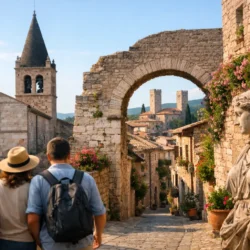
Assisi is not a place to rush between landmarks. Its pale stone lanes climb and turn, bells carry across the valley, and even a short walk can reveal a frescoed chapel, a family-run shop, or a view over olive groves. Knowing how to visit Assisi means allowing space for both its great Franciscan monuments and the quieter details that give this hill town its lasting character.
For many travelers, Assisi is an easy day trip from Perugia, Rome, or Florence. Yet it rewards an overnight stay or at least a full, unhurried day. The historic center is compact, but it is steep, layered, and far richer than a quick stop at the Basilica of St. Francis.
Choose the right pace for Assisi
A day in Assisi can work well if you arrive early and focus on the upper town. Begin at the Basilica of St. Francis, walk through Piazza del Comune, and continue toward the Basilica of St. Clare. Add a relaxed lunch and time to wander the lanes around Via San Francesco, and you will have a memorable introduction without trying to see every church and museum.
Two days make for a more complete visit. You can give proper time to the basilica complex, explore the Roman remains around the main square, walk or travel down to San Damiano, and enjoy Assisi after many day visitors have left. Early morning and late afternoon are especially beautiful, when the stone seems to change color with the light and the town grows quieter.
If your main interest is Franciscan history, art, or religious heritage, resist the temptation to combine Assisi with too many other Umbrian towns on the same day. Spello, Perugia, and Montefalco are rewarding destinations, but Assisi deserves its own pace.
Getting to Assisi without unnecessary stress
Assisi’s railway station sits in Santa Maria degli Angeli, on the plain below the historic town. Regular train connections make it accessible from Rome, Florence, and Perugia, often with a change depending on your route. From the station, use a local bus or taxi to reach the upper town. Walking uphill from the station is possible, but it takes time and energy that many visitors would rather save for the historic center.
Drivers should remember that Assisi is a medieval hill town, not a place designed around cars. Much of the center has restricted traffic areas, and streets can be narrow, steep, and confusing for first-time visitors. Use one of the public parking areas outside or below the central lanes, then continue on foot or by local transport. Check your accommodation’s parking instructions in advance if you are staying overnight.
Comfortable walking shoes are essential. The paving is uneven in places, and the route between the basilicas includes slopes and steps. Visitors with limited mobility can still enjoy Assisi, but planning transport carefully and choosing a hotel near the areas they most want to see will make the experience more comfortable.
Start at the Basilica of St. Francis
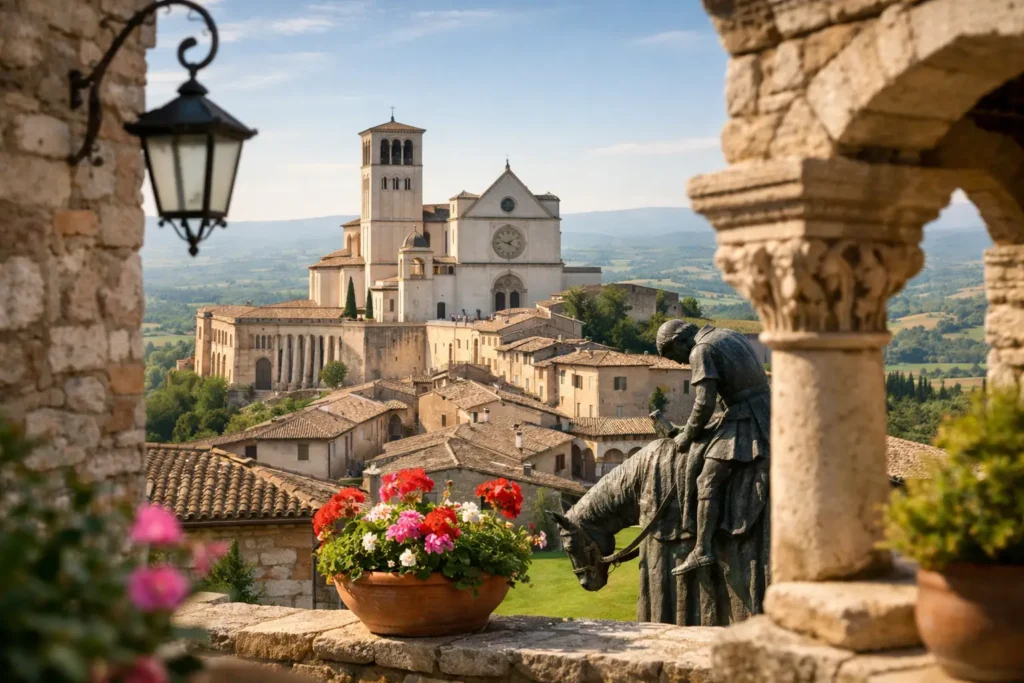
The Basilica of St. Francis is the spiritual and artistic heart of Assisi. Built after the death of St. Francis in 1226, it contains two churches, one above the other, with a remarkable cycle of frescoes and the saint’s tomb in the lower basilica. Even travelers who do not come for religious reasons often find the atmosphere here deeply moving.
Arrive early if you can. The basilica can be busy during weekends, holidays, and pilgrimage periods, and a quieter visit makes it easier to look closely at the art and absorb the setting. Dress respectfully, keep voices low, and be ready for security procedures. Photography rules may vary by area, so follow the signs and staff guidance.
It is easy to pass through too quickly, especially if you only recognize the name of Giotto. A knowledgeable official guide can bring the building into focus: why the architecture is divided into two levels, how the frescoes transformed storytelling in Italian art, and how Franciscan ideals shaped the town around you. For visitors who want context rather than a checklist, a guided walk with Umbria.tours can turn the major monuments and overlooked corners into one connected story.
Walk from Roman Assisi to the Basilica of St. Clare
From the Basilica of St. Francis, follow Via San Francesco toward Piazza del Comune. This is one of the town’s most enjoyable routes, but do not treat it as merely a passageway. Look above shopfronts for medieval façades, small shrines, carved stonework, and glimpses toward the Umbrian valley.
Piazza del Comune marks the civic center of Assisi. Its most striking monument is the Temple of Minerva, a remarkably well-preserved Roman façade with tall Corinthian columns. The contrast between Roman Assisi, medieval palaces, and the Christian town that developed around Franciscan history is one of the reasons this small city feels so substantial.
Continue toward the Basilica of St. Clare, dedicated to St. Clare of Assisi, a close companion of St. Francis and founder of the Poor Clares. Its pink-and-white stone façade stands above a broad square with open views across the plain. Inside, the Crucifix of San Damiano is a central object of devotion and art. The basilica is usually calmer than St. Francis, though it remains an active religious site and should be visited with the same consideration.
Between these landmarks, leave room to take side streets. Assisi is at its best when you occasionally choose the lane that is not on the direct route. You may find a small garden wall, a quiet doorway, or a shaded corner where the town feels more like a lived-in Umbrian community than a famous destination.
Make time for San Damiano and Santa Maria degli Angeli
San Damiano lies below the historic center and is closely tied to the early life of St. Francis and St. Clare. According to tradition, it was here that Francis heard Christ’s call to “repair my house.” The setting has a more secluded, contemplative feeling than the central basilicas, and it is particularly worthwhile for visitors interested in the origins of the Franciscan movement.
The route downhill is scenic but requires a return climb, so consider a taxi or plan it as part of a longer walk if the weather is mild. It is a good choice for a second day, rather than an addition to an already crowded first-day itinerary.
At the foot of the hill, Santa Maria degli Angeli is home to the Basilica of Santa Maria degli Angeli, built around the tiny Porziuncola chapel. This is another major Franciscan site, but it has a very different scale and atmosphere from upper Assisi. If you arrive or depart by train, it is a natural stop. If time is limited, prioritize it according to your interest in Franciscan heritage rather than trying to fit it in simply because it is nearby.
Eat well, but do not give lunch away to logistics
Assisi has plenty of choices for a quick panino, a relaxed trattoria meal, or an aperitivo with valley views. For a full lunch, step a little away from the busiest routes and look for seasonal Umbrian cooking: handmade pasta, legumes, mushrooms, local cheeses, cured meats, and extra-virgin olive oil. Umbria is also a serious wine region, so a glass from Montefalco or the hills around Assisi can be a fitting addition to the table.
Reservations are sensible for dinner and for popular restaurants during spring, summer, and holiday weekends. Lunch can take longer than some travelers expect, particularly in smaller places, which is part of the pleasure. Build that time into the day rather than booking an attraction immediately afterward.
When to go and what to expect
Spring and fall offer the most comfortable balance of weather, landscape, and walking conditions. April through June brings green hills and flowers, while September and October often provide warm days, harvest flavors, and softer light. July and August can be hot, and the stone streets offer limited shade in the middle of the day. In summer, begin early, pause for lunch, and return to sightseeing later in the afternoon.
Winter is quieter and can be wonderfully atmospheric, especially for travelers who prefer museums, churches, and long meals to outdoor schedules. Some smaller businesses may keep reduced hours, and rain can make the paving slippery. Christmas brings a special seasonal mood, although popular dates can still attract crowds.
Assisi also receives pilgrims throughout the year. Religious celebrations can add meaning and color to a visit, but they may affect access, parking, and crowd levels. If you are traveling on a tight schedule, leave a little flexibility in your plans.
Before you leave the upper town, find a viewpoint and pause over the valley. Assisi is best remembered not only for what you enter, but for the moment between places: the bell tower behind you, the olive-covered plain below, and the sense that centuries of faith, art, and daily life are still sharing the same streets.