Orvieto Parking Options for a Stress-Free Visit
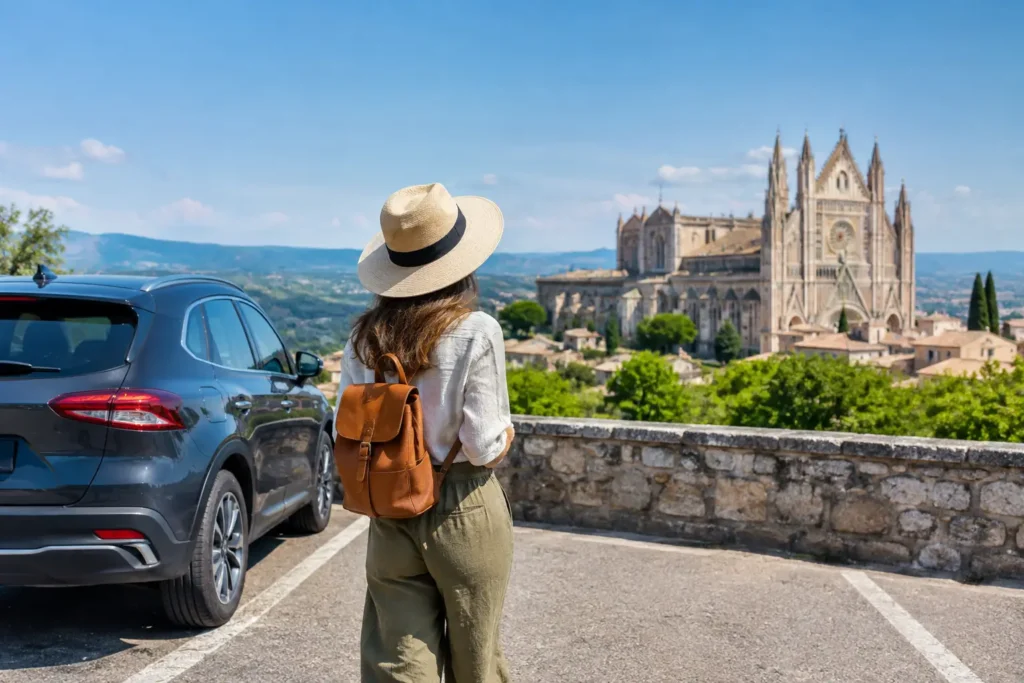
Orvieto rises dramatically above the surrounding Umbrian countryside, a city of golden volcanic stone, narrow medieval lanes, and one of Italy’s most memorable cathedrals. That hilltop setting is precisely why Orvieto parking options deserve a little planning before you arrive. The historic center is compact and a pleasure to explore on foot, but its streets were never designed for modern traffic – or for a last-minute search for a space.
For most visitors, the easiest approach is simple: leave the car at the foot of the rock or in a designated lot near the edge of the old town, then walk, take the funicular, or use the local lifts and escalators. You will save time, avoid restricted areas, and begin your visit with the views that make Orvieto so special.
Understand Orvieto Before You Park
Orvieto has two distinct levels. Orvieto Scalo sits below the cliff, beside the railway station and the main road connections. Orvieto’s historic center, often called Orvieto Alta, is the elevated medieval town where you will find the Duomo, Piazza della Repubblica, the Torre del Moro, underground sites, shops, wine bars, and most cultural attractions.
Driving directly into the upper town can be practical if your accommodation has confirmed private parking or you need to drop off luggage. It is less appealing as a general sightseeing strategy. The center includes limited-traffic zones, known in Italy as ZTLs, controlled by cameras. Entering without authorization can lead to a fine, sometimes long after a vacation has ended.
The best choice depends on your plans. A day visitor arriving from the A1 highway may prefer a lower-town car park and the funicular. Travelers staying overnight inside the walls may need to coordinate access with their hotel. Families with young children, visitors with limited mobility, and anyone carrying luggage should weigh convenience against the appeal of walking up through the town.
Orvieto Parking Options at the Foot of the Rock
Orvieto Scalo and the funicular
Parking near Orvieto Scalo is one of the most relaxed ways to visit. The area is close to the train station, and the funicular climbs from the lower town to Piazza Cahen, near the upper town’s western edge. From there, you can continue on foot or use local public transport to reach the Duomo area.
This is particularly useful if you are combining Orvieto with a train journey, arriving from Rome or Florence, or want to avoid driving uphill altogether. The ride itself is brief, but it gives a wonderful first sense of the city’s dramatic position above the valley.
It does mean that you will not emerge directly beside the cathedral. Allow time for the uphill walk or local connection across town, especially in summer heat or if your visit is centered on a timed tour. For many travelers, however, the trade-off is worthwhile: an easier arrival and none of the pressure of navigating medieval streets.
Campo della Fiera
Campo della Fiera is a well-known parking area near the base of the cliff, connected to the historic center by a system of escalators and elevators. It is a practical option for visitors arriving by car who want a direct route into the old town without relying on the funicular.
The ascent through the rock is part of the experience rather than merely a transfer. Once at the top, you are within walking distance of key sights and can make your way through Orvieto’s lanes at an unhurried pace. It is a strong choice for a full-day visit, particularly if your itinerary includes the Duomo, the underground city, lunch, and a late-afternoon stroll.
Check the signs on arrival for current opening arrangements, payment instructions, and access points. Public parking rules and rates can change, and Italian pay stations may require you to display a ticket clearly if indicated.
Ex Foro Boario and nearby lower access
The Ex Foro Boario area is another commonly used parking location at the lower edge of Orvieto. It provides a useful alternative when other lots are busy, especially at weekends, during holidays, or on market days. From this side of town, lifts and pedestrian routes provide access toward the historic center.
It can be a sensible choice if you are approaching from the south or if the road signs direct you there as you near the city. Do not assume that the first lot you see is your only option. Follow the official parking signs, known as parcheggio, and be ready to use the next designated area if your preferred lot is full.
Parking Near the Historic Center
Piazza Cahen and upper-town lots
Piazza Cahen, near the top station of the funicular, is one of the most convenient places to park close to the historic center. It gives you quick access to the main pedestrian routes, while keeping you outside the deepest part of the restricted central streets.
This location works well for visitors who want to start their walk near the western entrance to town, perhaps taking in the fortress gardens and valley views before continuing toward the cathedral. The Duomo is roughly a 15- to 20-minute walk, depending on pace and stops along the way. In Orvieto, those stops matter: ceramic shop windows, quiet churches, and a small glass of local wine have a way of extending every route.
Spaces in upper-town areas are more limited than in the larger lots below. If you arrive late in the morning during high season, do not build your entire day around finding a spot here. Have a lower-town alternative in mind.
Blue lines, white lines, and local signs
Across Italy, curb markings offer a useful clue, though local signs always take priority. Blue-lined spaces generally indicate paid parking. White-lined spaces may be free, but can have time limits, restrictions for residents, or rules that vary by day. Yellow markings are usually reserved for authorized vehicles or specific uses.
In Orvieto, read the sign beside the space rather than relying on color alone. Look for hours of payment, maximum stay, resident restrictions, and any instructions in Italian. A parking app may be accepted in some areas, but do not depend on mobile service or assume every lot uses the same system. Keeping a payment card and some small cash available is sensible.
Avoid the ZTL and Hotel Parking Surprises
The ZTL is the detail most likely to turn an easy day in Orvieto into an administrative headache. Camera-controlled access points may not always look dramatic, so watch carefully for signs stating Zona Traffico Limitato, often with a red-and-white no-entry symbol and electronic display.
If you are staying in the historic center, contact your hotel before driving up. Many properties can explain the permitted route for luggage drop-off, advise where to park afterward, or register your vehicle when authorized access is available. Never assume that a reservation automatically gives you permission to enter the ZTL.
Ask three direct questions before arrival: Can I drive to the property? Is parking on site, nearby, or below the town? Does the hotel need my license plate number? These small details are especially valuable if you arrive after dark, when steep streets and one-way systems are less intuitive.
Plan Parking Around Your Orvieto Day
For a short visit of two or three hours, choose the option that gets you closest to your first priority. If the Duomo is your focus, an upper-town lot may be worth trying early in the day. If you have a full itinerary, lower-town parking and the funicular or escalators can make the arrival calmer and leave you free to enjoy the city without watching the clock.
Those joining a guided walk should plan to arrive at least 20 to 30 minutes before the meeting time. This gives you room for a full lot, a ticket machine, and the journey uphill. A local guide can bring the city’s cathedral mosaics, papal history, Etruscan traces, and hidden corners into focus – but the best experience begins when you are not rushing to reach the starting point.
Summer afternoons can be hot, while fall weekends and religious holidays may bring heavier visitor numbers. On a busy day, park below the town rather than circling narrow streets in hope of a closer space. The few extra minutes of walking are usually far more enjoyable than the stress of traffic.
Orvieto rewards a slower rhythm. Leave the car where it belongs, step into the lanes with comfortable shoes, and let the city reveal itself one square, viewpoint, and remarkable stone facade at a time.