6 Perugia Museums Worth Your Time in Italy
Perugia museums reward visitors who slow down. Behind the medieval streets, commanding piazzas, and views across Umbrian hills lies a city shaped by Etruscan rulers, ambitious medieval merchants, Renaissance painters, and modern artists. The best collections are close to one another, but they tell very different stories. A little planning helps you choose the places that suit your interests rather than rushing through every gallery on a checklist.
For art lovers, the great names are here. For families and history-minded travelers, there are tombs, ancient objects, and unexpected hands-on traditions. Allow at least half a day for the principal museum sites, or give Perugia a full day if you would like time for its historic center, cafés, and underground Etruscan remains as well.
How to choose among Perugia museums
Start with the kind of Perugia you want to understand. The Galleria Nazionale dell’Umbria is the essential stop for Italian painting and sculpture, while the National Archaeological Museum brings the city’s much older Etruscan world into focus. The Collegio del Cambio is a compact but extraordinary encounter with Perugino’s frescoes, and smaller museums offer more specialized experiences in contemporary art, textiles, and aristocratic domestic life.
Opening times, access arrangements, and temporary displays can change, especially around public holidays and during quieter seasons. Check current information before setting out, and leave some flexibility in your schedule. Several locations are in the upper historic center, where streets are steep and paved in stone. The Minimetro and public escalators can make the approach easier, but comfortable shoes remain essential.
1. Galleria Nazionale dell’Umbria
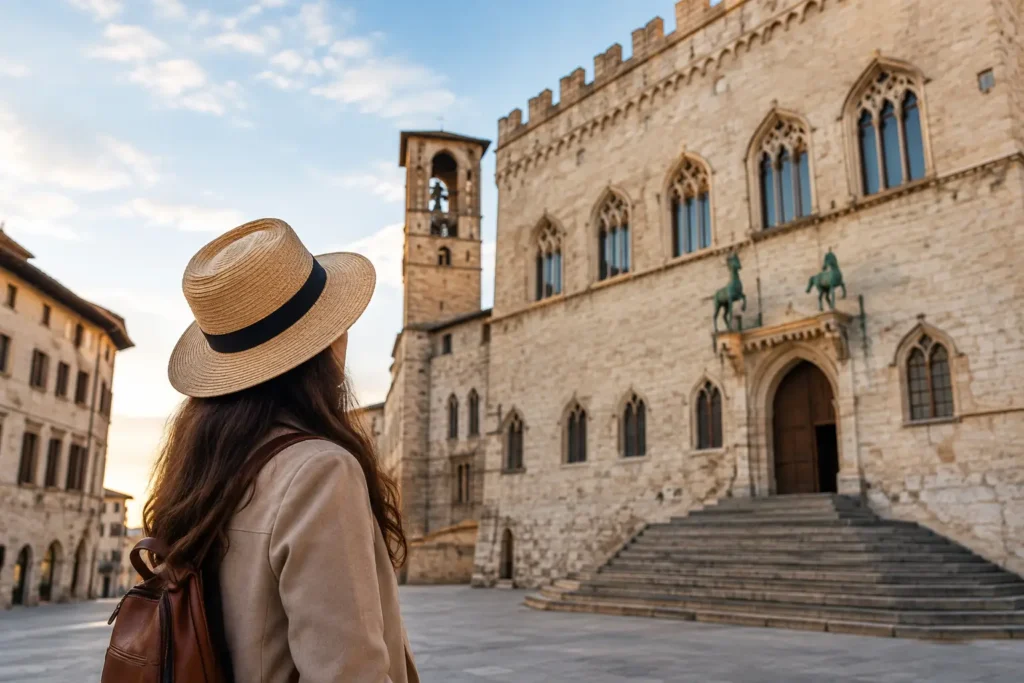
Set inside the Palazzo dei Priori, overlooking Piazza IV Novembre, the Galleria Nazionale dell’Umbria is where to begin if this is your first visit to Perugia. The palace itself sets the tone: a powerful Gothic civic building in the heart of a city that once competed with the greatest communes of central Italy.
Its collection traces Umbrian art from the Middle Ages through the Renaissance. Look for works by Perugino, Pinturicchio, and Piero della Francesca, alongside painted panels, wooden sculpture, gold-ground altarpieces, and decorative objects that reveal how faith, wealth, and civic pride shaped artistic commissions. Perugino is especially significant here. His calm figures and luminous landscapes helped define Renaissance painting, and seeing his work in his home region gives it a different weight.
This is not a museum to hurry through. If Renaissance art is a major reason for your Italian trip, allow two hours or more. Visitors with limited time can focus on the medieval rooms and the Perugino works, then step back outside for the lively atmosphere of the piazza.
2. Collegio del Cambio
A few steps from the Galleria, the Collegio del Cambio occupies rooms once used by Perugia’s money changers. It is small, so it fits easily into a packed itinerary, but its artistic importance is enormous. The audience chamber contains a celebrated fresco cycle by Perugino, completed at the end of the 15th century.
The painted program combines classical virtues, ancient heroes, religious scenes, and portraits in an elegant world of architecture and landscape. It was designed to communicate the ideals of a prosperous civic institution, not simply to decorate a room. An official guide can help bring out the details that are easy to miss: symbolic figures, political messages, and the unusual relationship between commerce and art.
Because the visit is brief, the Collegio del Cambio is ideal for travelers who want a concentrated Renaissance experience without committing to a large museum visit.
3. National Archaeological Museum of Umbria
Perugia was an important Etruscan city long before its medieval walls and palaces rose above the valley. The National Archaeological Museum of Umbria, housed in the former convent of San Domenico, gives that earlier city a clear and compelling voice.
The collection includes funerary urns, inscriptions, bronzes, ceramics, and finds from across Umbria. The Etruscan material is the main draw, yet the wider displays also show the region’s long passage through Roman and later periods. Pay attention to the carved urns. Their faces, reclining figures, and narrative scenes make ancient beliefs about family, memory, and the afterlife feel surprisingly immediate.
This museum is an especially good choice on a hot afternoon or a rainy day, when its spacious interiors offer a quieter counterpoint to the busy center. It also works well for families with older children who are intrigued by ancient civilizations, though younger visitors may benefit from a guide who can turn objects into stories.
4. Hypogeum of the Volumnis
Just outside central Perugia, in Ponte San Giovanni, the Hypogeum of the Volumnis is not a conventional museum, and that is exactly why it is memorable. This Etruscan underground tomb, dating from the Hellenistic period, was created for the wealthy Volumni family. Descending into its stone chambers offers a rare sense of entering a private ancient world.
The carved interior imitates the structure of an Etruscan house, with spaces arranged around a central atrium. Funerary urns and architectural details make clear that this was a place of commemoration as well as burial. It is best visited by taxi, car, or as part of a planned itinerary rather than as a casual walk from the historic center.
Pairing the hypogeum with the archaeological museum creates a fuller picture: first the objects and historical context, then the physical space where one influential family chose to be remembered.
5. Palazzo della Penna
For a change of period and atmosphere, Palazzo della Penna brings visitors into Perugia’s modern and contemporary cultural life. The historic building has hosted collections and exhibitions that move beyond the medieval and Renaissance story, including works connected with the Umbrian futurist Gerardo Dottori and other 20th-century artists.
This is a useful stop for travelers who enjoy seeing how a historic Italian city continues to support new ideas. Its appeal depends on the exhibitions currently on view, so check what is open during your stay. If the program suits your interests, it can add welcome contrast after a morning of sacred art and archaeology.
6. Giuditta Brozzetti Hand Weaving Museum
The Giuditta Brozzetti Hand Weaving Museum offers one of Perugia’s most personal cultural experiences. Located in the evocative former church of San Francesco delle Donne, it preserves Umbrian textile traditions through historic looms, woven patterns, and demonstrations of skilled hand weaving.
This is not simply a display of finished fabric. It is a chance to understand the patience, technique, and local motifs behind Umbrian linen and table textiles. The visit suits travelers interested in craft, design, and meaningful souvenirs, as well as those looking for an experience that feels more intimate than a major gallery.
A practical day around Perugia museums
For a well-paced cultural day, begin in Piazza IV Novembre with the Galleria Nazionale dell’Umbria. Follow it with the Collegio del Cambio while you are already in the Palazzo dei Priori area. After lunch in the historic center, walk toward San Domenico for the National Archaeological Museum, passing through streets that reveal a quieter side of Perugia.
If you have a second day, choose according to your interests. The Hypogeum of the Volumnis is the strongest choice for Etruscan history, while the weaving museum offers a distinctive local craft experience. Palazzo della Penna can be a rewarding addition when its exhibitions appeal. Trying to fit all six into one day is possible only at a fast pace, and it leaves little room for the city itself.
A private walking tour with Umbria.tours can be particularly valuable in Perugia because the city’s history is layered into its streets. A guide can connect the museum masterpieces with the Palazzo dei Priori, the Fontana Maggiore, the cathedral, medieval guilds, and the Etruscan foundations beneath the modern city.
Leave time at the end of your museum visit to stand in Piazza IV Novembre as the light changes on the stone façades. Perugia’s collections provide the context, but the city outside their doors is where its long history becomes wonderfully real.