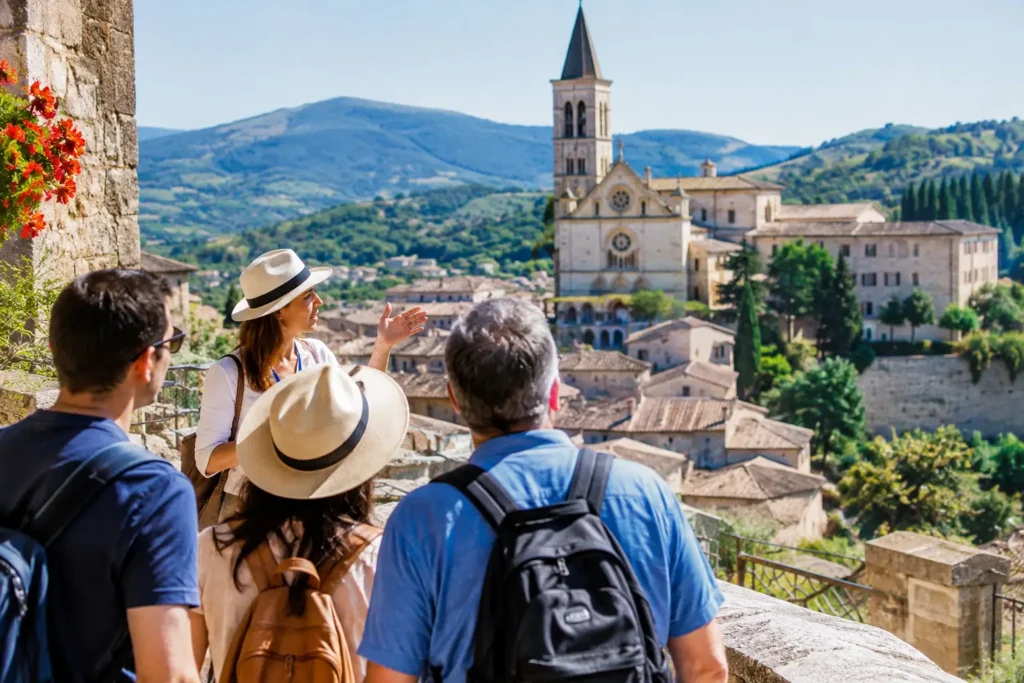
Spoleto Tours for Art, History, and Local Flavor
Spoleto does not reveal itself all at once. A Roman arch appears beside a medieval lane, an ancient theater sits below the old town, and the vast Ponte delle Torri emerges beyond the rooftops. Spoleto tours are most rewarding when they follow these connections: the people who shaped the city, the art they commissioned, and the dramatic Umbrian landscape that surrounds it.
For visitors staying in Umbria, Spoleto makes an especially satisfying destination for a half-day or full-day visit. It has the grandeur of an important historic city but retains the unhurried character of a hill town. With an official local guide, the stones, frescoes, and quiet corners become part of a story rather than a list of monuments.
Why Spoleto Deserves More Than a Quick Stop
Spoleto was a significant Roman settlement, a Lombard duchy, a papal stronghold, and later a center of artistic and religious life. Those layers remain visible, often within a few minutes’ walk. The challenge is not finding things to see. It is understanding how the Roman city became the medieval city, and why its most imposing landmarks stand where they do.
The historic center rises and falls across a hillside, so a well-planned visit also matters for comfort. Some streets are steep, and Spoleto’s monuments are spread over different levels. Escalators and moving walkways help connect the lower town with the old center, but the best route depends on your pace, mobility, interests, and how much time you have.
A private guided walk gives couples, families, and small groups the freedom to linger where it matters most. Art lovers may want more time in the cathedral; visitors interested in military history may prefer to explore the fortress in greater depth. Small-group tours are a good choice for travelers who want an expert introduction with a sociable, organized format.
The Essential Sights on Spoleto Tours
Piazza del Duomo and the Cathedral
Many visits naturally gravitate to Piazza del Duomo, one of Umbria’s most memorable squares. The cathedral, formally the Cathedral of Santa Maria Assunta, has a Romanesque facade that catches the changing light beautifully. Its setting at the foot of a sloping street creates a theatrical arrival, especially in the quieter morning or late afternoon hours.
Inside, the highlight is the apse fresco cycle by Filippo Lippi, completed in the 15th century. A guide can explain why this Florentine master was working in Spoleto, how the frescoes tell the story of the Virgin, and what to look for beyond the first impression of color and scale. Lippi himself is buried in the cathedral, linking the building directly to one of the Renaissance’s important artists.
The square is also a place to pause. Its palaces, steps, and surrounding streets show how civic life, religion, and architecture developed together. Rather than rushing onward after the cathedral, allow time to take in the view and the atmosphere of this remarkable corner of town.
The Roman Theater and Ancient Spoleto
Spoleto’s Roman theater is a clear reminder that the city was already well established long before its medieval walls and towers. The remains sit within the archaeological area below the higher reaches of the historic center, near the National Archaeological Museum. Even for travelers who have seen Roman ruins elsewhere in Italy, the theater is worth visiting for its setting and for the way it opens a window onto everyday urban life in antiquity.
A guide helps distinguish what belongs to the Roman city from later alterations. This context is valuable because Spoleto is not an open-air museum frozen in one era. Buildings were reused, streets shifted, and new powers built over the traces of earlier ones.
Rocca Albornoz and Ponte delle Torri
Above the town, the Rocca Albornoz is one of Spoleto’s defining landmarks. This 14th-century fortress was constructed during the effort to reassert papal authority in central Italy. Its scale makes sense as soon as you reach it: the Rocca commands broad views over the valley and the city below.
Close by stands Ponte delle Torri, the monumental aqueduct bridge that spans the wooded gorge. Its elegant arches are among the most recognizable images of Spoleto. The structure has undergone periods of conservation and access conditions can change, so it is wise to check the current situation when planning your visit. Even when the bridge itself cannot be crossed, the viewpoints around it remain extraordinary.
These upper-town sights require more walking than the cathedral area, but the reward is the landscape. For active travelers, this is where Spoleto’s cultural heritage meets its natural setting. For those who prefer a gentler day, a guide can shape an itinerary around the historic center and select the most accessible viewpoints.
Add Food and Everyday Umbrian Character
Spoleto is not only about monuments. Between visits, the city offers a chance to taste the ingredients that define Umbrian cooking: extra virgin olive oil, cured meats, legumes, seasonal vegetables, truffles, and local wines. A relaxed lunch can become part of the experience rather than a practical interruption between sights.
Ask for regional dishes prepared with restraint and excellent ingredients. Strangozzi pasta, often served with tomato, truffle, or olive oil-based sauces, is a good place to start. Depending on the season, menus may feature asparagus, porcini mushrooms, game, or lentils from the surrounding area. A local guide can point you toward the traditions behind the menu and help you understand what is genuinely Umbrian.
If food is a central reason for visiting, consider pairing your city walk with an olive oil tasting or a visit to a local producer elsewhere in the region. Spoleto is well placed for building a wider itinerary that includes the vineyards of Montefalco, the medieval streets of Bevagna, or the hill towns around the Valle Umbra.
How Much Time Should You Allow?
A focused walking tour of central Spoleto works well in about two to three hours. This is enough time for the cathedral, key Roman remains, major squares, and the stories that tie them together. It suits visitors with a packed Umbria itinerary or those arriving for a day trip.
Allow four to six hours if you want to include the Rocca, the Roman theater, museum time, a proper lunch, and unhurried walks through the upper town. A full day is particularly worthwhile for travelers who enjoy photography, architecture, or browsing small artisan shops without watching the clock.
Spoleto can also be combined with nearby destinations, but there is a trade-off. Pairing it with another town gives you a broader view of Umbria; giving Spoleto a full day provides a deeper understanding of one of the region’s most layered cities. For most first-time visitors, it is better to choose fewer places and experience them well.
When to Visit Spoleto
Spring and fall are ideal for walking, with mild weather and softer light on the stone facades. April through June brings green hills and a lively but manageable rhythm, while September and October offer harvest flavors and cooler days. Summer can be warm, especially at midday, so morning tours and a long lunch break are sensible.
The city is internationally known for the Festival dei Due Mondi, held each summer. Concerts, theater, dance, and exhibitions bring a special energy to the streets and piazzas. It is an exciting time to visit, but accommodation and dining reservations should be made well ahead, and the city can feel busier than usual.
Winter rewards travelers seeking quiet streets, clear views, and a more local pace. Some attractions and restaurants may keep reduced hours, so this is a season when advance planning is particularly helpful.
Choose a Tour That Fits Your Day
The right Spoleto experience begins with an honest look at your priorities. A private tour is best when you want flexibility, have particular interests, or are traveling with family or friends. A small-group tour offers excellent value and the pleasure of seeing the city through shared conversation, while still benefiting from professional local knowledge.
At Umbria.tours, guided experiences are designed around the places that make the region distinctive, with official guides who can bring art, history, local stories, and practical details together. Before booking, consider your arrival point, preferred walking pace, whether cathedral or museum interiors are a priority, and if you would like to add a food experience to the day.
Spoleto rewards curiosity. Leave a little room in your schedule for the unexpected courtyard, the view beyond a stone arch, or a quiet table overlooking the cathedral steps. Those unplanned moments often become the part of Umbria you remember most.