Umbria Food Worth Planning a Trip Around
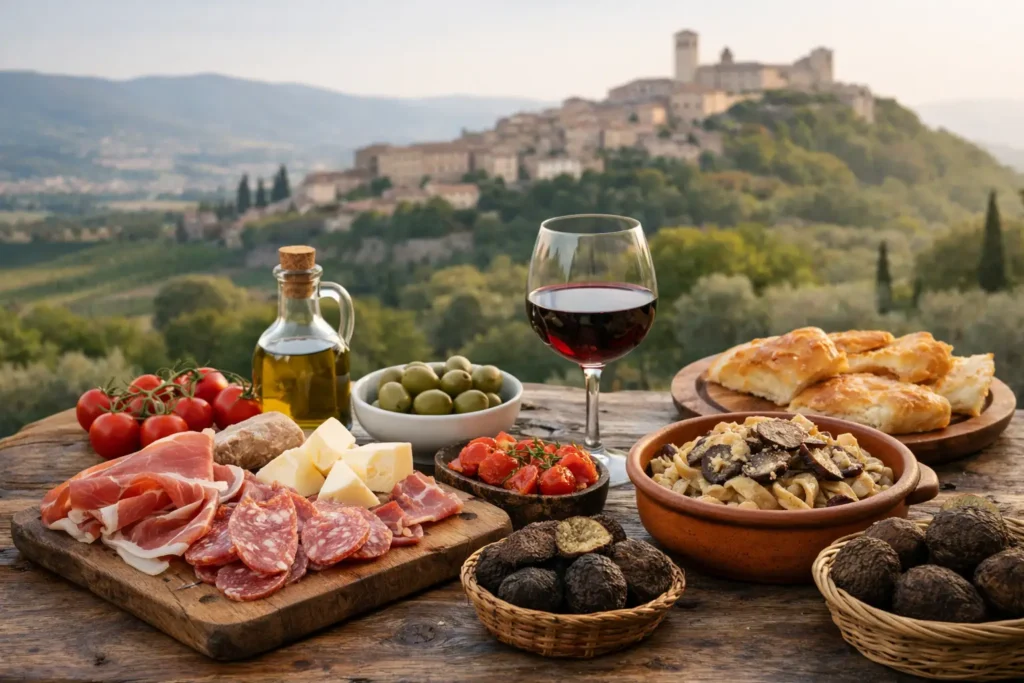
A slice of warm torta al testo, split open and filled with local pecorino, prosciutto, or sautéed greens, says more about Umbria food than a long restaurant menu. This is cooking made for people who have worked olive groves, raised pigs, gathered truffles, and returned to the table hungry. It is generous without being showy, deeply seasonal, and tied closely to the hills, woods, and medieval towns you will explore.
For travelers, that makes Umbria a particularly rewarding place to eat. The region sits in the center of Italy, but its cuisine follows its own rhythm. You will find fewer coastal fish dishes and fewer elaborate sauces than in some neighboring regions. Instead, Umbrian cooking relies on exceptional raw ingredients, confident simplicity, and recipes that have earned their place at family tables over centuries.
Umbria Food Starts With the Land
Umbria has no coastline, and that has shaped both its character and its kitchen. Its landscape of olive groves, vineyards, oak woods, pasture, and small farms supplies the essentials: extra virgin olive oil, wine, grains, legumes, pork, game, cheese, and wild herbs. A dish may arrive with only a few ingredients, but each one matters.
Olive oil is the clearest example. Around Trevi, Spello, Foligno, and along the slopes below Assisi, the harvest produces intensely fragrant oils with grassy, artichoke-like notes and a lively peppery finish. Taste it simply on toasted bread, known locally as bruschetta, and you begin to understand why Umbrians take oil so seriously. The freshest oil is usually at its best in late fall and winter, shortly after the harvest, though a good local tasting is worthwhile at any time of year.
The region’s woods bring another defining ingredient: truffles. Black truffles are especially associated with Umbria, appearing shaved over fresh pasta, folded into eggs, blended into sauces, or served with meat. White truffles are more seasonal, harder to find, and usually more expensive. If a menu seems too good to be true, ask what kind of truffle is being used. Truffle-flavored products can be enjoyable, but they are not the same experience as fresh local truffle.
The Dishes to Look For in Umbrian Towns
The best Umbrian meals often begin with bread and end with a second helping of pasta. Between those two points, there is plenty to discover.
Torta al testo and Umbrian bread
Torta al testo is one of the region’s most satisfying everyday foods. This round, unleavened flatbread is cooked on a hot stone or cast-iron griddle, then stuffed while still warm. In Perugia and the central valleys, look for fillings such as cured meats, sausage, grilled vegetables, local cheeses, or savory greens. It makes an excellent casual lunch between visits to churches, galleries, and medieval lanes.
Umbrian bread is traditionally made without salt, a custom often linked to a historic salt tax. The result can surprise first-time visitors who expect a salty loaf, but it makes sense alongside strongly flavored salumi, aged cheese, olive oil, and saucy dishes. Do not judge it on its own. Eat it as the local table intends.
Pasta with truffles, pork, and tomatoes
Strangozzi, also called stringozzi in some areas, is a long, hand-cut pasta that is central to the Umbrian table. Its texture holds sauces beautifully, whether dressed with tomato and parsley, wild mushrooms, or black truffle. In and around Spoleto, it is often served as strangozzi alla spoletina, with a straightforward tomato sauce, garlic, olive oil, and herbs.
Near Norcia, the word “norcineria” tells you that pork is serious business. The town has long been famous for skilled pork butchers and cured meats, and its name is used throughout Italy in connection with charcuterie. Pasta alla norcina combines sausage, often with cream or ricotta and sometimes truffle, into a rich dish with unmistakable mountain-country character. It is comforting, delicious, and not a meal to follow with another heavy course.
A menu may also feature umbricelli, another thick hand-rolled pasta, often dressed with a simple meat sauce or tomato. Names and shapes vary from town to town, which is part of the pleasure. Ask the restaurant what is made in-house that day rather than searching for a single definitive version.
Lentils, beans, and humble dishes with real depth
Umbria’s culinary identity is not only about truffles and cured meats. The tiny lentils of Castelluccio, grown on the high plain near the Sibillini Mountains, are prized for their delicate skin and earthy flavor. They are excellent in soups, with sausage, or served simply with olive oil.
Around Lake Trasimeno, beans, lake fish, and traditional rural dishes tell a different local story. In the Valnerina and mountain areas, mushrooms, potatoes, cheeses, and game appear more often. This is why an Umbrian food itinerary should not be planned as if every town serves the same specialties. A meal in Orvieto has a different setting and pantry from one in Norcia or along Lake Trasimeno.
Wine, Olive Oil, and the Value of a Guided Tasting
Umbrian wine deserves time beyond a quick restaurant pour. Montefalco is known for powerful Sagrantino, a deeply structured red with high tannins that suits roasted meats, aged cheeses, and long lunches. It can feel intense if you are used to lighter Italian reds, but with food and a producer’s explanation, its appeal becomes clearer. Montefalco Rosso is often a more approachable choice for a first taste.
Orvieto Classico offers a useful contrast. This historic white wine can be dry, fresh, and mineral, pairing naturally with lighter antipasti, vegetables, and local cheeses. Torgiano, near Perugia, is another important wine area, with both red and white traditions.
A visit to a vineyard or olive mill adds context that a bottle alone cannot provide. You see the slope, the soil, the harvest methods, and the people behind the label. Timing matters: olive mills are especially active during the fall pressing season, while wineries may have limited access during harvest. Booking a tasting in advance is wise, particularly for small family producers and private groups.
For visitors who want the food to come with regional history, an official local guide can make the experience much richer. A walk through Spello, Montefalco, Perugia, or Assisi can connect the olive trees beyond the walls, the market traditions in the streets, and the dishes on your plate. Umbria.tours combines this kind of local perspective with bookable food and cultural experiences, which can be especially helpful when your time in the region is limited.
How to Eat Well Without Chasing Tourist Menus
The most memorable meals are rarely found by ordering every famous item at once. Choose a restaurant with a short seasonal menu, then let the location guide you. In Norcia, prioritize pork, lentils, and mountain ingredients. In Montefalco, order dishes that welcome Sagrantino. Near Trevi or Spello, seek out the newest olive oil. In Orvieto, make room for local wine and dishes built around seasonal vegetables.
Lunch is often the easier meal for travelers. It gives you time to enjoy a proper plate of pasta and a glass of wine without driving afterward, and many small towns feel especially alive around midday. For dinner, reservations are sensible on weekends, during festivals, and in the busiest seasons. In smaller villages, restaurant hours can be less flexible than in major cities, so it pays to plan ahead.
Leave space for sweets, too. Rocciata, a rolled pastry with apples, nuts, cocoa, and spices, is associated with the Foligno and Assisi area. Tozzetti, crisp almond biscuits, are often served with a sweet wine or after coffee. These are not grand patisserie creations. Like much of Umbrian cooking, they are rooted in home baking and made to be shared.
The finest Umbria food experience is not about collecting dishes for a checklist. It is about noticing how a bowl of lentils changes in the mountains, how new olive oil sharpens a piece of bread, and how a local wine belongs to the view beyond the town walls. Give each meal enough time, ask a few questions, and let the place choose part of the menu for you.