Umbria Versus Tuscany Crowds: Which Feels Calmer?
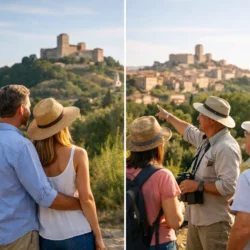
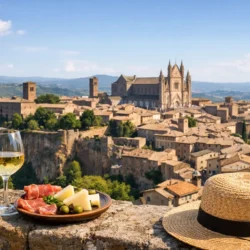
A table outside a stone-walled cafe, a bell tower above the rooftops, a glass of local wine at sunset: both regions can deliver the Italian trip people imagine. But when travelers compare Umbria versus Tuscany crowds, the difference often shapes the entire experience. Tuscany has world-famous cities, celebrated vineyards, and a powerful pull in every season. Umbria offers a similarly rich landscape of art, hill towns, food, and sacred places, often with more room to pause and take it in.
That does not mean Umbria is empty, nor that Tuscany is always overwhelming. The real question is where you are traveling, when you go, and what kind of day you hope to have.
Umbria versus Tuscany crowds: the practical difference
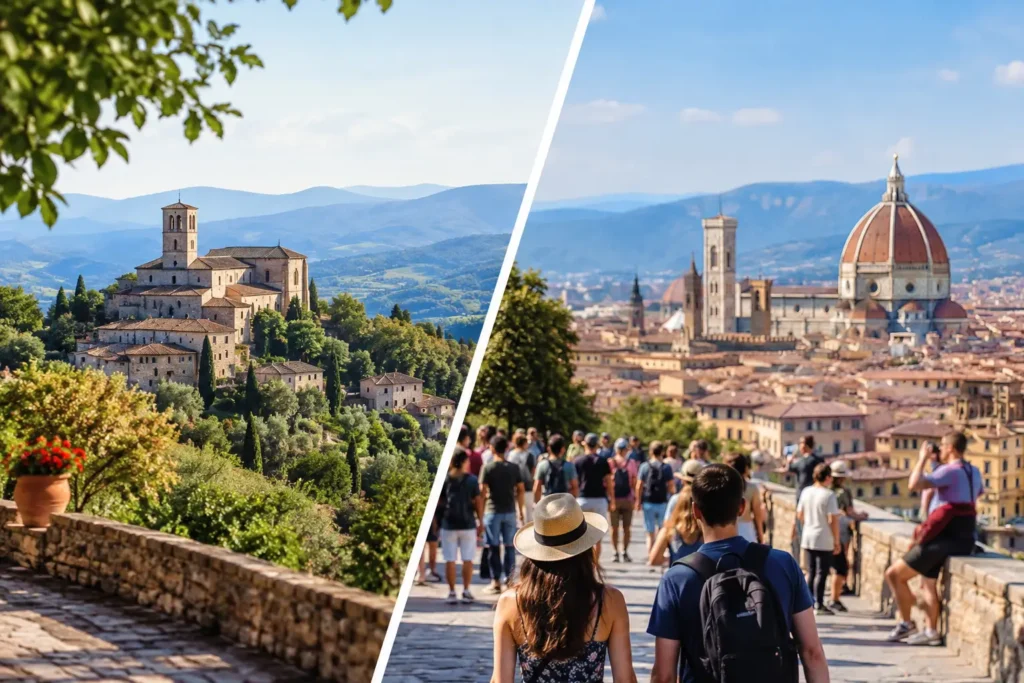
Tuscany receives a far greater volume of international visitors, particularly around Florence, Siena, Pisa, San Gimignano, Chianti, and the Val d’Orcia. In high season, its best-known squares, museums, scenic roads, and restaurant terraces can feel busy from morning until late evening. Reservations become essential, parking takes patience, and the most photographed views may come with coaches and day-trippers nearby.
Umbria has major draws of its own. Assisi welcomes pilgrims and cultural travelers from around the world; Orvieto’s cathedral attracts substantial day traffic; Perugia becomes exceptionally lively during its headline festivals. Yet outside specific events, Umbria generally feels less concentrated. Visitors spread across small cities, vineyards, villages, walking routes, and rural stays rather than gathering around a handful of globally famous highlights.
For many couples, families, and independent travelers, that distinction is less about avoiding people altogether and more about having choices. In Umbria, it is often easier to step one street away from the main monument and find a quiet lane, a local shop, or a table without a long wait. You can visit an important church in the morning, enjoy a relaxed lunch, and still have time for a slow walk through the historic center.
Why Tuscany can feel busier than its visitor numbers suggest
Tuscany’s popularity is earned. Florence holds an extraordinary concentration of Renaissance art and architecture. Siena’s medieval streets are compelling in every direction. The cypress-lined landscapes south of the city have become visual shorthand for Italy itself. The challenge is that many visitors naturally put the same places on the same short itinerary.
Crowds also cluster around access points. Florence’s central stations, major galleries, bridges, and shopping streets can be intensely busy even in shoulder season. In the countryside, a peaceful-looking village can fill quickly when several tour buses arrive at lunch. During summer weekends, popular wine towns and scenic roads may be packed with domestic visitors as well as international guests.
None of this makes Tuscany a poor choice. It simply rewards careful planning. Travelers who stay several nights, book museum entry in advance, explore early or late, and include lesser-known towns can still find its gentler side. But if your vacation time is limited and you prefer a naturally slower rhythm, Umbria may require less effort to feel relaxed.
Where Umbria is quiet, and where it is not
Umbria’s reputation as Italy’s green heart is not only about its rolling countryside. It is also about scale. Its towns are rich in history but remain places where daily life is visible: residents doing errands, neighbors talking in the piazza, and seasonal produce appearing on local menus.
Spello, Bevagna, Montefalco, Gubbio, and Spoleto all have moments of calm that can be difficult to find in Tuscany’s most famous destinations. Perugia feels more urban and energetic, particularly around Corso Vannucci and its main landmarks, but its layered streets and underground history offer plenty to explore beyond the busiest routes. In Assisi, the Basilica of Saint Francis is understandably active, while the upper lanes, quieter churches, and countryside paths can restore a sense of stillness.
Timing still matters. Assisi is busiest around religious holidays, Easter, and major pilgrimage periods. Perugia draws large crowds for Umbria Jazz in July and the Eurochocolate festival in autumn. Spello’s Infiorata, held around Corpus Christi, transforms the town with intricate floral carpets and attracts visitors from across Italy. These are memorable occasions, but they are not the dates to choose if solitude is your priority.
The trade-off is worth understanding. A festival brings music, flowers, processions, and a rare sense of local celebration. A quieter week brings easier parking, more spontaneous meals, and unhurried conversations with producers and guides. The better choice depends on what you want to remember.
The best times for fewer crowds in both regions
Late March through April and late October through early November can be especially rewarding in Umbria, with milder visitor numbers, changing landscapes, and strong seasonal food traditions. Spring brings green hills, wildflowers, and Easter events. Autumn brings grape harvest activity, olive picking, truffles, chestnuts, and new olive oil.
May, June, and September are beautiful but increasingly popular across central Italy. In Tuscany, these months can feel close to peak season in the best-known destinations. In Umbria, they are active too, especially on weekends, but a well-paced itinerary can still include peaceful mornings and uncrowded villages.
July and August demand a different approach. Heat and holiday travel increase throughout Italy, while many Italian families take their vacations in August. If these are your only travel dates, stay outside the busiest historic centers, schedule guided visits early, and leave the middle of the day for a long lunch or a cool underground attraction. Orvieto Underground and Perugia’s subterranean routes offer a fascinating change of pace when the afternoon sun is strongest.
Winter is the quietest period, apart from Christmas and New Year. Some smaller hotels, restaurants, and attractions may have reduced hours, and the weather can be cold or wet. In return, travelers can experience medieval towns with a more local atmosphere, enjoy hearty Umbrian cooking, and visit major sights with very little pressure on the day.
Choose experiences that change the pace
Crowds are not only about destination choice. They are also about how a day is designed. A rushed self-drive itinerary that attempts Florence, Siena, San Gimignano, and Chianti in two days can make even a beautiful region feel like a queue. A focused itinerary with one historic center, one food experience, and time to wander feels very different.
In Umbria, private and small-group guided walks are particularly valuable because an official local guide can put the headline monument in context, then lead you toward the details that independent visitors often miss. In Orvieto, that may mean looking beyond the cathedral facade to understand the town’s Etruscan roots and dramatic volcanic setting. In Perugia, it may mean following the layers of the medieval city beneath modern streets. In Assisi, it can mean connecting the basilica’s frescoes with Saint Francis’ story and the wider landscape of his life.
Food and wine experiences also offer a welcome alternative to crowded town centers. A visit to an olive mill during the harvest season, a tasting of Sagrantino near Montefalco, or a lunch built around Umbrian pork, lentils, truffles, and local cheeses gives the day a sense of place without following the standard sightseeing circuit.
Is Umbria the better choice for your trip?
Choose Tuscany if seeing Florence’s great museums, Renaissance masterpieces, and iconic landscapes is central to your plans. Its popularity reflects an exceptional cultural inheritance, and first-time visitors may rightly decide that its famous places are not to be missed.
Choose Umbria if you want medieval towns, sacred art, excellent regional cuisine, vineyards, and countryside with a little more breathing room. It also works beautifully alongside Tuscany rather than against it. A few days in Florence or Siena followed by time in Umbria can shift a fast-paced Italian vacation into something more balanced.
Travelers often find that Umbria offers the kind of Italy they hoped to encounter: not staged or empty, but lived-in, generous, and easier to experience at a human pace. Leave room in your itinerary for a guided walk, an unplanned piazza stop, and one village you had not expected to love. Those quieter moments are often the ones that stay with you.