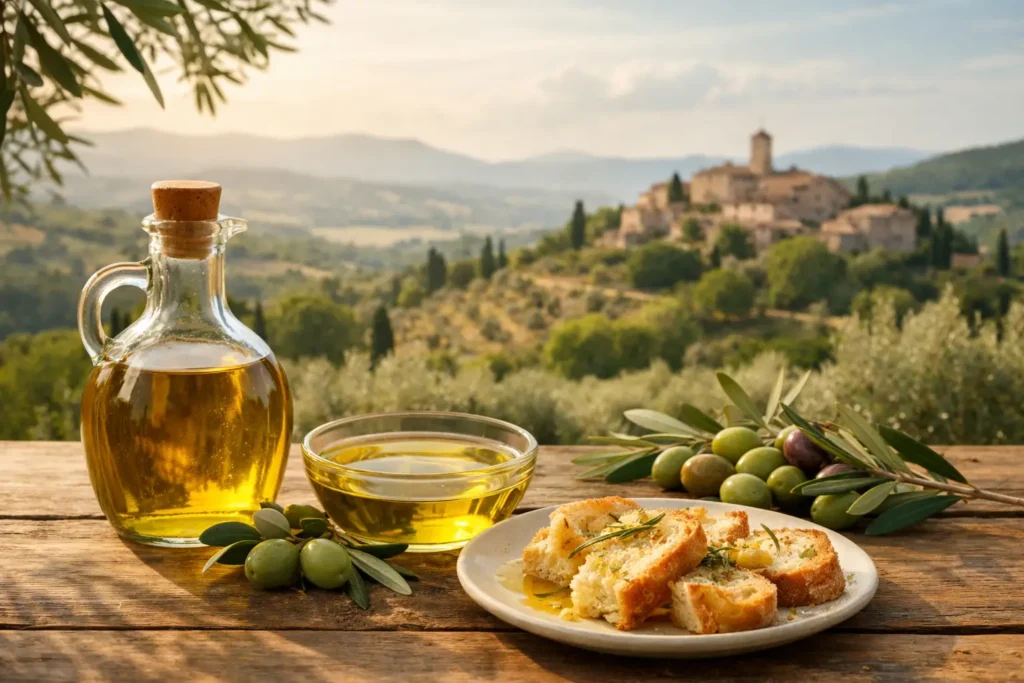
Umbrian Olive Oil and the Taste of Umbria
The first taste of Umbrian olive oil often comes with very little ceremony: a slice of warm, unsalted bread, a small pour of vivid green oil, and perhaps a pinch of salt. Yet that simple moment reveals a great deal about the region. The perfume can be fresh and herbaceous, the flavor elegantly bitter, and the peppery finish surprisingly lively. It is not merely a condiment on an Umbrian table. It is a record of hillsides, olive varieties, family work, and the timing of the harvest.
For visitors who want to understand Umbria beyond its famous basilicas, medieval lanes, and wine cellars, olive oil offers a direct route into the landscape. A tasting or mill visit turns an everyday ingredient into one of the most memorable parts of a stay in Italy’s green heart.
Why Umbrian olive oil tastes so distinctive
Umbria is a land of ridges, valleys, woods, and hill towns, and its olive groves often occupy slopes where vines, grains, and woodland meet. The region lies at the northern edge of Italy’s traditional olive-growing belt, so winters can be cold and harvest conditions demand real attention. That climate, together with altitude and soils that vary from one valley to the next, helps produce oils with freshness, structure, and character.
Many Umbrian extra virgin olive oils are known for green notes: cut grass, artichoke, almond, green tomato, or wild herbs. On the palate, bitterness and pungency are not flaws. In a well-made fresh oil, they are signs of the natural phenolic compounds that give extra virgin olive oil its lively, peppery personality. Some oils are gentler and rounder, particularly when made from riper fruit or blended for a softer style. Others bring a sharper, more assertive finish that is wonderful with grilled meats, bean soups, and bruschetta.
The exact profile depends on place, variety, season, and producer. This is why a tasting is more revealing than a label alone. Two oils from neighboring villages can taste quite different, especially when one is led by Moraiolo olives and another includes more Frantoio, Leccino, or San Felice.
The olive varieties behind the flavor
Moraiolo is often considered a defining Umbrian variety. It is well suited to hillside groves and contributes intensity, herbal aromas, bitterness, and a persistent peppery finish. Frantoio can bring fragrance and balance, while Leccino is often softer, with a more delicate fruitiness. Producers may press a single variety separately or create blends, using each olive’s qualities to achieve a desired style.
There is no single “best” Umbrian oil because the right choice depends on how you plan to use it. A bold oil can stand up beautifully to lentils from Castelluccio, steak, roasted vegetables, or a thick slice of toasted bread. A milder expression may be better with white fish, fresh ricotta, or a salad of tender leaves. Learning to recognize those differences makes shopping in Umbria much more rewarding.
Harvest time: when the region smells of olives
The olive harvest usually begins in autumn, often from late October into November, though weather, altitude, and ripeness determine the real schedule. It is one of the most atmospheric times to travel through rural Umbria. Nets appear beneath trees, crates fill with fruit, and village conversations turn to yield, rain, and the all-important moment to press.
Quality-minded producers generally move olives to the mill quickly after picking. Fresh fruit is essential. Olives left too long can begin to deteriorate, making it harder to preserve the clean aromas and vitality people expect from excellent extra virgin oil. At the mill, olives are cleaned, crushed, and turned into a paste before the oil is separated. Modern equipment can offer careful temperature control and hygienic processing, but the essential work remains tied to agricultural knowledge and quick decisions during a short, demanding season.
A freshly pressed new oil can be strikingly intense. It may look cloudy because it has not yet settled or been filtered, and its flavor can be green, spicy, and almost fiery. That is part of its appeal. If your trip falls during harvest, a visit to an active olive mill is a particularly vivid way to see local food culture in motion.
How to taste olive oil like a local
Professional tasting uses a small colored glass so appearance does not influence judgment, but visitors do not need formal training to taste attentively. Start by warming a little oil in a small cup with your hands. Cover the top briefly, then smell. Look for fresh, plant-like aromas rather than a flat or greasy scent.
Take a small sip, drawing in a little air as you taste. You may notice fruitiness first, then bitterness on the tongue, followed by pepperiness at the back of the throat. A cough is common with a fresh, high-phenolic oil and can be a very pleasant surprise once you know what it means. The aim is not to find an oil that tastes like every other oil. It is to notice balance, freshness, and the way its flavors develop.
Bread is useful after a proper tasting, but it can also hide subtleties. Try the oil first on its own, then taste it with a food that suits its style. In Umbria, that might mean a bowl of chickpeas, a plate of strangozzi pasta, grilled vegetables, or a simple soup of farro and beans.
Where olive oil belongs in an Umbrian meal
Umbrian cooking makes room for olive oil from breakfast through dinner, though its most expressive role is often at the end of preparation. A generous finishing pour can brighten a soup, give depth to legumes, or bring a glossy, fragrant edge to grilled bread. In autumn, the first new oil is celebrated on bruschetta, sometimes rubbed with garlic and served with little else.
This is also a region where oil has practical purpose. It is used in sauces, vegetable dishes, roasts, and pastries, but it is rarely treated as anonymous fat. When an oil is good, it is part of the recipe’s flavor. A local cook may choose a more assertive bottle for a hearty dish of wild greens and a gentler one for fish from Lake Trasimeno.
Food travelers can look for olive oil experiences around the region’s hill towns and countryside. The area around Trevi, Spello, Assisi, and the slopes of Montefalco is especially closely associated with olive groves, while mills and producers can be found across Umbria. Combining a tasting with a guided walk through an historic town creates a fuller picture: the stone walls, views, religious art, fields, and food traditions all belong to the same landscape.
Buying Umbrian olive oil to take home
A beautiful bottle makes an appealing souvenir, but a few details help you choose well. Look for extra virgin olive oil with a clear producer name, harvest information when available, and a bottle that protects the oil from light. Dark glass or a metal tin is preferable to clear glass. If you have tasted before buying, trust your palate as well as the label.
Protected designation labels can offer useful reassurance about origin and production rules, but they are not the only mark of quality. Small producers may make excellent oils outside a particular designation, and blends can be every bit as compelling as single-variety bottlings. Ask about the olive varieties, harvest period, and intended food pairings. Those questions often lead to the most interesting conversation at a mill or tasting table.
Once home, store the oil in a cool, dark cupboard, away from the stove and direct sun. Buy a quantity you will enjoy while it is fresh rather than saving a prized bottle indefinitely. Olive oil does not improve with age like wine. Its brightest flavors are there to be used.
Make time for the story behind the bottle
An olive-oil tasting is especially valuable when time in Umbria is limited. It gives context to meals you will eat throughout the trip and introduces you to a side of the region that is easy to miss from the road. With a local guide, a mill visit can also become a conversation about rural life, seasonal rhythms, and the traditions that connect a family grove to a plate in a village trattoria.
Whether you taste a vivid new oil during harvest or a carefully stored bottle in spring, pause over that peppery final note. It is one of Umbria’s clearest expressions of place, and a small, delicious reason to look more closely at the countryside between its famous towns.