
Related Posts
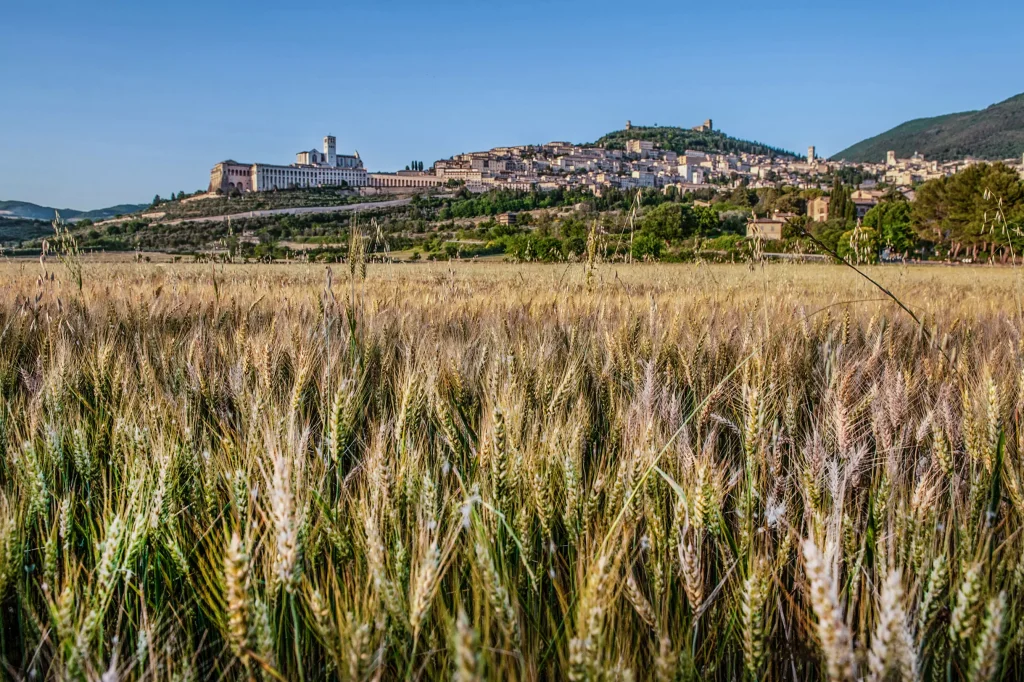
Assisi can seem familiar before you arrive. The name brings to mind St. Francis, the great basilica, and a hill town of pale stone above the Umbrian plain. Yet a private guided Assisi walking tour reveals a more layered place: a Roman town beneath medieval streets, a living center of faith, and a community whose views, alleys, and small details reward unhurried attention.
For travelers with limited time in Umbria, private guiding turns a visit into an experience shaped around what matters to you. You may want to understand Franciscan history, spend more time with Giotto’s frescoes, find the quiet corners beyond the main square, or simply walk at a comfortable pace with someone who knows the city well. Assisi offers all of this, but its stories are easier to grasp when they are connected by an official local guide.
The Basilica of St. Francis is rightly the essential stop. It holds extraordinary art, powerful religious meaning, and the tomb of the saint whose message continues to draw visitors from across the world. A good visit is not just a matter of entering the building. It is about understanding why the basilica was built where it was, how the lower and upper churches create different atmospheres, and what the fresco cycles meant to the people who first encountered them.
A private guide can bring focus to this visit. Rather than trying to absorb every artwork at once, you can follow the details that interest you most: the life of St. Francis, the artistic innovations associated with Giotto and his contemporaries, or the relationship between images, pilgrimage, and prayer. If religious heritage is central to your trip, there is room for thoughtful context. If art is your priority, the conversation can lean toward technique, patrons, symbolism, and the shift toward more human storytelling in medieval painting.
Beyond the basilica, Assisi keeps unfolding. Piazza del Comune stands on the footprint of the ancient Roman forum, with the remarkably preserved Temple of Minerva facing the square. Its classical columns are a striking reminder that the city existed long before Francis was born. Nearby streets lead past stone houses, small churches, craft shops, and viewpoints that open suddenly toward Monte Subasio and the wide Umbrian valley.
This is where a private walk is particularly valuable. Assisi is compact, but it is not flat, and its historic center contains many possible routes. An experienced guide can create a logical walk that combines major landmarks with the less obvious places that give the town its character.
No two visitors come to Assisi with exactly the same interests. A couple on a first trip to Italy may wish to see the city’s defining monuments and enjoy a relaxed introduction. A family may need frequent pauses, a route with manageable hills, and stories that bring history to life for younger travelers. A small group of art lovers may prefer a more detailed look at frescoes and Roman remains.
Your itinerary can be shaped around these differences. It may include the Basilica of St. Francis, Piazza del Comune, the Temple of Minerva, the Cathedral of San Rufino, and the Basilica of St. Clare, where the saint’s story offers another essential perspective on Assisi. St. Clare was not simply a figure beside Francis. Her spiritual strength and the community she founded are part of the city’s identity.
Time permitting, a guide may also lead you through quieter residential lanes or toward a panoramic point beyond the busiest route. These moments are often what travelers remember most clearly: a carved doorway overlooked by hurried passersby, the sound of bells across the rooftops, or a view that explains why this hilltop setting has inspired pilgrims for centuries.
Private does not mean rushed or overly formal. It means that the pace belongs to your party. You can pause for photographs, ask questions as they arise, spend longer in a church, or stop for a coffee when the day calls for it. That flexibility is especially useful in Assisi, where the steep stone streets can make a fixed group schedule feel demanding.
Before booking, consider what you want your time in Assisi to accomplish. A shorter introduction works well if Assisi is one stop in a wider Umbrian itinerary or a day trip from another central Italian destination. It can provide an excellent overview of the basilica, the historic center, and the city’s main stories.
A longer private visit is worth considering if this is a destination you have anticipated for years, or if you are especially interested in sacred art and Franciscan history. The basilica alone deserves time, and Assisi is best appreciated when there is space to wander between important sites rather than moving straight from one monument to the next.
Mobility should also shape the plan. The town’s paving is uneven in places, and there are slopes and steps. Comfortable shoes are essential, particularly in warmer months when the stone streets reflect the afternoon sun. A private guide can often adapt the route, but it is best to share mobility needs in advance so the experience is designed with care.
The season changes the rhythm of the town. Spring and fall offer pleasant walking weather and clear views across the countryside. Summer mornings are usually more comfortable than the middle of the day, while winter can bring a quieter, more contemplative atmosphere. Religious celebrations and major holidays can add a special sense of occasion, though they may also mean larger crowds or changes to access at places of worship.
Assisi has powerful visual appeal even for an independent visitor. You can admire the basilica, walk through the squares, and enjoy a meal with a beautiful view. What is harder to find on your own is the thread that joins the places together.
An official guide provides that thread with informed, accessible storytelling. The goal is not to overload the walk with dates and names. It is to show how Roman Assisi, medieval civic life, the rise of the Franciscan movement, and the city’s artistic legacy meet in the streets around you. A guide can also help distinguish a famous monument from a meaningful one, because the smaller church or overlooked medieval detail may be exactly what gives context to the landmark you came to see.
Local knowledge is practical as well as historical. It helps you use your time wisely, understand the atmosphere of religious sites, and recognize when a quieter street offers the better experience. For visitors who prefer the confidence of a professional while still wanting a personal, welcoming day, this is the difference between simply checking off Assisi and truly meeting it.
At Umbria.tours, private experiences are led by official local guides who share the region through its art, history, and everyday character. The approach is personal, but it remains grounded in the knowledge that makes a place like Assisi intelligible and memorable.
The most rewarding private walks leave a little room for the unexpected. You may see sunlight changing the color of the stone at the end of an alley, hear a guide explain an inscription you would never have noticed, or find that a viewpoint over olive groves stays with you as strongly as the great basilica.
Assisi asks for curiosity more than speed. Choose a route that matches your interests, wear shoes made for its hills, and allow enough time to listen as well as look. Then the city of St. Francis becomes not just a famous stop in Umbria, but a place whose stories continue with you long after the walk is over.