Related Posts

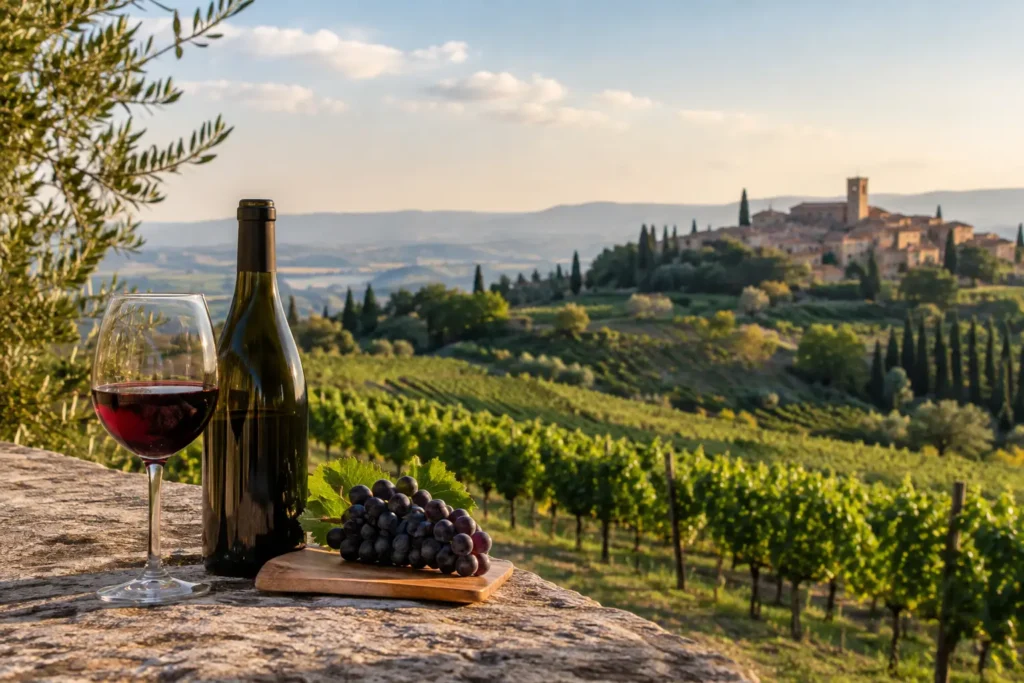
A vineyard visit in Umbria is rarely only about the wine in your glass. It may begin on a ridge above medieval Montefalco, with olive groves and the Apennines in the distance, or in the volcanic soils beneath Orvieto’s dramatic cathedral. This Umbrian vineyard guide will help you choose the right wine area, understand what makes its bottles distinctive, and build a tasting into a day that feels connected to the region.
Umbria is often described as Italy’s green heart, but its wine country has many personalities. Some estates are small and family-run, with a host pouring wines beside the cellar door. Others are historic producers with carefully designed tasting rooms, vineyards, and restaurants. The best choice depends on whether you are looking for a serious introduction to native grapes, a relaxed countryside lunch, or a cultural stop between visits to towns such as Assisi, Spello, Orvieto, and Perugia.
Montefalco is the essential destination for travelers who want to understand Umbrian red wine. The town sits high above a patchwork of vines and is often called the balcony of Umbria for its wide views across the valley. Its historic center is worth time in its own right, particularly before or after a tasting, when the quiet stone lanes and piazzas reveal a more intimate side of the region.
The grape to know here is Sagrantino. It produces deeply colored, structured wines with firm tannins, dark fruit, spice, and sometimes notes of tobacco or dried herbs. Montefalco Sagrantino DOCG can be powerful when young, so do not expect every bottle to be an easy aperitif wine. At its best, it is memorable with roasted meats, game, aged cheeses, and the slow meals that Umbrian kitchens do especially well.
If a full-bodied red is not your preference, ask to taste Montefalco Rosso. Usually based on Sangiovese alongside Sagrantino and other permitted varieties, it is often more immediately approachable while still reflecting the area’s warm days and clay-rich soils. Some wineries also make Passito, a sweet wine from dried Sagrantino grapes. It can be a wonderful finish with chocolate, biscotti, or blue cheese.
Orvieto offers a very different setting and style. The city rises from a volcanic tufa rock outcrop, crowned by one of Italy’s most remarkable cathedrals. Vineyards spread across the surrounding hills in Umbria and neighboring Lazio, where the famous Orvieto DOC is made primarily from white grapes including Grechetto and Trebbiano.
Orvieto wines can range from crisp and light to richer, more textured expressions, depending on the producer and vineyard site. Look for fresh citrus, white flowers, orchard fruit, and a mineral edge that makes these wines particularly welcome at lunch. They pair naturally with antipasti, freshwater fish, vegetable dishes, and local cheeses.
A tasting around Orvieto works especially well for visitors who want to combine wine with art and history. Plan enough time for the cathedral, the underground passages, or a walk through the medieval streets. A vineyard appointment outside the city gives the day a welcome change of pace after the drama of the historic center.
Between Perugia and Assisi, Torgiano is one of Umbria’s most established wine names. Its gently rolling landscape makes it an easy addition to an itinerary based in Perugia, and its producers have played an important role in bringing Umbrian wines to international attention.
Torgiano Rosso Riserva DOCG is the region’s other leading red denomination alongside Montefalco Sagrantino. It is generally centered on Sangiovese and may feel more familiar to visitors who enjoy Tuscan reds, though it retains its own Umbrian character. Expect balanced acidity, red fruit, earthiness, and savory notes that work beautifully with pasta dishes, grilled meats, and truffles when they are in season.
This area also demonstrates why it is worth tasting more than one producer. Winemaking choices matter: oak aging, vineyard elevation, harvest timing, and the proportion of supporting grapes can produce very different styles from the same denomination.
The vineyards near Lake Trasimeno are ideal for travelers who prefer quieter roads, lakeside scenery, and a less formal wine day. The local grape Gamay del Trasimeno, which is genetically closer to Grenache than to French Gamay, can make fragrant reds and rosés with bright berry flavors and gentle spice. It is an appealing choice in warm weather and a refreshing contrast to Sagrantino’s intensity.
Elsewhere, seek out Grechetto, one of Umbria’s signature white grapes. It can be lively and easy-drinking, but quality examples offer more depth, with almond, pear, herbs, and a pleasing texture. You may also encounter wines made from Trebbiano Spoletino around Spoleto, an increasingly interesting white variety that can show freshness, structure, and real aging potential.
The most rewarding tastings are usually booked in advance. Many Umbrian wineries remain working agricultural estates rather than walk-in visitor attractions, particularly smaller family producers. An appointment ensures that someone can welcome you properly, explain the wines in English where available, and often show you the cellar or vineyards.
Think about the kind of visit you want. A short, focused tasting may suit a day already filled with sightseeing. If wine is the main purpose, choose an estate offering a vineyard walk, cellar visit, and food pairing. A lunch at a winery can be especially rewarding, though it is wise to leave time afterward rather than schedule a long drive or a museum entry immediately after.
There are practical trade-offs. Montefalco is an excellent choice for serious red wine, but its bolder wines may be less appealing for visitors seeking only light whites and rosés. Orvieto is better for a mixed day of monument visits and wine, although tasting rooms and vineyards can be spread beyond the city. Lake Trasimeno offers a relaxed setting, but it may require more planning if you are staying on the eastern side of Umbria.
For couples and small groups, a private driver or guided food-and-wine experience can make the day more relaxed. It removes the concern of driving after tasting and adds the local context that turns a bottle into a story about soil, family, season, and place. Umbria.tours can help visitors pair a regional wine experience with guided time in the towns nearby.
Wine is best understood here at the table. Umbrian cooking is direct, seasonal, and rooted in the land, with olive oil, legumes, cured meats, mushrooms, truffles, and pork appearing often. Montefalco Rosso is a natural companion for strangozzi pasta with tomato sauce or sausage. Mature Sagrantino has the depth for wild boar, lamb, or a plate of aged pecorino.
For white wines, Grechetto and Orvieto are excellent with bruschetta dressed in new-season olive oil, bean soups, roast chicken, and local cheeses. A chilled Gamay del Trasimeno rosé belongs on a sunny terrace with salumi and views of the lake. If you visit in autumn, ask about seasonal dishes with porcini mushrooms or black truffle, which can bring an earthy dimension to both white and red pairings.
Do not overlook olive oil tasting, either. In Umbria, wine and oil landscapes often sit side by side, and learning to recognize fresh oil’s grassy, peppery character adds another layer to a vineyard day.
Spring offers green hills, wildflowers, and comfortable conditions for cellar visits and walks among the vines. April through June is especially pleasant for travelers who want to combine wine with towns and outdoor activities without the peak summer heat.
Summer brings long evenings, festivals, and a more energetic atmosphere, but reservations become more important. Vineyard visits are often best scheduled in the morning or later afternoon. September and October are harvest months, full of anticipation and activity. They can be thrilling times to visit, though some wineries may have limited flexibility because production comes first.
Late autumn and winter are quieter, with fewer crowds and a more contemplative appeal. This is a strong season for red wine lovers, truffle dishes, and slow lunches by a fireplace. The vines may be dormant, but the cellar is still very much alive.
A good Umbrian wine day does not need to chase the greatest number of labels. Choose one area, leave room for a village walk and a proper meal, and let the landscape explain what the glass cannot say on its own.