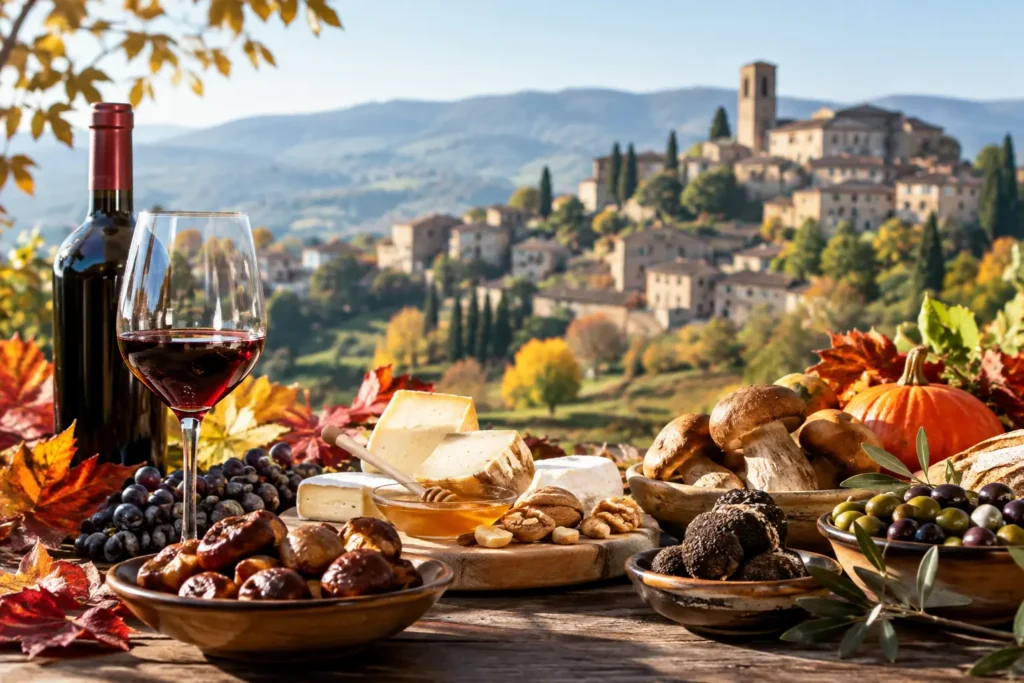
Autumn Food Festivals in Umbria Worth Planning For
By late September, the air in Umbria begins to smell different. Wood smoke drifts through stone lanes, new olive oil appears on bruschetta, and village squares fill with long tables, music, and conversations that continue well after dinner. Autumn food festivals in Umbria are not polished food fairs designed for spectators. They are seasonal gatherings tied to the harvest, local recipes, and the people who produce them.
For visitors, this is one of the most rewarding times to travel through Italy’s green heart. The landscape is still generous with color, summer crowds have eased, and many of the region’s most memorable flavors are at their freshest. A festival can become the highlight of a day spent visiting Assisi, wandering the medieval streets of Spello, or tasting Sagrantino near Montefalco.
What makes Umbrian autumn festivals special
Umbrian food is built on excellent ingredients treated with respect: extra-virgin olive oil, black truffles, legumes, cured meats, game, wine, chestnuts, and seasonal vegetables. In autumn, those ingredients are not simply placed on a menu. They become the reason for a celebration.
The Italian word sagra usually describes a local festival centered on a product, dish, or patron tradition. Some events are small and deeply local, with handwritten menus and communal tables. Others, such as olive-oil weekends and established truffle markets, attract visitors from across Italy and abroad. Both have their appeal.
A smaller village sagra may offer the warmest sense of place, but it can require patience with queues, Italian-only menus, and limited parking. A larger event is often easier to navigate and may include tastings, producers’ stalls, cooking demonstrations, and organized transportation. The best choice depends on whether you are looking for a relaxed local evening or a fuller food-focused day out.
Olive oil season: Frantoi Aperti and the new harvest
The olive harvest is one of Umbria’s defining autumn moments. Between late October and November, mills begin pressing freshly picked olives, producing oil with an intense green color, peppery finish, and grassy aroma. For anyone who has only tasted supermarket olive oil, the first spoonful of new Umbrian oil can be a revelation.
Frantoi Aperti, or Open Olive Mills, is among the region’s best-known autumn programs. Participating towns and olive mills welcome visitors for tastings, harvest activities, walks among the groves, and regional food events. The program changes from year to year, so it is wise to confirm the current schedule before building an itinerary around a particular mill or town.
Trevi is especially associated with high-quality olive oil and makes a natural stop for travelers exploring the central valley. Spello, Assisi, and the hills around Lake Trasimeno also offer beautiful olive-growing landscapes. A guided visit adds useful context: how the olives are harvested, why pressing quickly matters, and how to recognize bitterness and pungency as signs of fresh, well-made oil rather than flaws.
How to taste new olive oil
Do not save the oil only for salad. In autumn, look for it on warm bread, grilled vegetables, bean soup, roasted potatoes, or simple bruschetta rubbed with garlic. Taste it slowly. A lively tickle at the back of the throat is common with fresh extra-virgin olive oil and is part of its character.
If you visit a mill, bring a light jacket and shoes suitable for uneven ground. Harvest activities can take place outdoors, and small historic towns are best explored on foot.
Truffle fairs in the hills and medieval towns
Autumn is also truffle season, particularly for black truffles, although the exact varieties and peak periods vary by area. In Umbria, truffles are often used with admirable restraint: shaved over eggs, folded into pasta, paired with meat, or stirred into warm sauces that allow the aroma to lead.
Gubbio, with its dramatic medieval center climbing the slope of Mount Ingino, is a wonderful place to look for truffle events and seasonal menus. Other hill towns and rural communities host markets or exhibitions where visitors can meet producers, buy truffle products, and sample dishes prepared for the occasion.
There is a practical distinction worth making. Fresh truffles are precious and highly seasonal, while many jars, oils, and sauces sold at festivals are flavored products. They can be enjoyable souvenirs, but they do not offer the same experience as fresh truffle shaved over a hot dish. Ask what variety is being used, whether it is fresh, and where it was sourced. A good producer will be happy to explain.
For a more complete day, combine a food event with a guided walk through a historic center. In Gubbio, Roman remains, medieval palaces, and narrow streets provide the setting; the truffle lunch gives the visit its autumnal flavor. This is the pleasure of traveling in Umbria: history and food rarely sit in separate compartments.
Chestnuts, woods, and village cooking
As temperatures cool, the wooded hills of northern and central Umbria take on shades of copper and gold. Chestnut festivals celebrate a product that once mattered greatly to mountain communities, where chestnut flour and preserved chestnuts helped sustain families through winter.
Events in villages around the region may feature roasted chestnuts, castagnaccio cakes, handmade pasta, mushrooms, polenta, and local wines. Montone and other hill towns are known for autumn gatherings that bring the forest into the square, often with artisan stalls and traditional music.
These are particularly enjoyable for families and travelers who prefer an unhurried evening. Arrive before the busiest dinner hour, take time to explore the town first, and then settle in for a meal. Festival food is often served on a simple menu with a limited number of dishes. That is usually a good sign: the kitchen is focusing on recipes it knows well.
Wine festivals around Montefalco and Bevagna
Montefalco is inseparable from Sagrantino, Umbria’s powerful, age-worthy red wine. The vineyards around the town are beautiful in fall, and the harvest brings tastings, winery visits, and seasonal restaurant menus built around roasted meats, wild game, legumes, and local cheeses.
Sagrantino is structured and tannic, so it is not always the easiest wine for a casual afternoon tasting. If you prefer something lighter, ask for Montefalco Rosso or a local white wine. The right tasting should feel welcoming, not like an exam, and a knowledgeable host can help you understand why Sagrantino has become one of the region’s signature wines.
Nearby Bevagna offers another kind of pleasure: an exceptionally well-preserved medieval town where you can enjoy a slow stroll before dinner. The combination of wine country, Roman traces, and quiet stone streets makes this area ideal for couples and small groups who want to spend a full day beyond the better-known cities.
Perugia’s larger food events
Perugia, Umbria’s lively regional capital, is often home to larger food-centered events in the fall, including chocolate celebrations and seasonal markets. These occasions can be fun, energetic, and easy to reach for travelers staying in the city or arriving by train.
They are also different from a village sagra. Expect more people, more commercial stands, and a busier urban atmosphere. If your priority is a festive day with a wide choice of tastings, Perugia is an excellent option. If you are seeking a harvest dinner among locals, plan an additional evening in a smaller town.
Perugia also works well as a base for combining food with art and history. Before following the scent of chocolate or roasted chestnuts, make time for the Etruscan walls, the underground passages of Rocca Paolina, and the elegant center around Piazza IV Novembre.
Planning a festival-focused autumn itinerary
Festival dates, opening hours, and participating producers can change due to harvest conditions, weather, or local scheduling. Check details close to your travel dates, especially for smaller events. In rural areas, having a car is helpful, though not always essential if you choose a guided experience or stay near a rail-connected city.
Book accommodation early for weekends in October and November, particularly around popular olive-oil programs and wine areas. Historic centers have limited parking, so allow extra time and use designated lots outside the walls where available. Comfortable walking shoes matter more than formal footwear on Umbrian cobblestones.
It is also worth planning meals with moderation. A day that includes an olive-oil tasting, winery visit, and full festival dinner can be wonderfully memorable, but it can also be a lot. Leave room for a quiet lunch, a countryside walk, or an hour in a museum. Umbria rewards travelers who do not rush from one tasting table to the next.
For visitors who want the local stories behind the flavors as well as the flavors themselves, an official guide can make the experience richer. Umbria.tours can help pair major destinations with food and wine activities, allowing you to enjoy the season without losing time to uncertain logistics.
Choose one festival as the anchor for your day, then let the roads, hill towns, and harvest scents lead you the rest of the way. The most satisfying autumn meal in Umbria is often the one you find after you have stopped trying to hurry.