
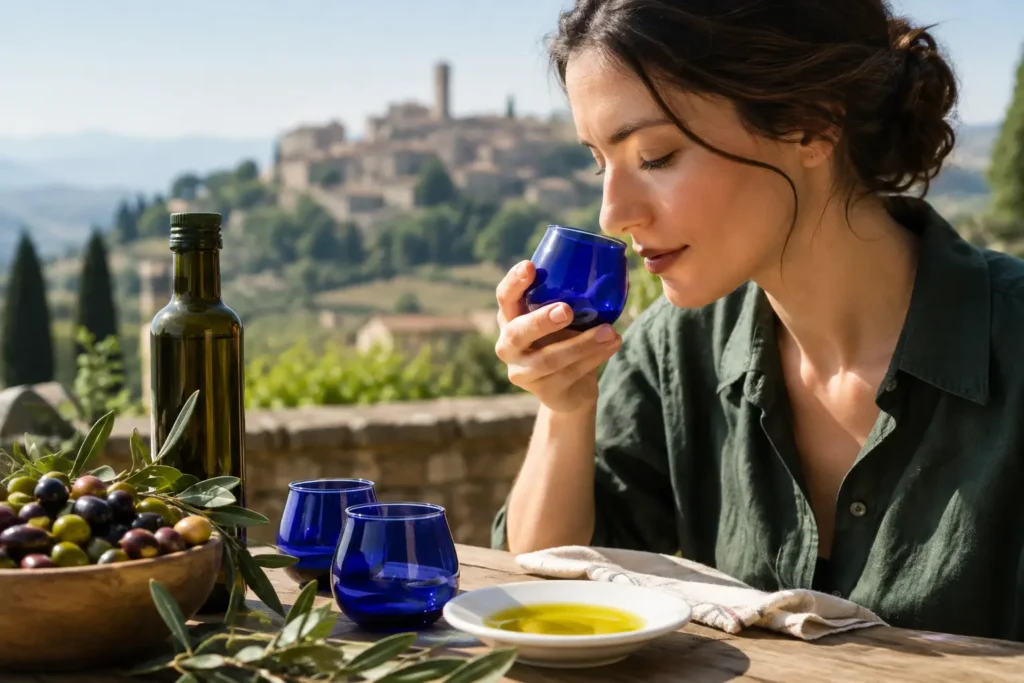
How to Taste Olive Oil Like an Umbrian Local
A good Umbrian extra virgin olive oil can change character in a few seconds. First it may smell like freshly cut grass, artichoke, tomato leaf, or green almond. Then comes a clean bitterness on the tongue, followed by a peppery tickle in the throat. Knowing how to taste olive oil helps you recognize those qualities and makes every meal in Umbria, from a simple bruschetta to a bowl of lentils, more memorable.
Olive oil tasting is not reserved for producers or professional panels. It is a straightforward sensory exercise, and the best place to start is with curiosity. You do not need a formal blue tasting glass, a vocabulary book, or a pantry full of bottles. You only need a small amount of oil, a clean glass, and a few quiet minutes.
Why Olive Oil Tastes So Different in Umbria
Umbria is Italy’s only landlocked region, but olive trees have shaped its hillsides for centuries. Groves surround villages such as Trevi, Spello, Assisi, and the slopes above Lake Trasimeno, where altitude, soil, exposure, and local varieties all influence the final oil.
Many Umbrian oils are known for their green, lively character. They can be intensely herbal, with notes of artichoke, chicory, almond, and wild greens. The bitterness and pepperiness that surprise first-time tasters are not mistakes. In a fresh, well-made extra virgin olive oil, they often indicate the presence of natural phenolic compounds, particularly in oil pressed from olives harvested while still green.
That does not mean every good oil should taste fiercely bitter. Style varies by variety, harvest date, and producer. A softer oil can be excellent with delicate fish or fresh cheese, while a more assertive oil brings energy to grilled meats, bean soups, and toasted bread. Tasting gives you the confidence to choose the right oil for the dish rather than treating all bottles as interchangeable.
How to Taste Olive Oil Step by Step
Professional tasters use a standardized approach, but you can follow the same essential method at home or during a visit to an olive mill.
Start with a small pour
Pour about a tablespoon of olive oil into a small, clean glass. A stemless wine glass or a small tumbler works well. Professionals use cobalt-blue glasses so color does not influence judgment, but at home it is fine to notice the color as long as you do not use it as a measure of quality.
Oil may range from golden yellow to bright green depending on the olive variety and filtering. A greener oil is not automatically fresher or better. Aroma and flavor tell a far more useful story.
Warm the glass in your hand
Cover the top of the glass with one hand and cup the base with the other. Gently swirl the oil for 20 to 30 seconds. Your hand warms it slightly, allowing the aromatic compounds to rise.
Lift your covering hand and smell deeply. Do this before tasting. Ask yourself a simple question: does the aroma feel fresh and alive? You may recognize cut grass, herbs, apple, green banana, tomato vine, olive leaf, artichoke, or nuts. There is no prize for naming the exact note. The point is to pay attention to whether the aroma is clean, pleasant, and expressive.
Sip, then draw in a little air
Take a small sip, around half a teaspoon. Hold the oil in your mouth and move it across your tongue. Then draw in a little air through your teeth, as though quietly slurping soup. This may feel unusual at first, but it spreads the oil across your palate and releases more aroma through the back of your nose.
Notice the texture. Is it light and fluid, creamy, or almost buttery? Then focus on flavor. Is the oil green and grassy, fruity and mellow, or nutty and sweet? Does it remind you of vegetables, herbs, citrus peel, or almonds?
Notice bitterness and pepperiness separately
Bitterness is generally perceived on the tongue, while pepperiness arrives later in the throat. A brief cough can be a perfectly normal response to a fresh, high-phenolic olive oil. In Italy, you may hear people affectionately refer to this pleasant throat sensation as pizzicore.
Neither quality should feel harsh or unpleasantly aggressive. Balance matters. A fine oil brings fruitiness, bitterness, and pungency together in a way that feels clear rather than clumsy. After swallowing, pause for a moment. The finish should be clean and should leave you wanting another taste, not a drink of water to cover a flaw.
The Three Positive Qualities to Look For
When tasting extra virgin olive oil, keep three words in mind: fruitiness, bitterness, and pungency. They are the foundation of a useful tasting note.
Fruitiness describes the fresh aroma and flavor of healthy olives. It can be green and vegetal, or riper and softer. An oil smelling of fresh leaves and artichoke may be intensely green-fruity, while one suggesting almond or apple may feel more rounded.
Bitterness is a taste, not a defect. In a well-balanced oil it gives shape and length, much as pleasant bitterness does in radicchio, dark chocolate, or good coffee. It is often more pronounced in early-harvest oils.
Pungency is the peppery, warming sensation in the throat. It can be gentle or powerful. A bold Umbrian oil may make you cough once or twice, particularly when it is newly pressed. That lively sensation often fades gradually as the oil ages.
How to Spot Olive Oil Defects
Tasting also helps you avoid disappointing bottles. Fresh olive oil should never smell stale, musty, or greasy. Some defects are easier to recognize once you have smelled a truly fresh oil beside an older or poorly stored one.
Watch for these four warning signs:
- Rancid: smells like old nuts, crayons, stale frying oil, or wax. This develops as oil oxidizes.
- Fusty: has a fermented, muddy, or overripe odor, often caused when olives sit in piles too long before milling.
- Musty: suggests a damp cellar, mold, or wet cloth.
- Winey or vinegary: has a sharp fermented smell reminiscent of vinegar or wine.
A cloudy appearance is not necessarily a defect, and neither is a deep green color. Filtered oil often keeps longer because small particles and moisture have been removed, while unfiltered oil can be appealing when very fresh but needs careful storage and prompt use.
Taste Oil with Food, but Taste It Alone First
Bread is a beautiful way to enjoy Umbrian olive oil, but it can hide details during a first tasting. Taste the oil on its own before pairing it with food. Then try it on warm, unsalted bread and see how the flavors change.
A grassy, peppery oil is especially good with grilled vegetables, farro, chickpeas, roasted potatoes, and soups made with Umbrian legumes. A gentler, rounder style can suit white fish, mozzarella, delicate salads, or cake. There is no single perfect pairing, since the intensity of both the food and the oil matters.
At an olive mill, ask which varieties were used, when the olives were harvested, and whether the oil is a single variety or a blend. These small details turn a tasting into a clearer picture of the landscape around you. A local producer can often explain why oil from one hillside tastes brighter or more peppery than oil from a nearby valley.
Store Your Olive Oil So It Stays Worth Tasting
Even an exceptional oil loses character when exposed to light, heat, and air. Keep it in a dark cupboard away from the stove, with the cap tightly closed. Dark glass or a tin is preferable to clear glass, and buying a size you will use within a few months is often wiser than saving a large bottle for a special occasion.
Check the harvest date when it is available. Olive oil is a fresh agricultural product, not a bottle to age indefinitely. The best moment to enjoy its vibrant aromas is usually sooner rather than later.
The next time you sit down to an Umbrian meal, pour a little oil into a glass before it reaches the table. Smell it, taste it slowly, and let its bitterness and peppery finish tell you something about the olives, the harvest, and the hills where they grew.