Related Posts
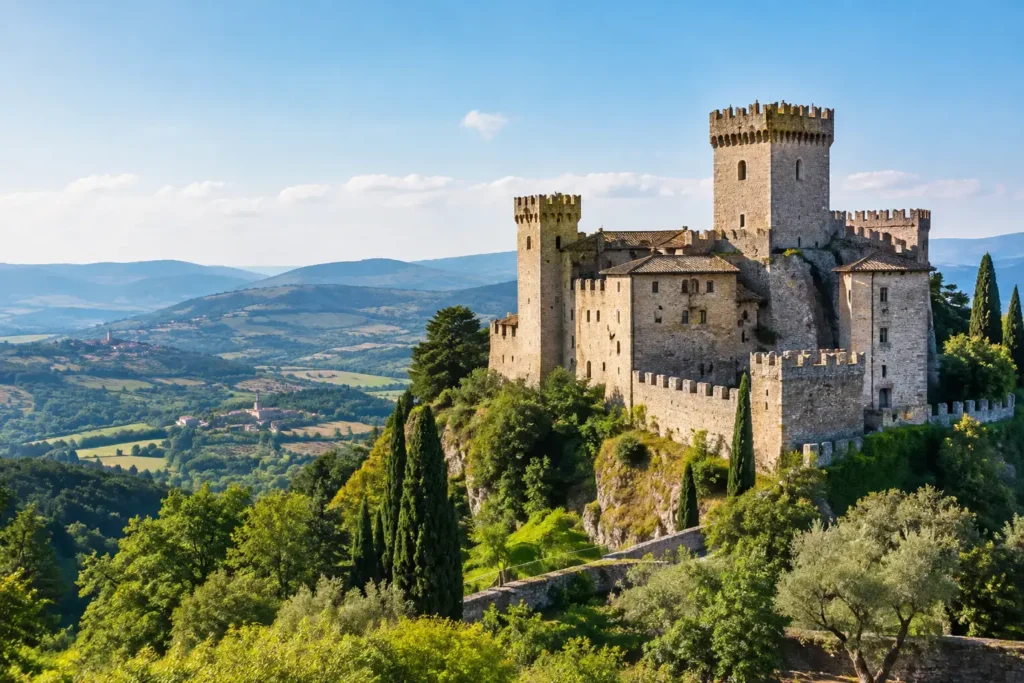
The best Umbrian castles to visit are rarely isolated monuments. They rise above hill towns, overlook olive groves and vineyards, or stand beside routes that once connected Rome with the Adriatic. Some are polished museums with frescoed rooms; others are powerful fortresses where the reward is a high walk along the ramparts and a wide view of the Apennines.
For a first journey through Umbria, castles add a different perspective to the region’s churches, Roman remains, and medieval streets. They tell stories of papal power, noble families, border disputes, and the practical art of defending a hilltop town. The key is to choose castles that suit your route, since opening hours and access can vary considerably, especially at smaller sites.
If you are staying near Assisi, Perugia, or Spoleto, begin with a major fortress that can be easily paired with a historic center. Rocca Maggiore in Assisi and the Rocca Albornoziana in Spoleto both make excellent half-day cultural stops, particularly for travelers who want history without a long detour.
For quieter countryside experiences, look toward the Tiber Valley and the area around Gubbio. These castles are often less crowded, but they may have more limited visiting arrangements. A castle used as a hotel, restaurant, or private estate can still be memorable, yet it should not be treated like a public museum. Confirm access in advance and allow time to enjoy the surrounding village or landscape.
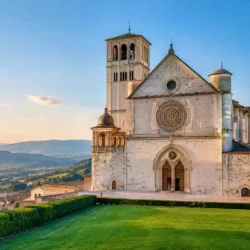
High above Assisi, Rocca Maggiore is one of the most rewarding fortresses in Umbria for its setting alone. The castle crowns the slope above the Basilica of St. Francis and looks across the rooftops, the broad Umbrian plain, and the distant hills of Monte Subasio.
The present fortress was developed in the late 14th century, although the site had strategic importance well before then. Its towers, defensive walls, and long walkway create a vivid sense of how Assisi was watched and protected. This is not the place to come for lavish interiors. Come for the architecture, the wind on the ramparts, and a view that makes the geography of Assisi immediately clear.
Visit in the late afternoon if possible, after exploring the basilica and the town’s main squares. The uphill walk is steep, so comfortable shoes are essential.
Spoleto’s Rocca Albornoziana is a grand papal fortress with the scale to match its commanding position. Built in the 14th century under Cardinal Gil Álvarez Carrillo de Albornoz, it was part of a wider effort to restore papal authority across central Italy.
Unlike many hilltop castles, the Rocca feels both military and ceremonial. Its two courtyards, massive towers, and elegant spaces show that power in medieval and Renaissance Italy was displayed as much as defended. From the fortress, you can look down toward Spoleto’s cathedral, Roman theater, and the striking Ponte delle Torri aqueduct.
This is a particularly good choice for visitors who enjoy art as well as fortifications. Pair it with a guided walk through Spoleto to connect the castle’s political history with the town’s Roman and medieval layers.
Outside the historic center of Narni, the Rocca Albornoz offers a more atmospheric, less polished castle experience. Its position above the Nera Valley made it an important control point, and its walls still communicate the toughness of a frontier fortress.
The castle was also built under Cardinal Albornoz in the 14th century, though it later passed through periods of decline and restoration. Today, its appeal lies in the setting: wooded slopes, stone walls, and broad views toward Narni and the valley below.
Narni itself deserves time. Its medieval lanes, Romanesque cathedral, and underground history give the visit depth, while the fortress adds a dramatic outdoor element. It works well for families with older children and travelers who prefer a castle with a little more solitude.
Castello Bufalini near San Giustino is one of Umbria’s most distinctive castle visits because it feels more like a fortified noble residence than a battlefield stronghold. Built around an earlier defensive structure and transformed by the Bufalini family, it combines imposing walls with Renaissance refinement.
Inside, visitors can encounter decorated rooms, portraits, furnishings, and frescoes that reveal how aristocratic life unfolded behind defensive walls. The gardens are an important part of the experience, especially in spring and early fall, when the formal layout and leafy surroundings soften the castle’s severe exterior.
This is an excellent option for travelers interested in interiors, family histories, and Renaissance art. It is also a worthwhile stop when traveling between Umbria and eastern Tuscany.
Castello di Alviano rises above the small village of Alviano in southern Umbria, not far from the Tiber River. The castle is associated with Bartolomeo d’Alviano, the celebrated Renaissance military leader whose name still carries weight in the town.
Its sturdy, compact form reflects its defensive purpose, while the surrounding landscape offers a quieter side of Umbria. Nearby wetlands and the Tiber Valley create a strong contrast with the better-known hill towns. This makes Alviano a good choice for travelers combining cultural visits with birdwatching, rural roads, or a relaxed day between Orvieto and the Lazio border.
The village is small, which is part of its charm. Plan this as a focused stop rather than a full-day destination, unless you are also exploring the nature reserve and surrounding countryside.
Montone is one of Umbria’s most beautiful small hill towns, and the remains of the Rocca di Braccio bring its turbulent past into focus. The fortress is linked to the condottiero Braccio da Montone, one of the most formidable military figures of the early 15th century.
Do not expect an intact castle with furnished halls. The surviving structure is fragmentary, but the location and story are compelling. Montone’s narrow stone streets, small squares, and distant views are the real reward, with the Rocca serving as a reminder of the town’s once-outsized political importance.
Choose Montone if you enjoy places where history is woven into the village rather than contained inside a ticketed monument. It is especially appealing during the warmer months, when its events and local restaurants bring life to the quiet streets.
Just north of Perugia, Castello di Ramazzano offers the romantic image many travelers hope to find in rural Umbria: a stone castle surrounded by vineyards, cypress trees, and open countryside. The complex has medieval origins and later became associated with agricultural life and wine production.
Its experience is different from that of Assisi or Spoleto. Rather than a major public monument, Ramazzano is best approached as part of a food-and-wine day in the Perugia area. Depending on current access arrangements, you may be able to enjoy the setting through hospitality, dining, or a tasting rather than a conventional castle tour.
This is a good reminder that some of Umbria’s finest castles are lived-in landscapes. Their history survives not only in battlements, but also in the vineyards and kitchens around them.
Set in the green hills between Gubbio and the Chiascio Valley, Castello di Baccaresca has the secluded character of a country fortress. Its stone towers and rural setting make it a memorable base or stop for travelers drawn to Umbria’s outdoor side.
The castle is now tied to hospitality, so access is generally connected to staying, dining, or booked experiences rather than independent museum-style entry. That trade-off may suit couples seeking a peaceful overnight stay, but visitors who want extensive historic interpretation should focus instead on Gubbio’s palaces and museums.
Use Baccaresca as part of a slower itinerary. The roads around Gubbio lead through woodland, farms, and small villages, and the landscape is as much a reason to come as the building itself.
Castello di Sismano stands in the gentle, wooded countryside of central-southern Umbria, where the region feels far removed from the busier routes around Assisi and Perugia. The castle has medieval origins and retains a compelling fortified profile, even though its present role is connected to private hospitality and events.
For many visitors, the pleasure is in the atmosphere: an ancient stronghold emerging from a quiet rural landscape. It is best considered when you have a car and want to explore lesser-known villages around Amelia, Todi, or Acquasparta.
Because access conditions can change, treat Sismano as a place to arrange in advance. It is ideal for travelers who value a special setting over a traditional, self-guided castle museum.
The strongest castle days have contrast. In Assisi, follow Rocca Maggiore with the Basilica of St. Francis and a leisurely lunch in the old town. In Spoleto, move from the Rocca Albornoziana to the cathedral and the Ponte delle Torri. Near Perugia, combine a countryside castle with an olive oil tasting, winery visit, or a guided exploration of the city’s Etruscan and medieval heart.
A local official guide can make a particular difference at the major fortresses, where the stonework alone does not always explain the rivalries, papal politics, and urban changes behind it. At smaller castles, advance planning matters more than interpretation: check seasonal hours, parking, and whether admission is available to non-guests.
Leave room in your itinerary for the road between the castles. In Umbria, the approach is often part of the visit: a ridge road above fields, a glimpse of towers through olive trees, or a hill town appearing slowly beyond the next bend.