Related Posts
A working olive mill is not a museum with a fixed daily schedule. During the autumn harvest, tractors arrive with crates of olives, the press may run late into the evening, and a producer’s first responsibility is making exceptional oil. That is why understanding olive mill opening times can make the difference between a quick stop at a closed gate and one of the most memorable food experiences of your Umbrian holiday.
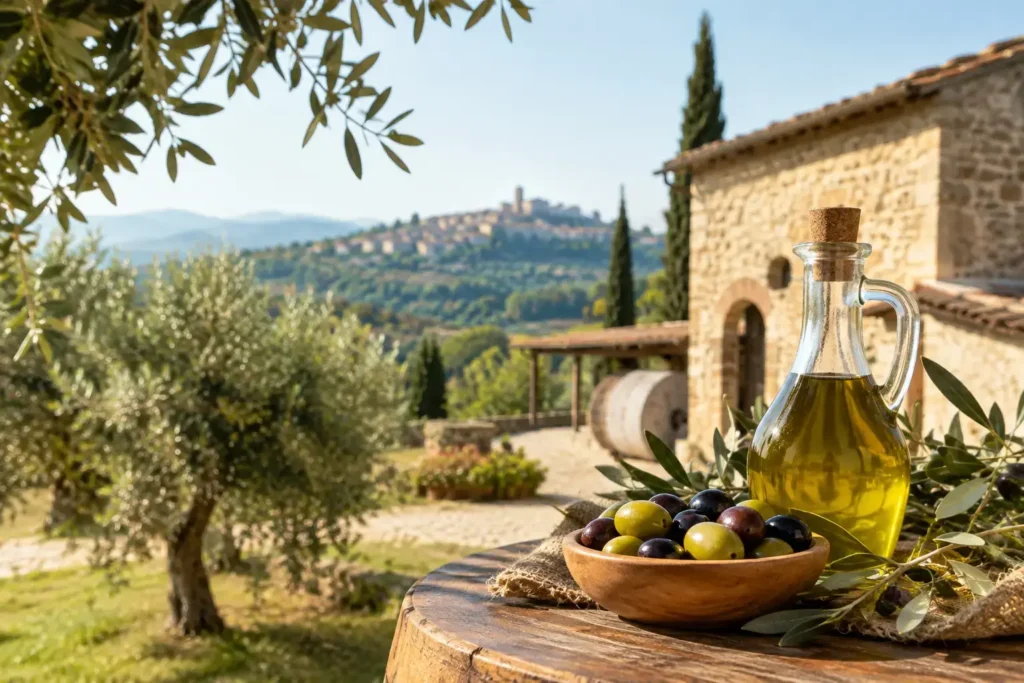
In Umbria, olive oil is part of the landscape as much as the hill towns, vineyards, and stone farmhouses. Groves surround Assisi, Spello, Trevi, Spoleto, and the slopes of Lake Trasimeno, where local varieties and careful pressing create oils with a vivid green color, grassy fragrance, and pleasing peppery finish. Visiting a mill gives that flavor a story – but it takes a little planning.
Unlike a shop or a major attraction, an olive mill follows the agricultural calendar. Many are family-run businesses, often located on working farms, and their opening hours change according to the season, weather, harvest volume, and production needs.
The busiest period is usually from late October through December, though exact dates shift each year. A warm autumn can delay the harvest; rain can pause picking; an early cold spell can speed up the work. In this period, mills may be operating from morning until night, but that does not necessarily mean they welcome walk-in visitors at every hour. The owners may be receiving olives, overseeing pressing, cleaning equipment, or arranging deliveries.
Outside harvest, a mill may still offer tastings, sell oil, and welcome visitors by appointment. Some have a small shop with regular hours, especially in popular towns or along well-traveled routes. Others open only when a group has booked. Neither model is better. The smaller, appointment-based mills can offer particularly personal visits, with time to speak directly with the producer.
For many travelers, harvest season is the most exciting time for a mill visit. Fresh olives arrive from the groves, are cleaned and sorted, then crushed and processed quickly to protect their quality. The aroma inside the mill is unmistakable: green, bright, and intensely vegetal.
This is the moment to see the full journey from fruit to oil. It is also the time when schedules are least predictable. A visit booked in advance is strongly recommended, particularly on weekends and around All Saints’ Day, when many visitors come to Umbria for autumn colors, truffles, wine, and new olive oil.
If you are planning a private visit during the harvest, allow some flexibility. The producer may need to adjust the timing around a delivery of olives or a pressing cycle. That small trade-off is often worthwhile. You are seeing a real harvest day, not a staged demonstration.
Winter is an excellent choice for travelers who want to taste freshly pressed extra virgin olive oil without the intensity of harvest operations. By January, many producers have completed the main pressing period and can devote more time to explaining their groves, production methods, and the differences between oils.
Opening times can be more limited in this season, especially at rural estates, but prearranged tastings are often easy to organize. It is a good fit for a cultural itinerary that combines Perugia, Assisi, Orvieto, or Spoleto with a leisurely food experience.
From April through September, the olive trees are in a different phase of their year. There is no pressing to watch, yet a mill visit can still be rewarding. You may walk among the groves, learn how producers care for the trees, and taste oils from the most recent harvest alongside regional bread, cheeses, legumes, or seasonal vegetables.
Summer travelers should not assume that every mill is open daily. Smaller producers may be working in the fields, managing hospitality accommodations, or taking a brief family break. August, especially around Ferragosto on August 15, can bring altered schedules across Italy. Confirming your visit in advance remains essential.
The most reliable approach is to treat a mill visit as a bookable experience rather than an unplanned stop. Choose the day first, then arrange a confirmed time that works with your route and preferred language. This is particularly useful if you are staying outside a major town, traveling with children, or relying on a rental car with a tight itinerary.
When choosing a time, think about what you want from the visit. A morning appointment during harvest may offer the best chance of seeing active production. A late-afternoon tasting can be more relaxed and pairs naturally with a drive through the olive-covered hills around Trevi, Spello, or Montefalco. If you are joining a lunch or cooking experience afterward, ask whether the mill can accommodate the timing.
It also helps to ask a few practical questions before you go: Is the mill pressing olives on your chosen date? Is the visit a guided tour, a tasting, or both? How long should you allow? Is the property accessible for anyone with limited mobility? Can the producer ship bottles home, or should you leave room in your luggage?
For a typical visit, allow between 60 and 90 minutes. A quick tasting may take less time, while a walk in the groves, a full explanation of pressing, and a food pairing can easily become a half-day experience.
Umbrian mills range from historic stone buildings to highly modern facilities. Some preserve older equipment as a reminder of past methods while using contemporary machinery for today’s production. Modern systems help control temperature and limit the oil’s exposure to air, protecting freshness and fragrance.
The most interesting visit is not necessarily the oldest-looking mill. Ask about how quickly olives are pressed after picking, how the oil is stored, and how the producer decides when to harvest. These choices have a direct effect on quality. Earlier-picked olives can produce oils that are greener, more bitter, and more peppery, while riper fruit often gives softer, rounder flavors.
A good tasting will show you why extra virgin olive oil is not simply a cooking ingredient. Warm a small amount in your hand, cover the glass briefly, then smell before tasting. You may notice artichoke, fresh-cut grass, almond, tomato leaf, or herbs. Bitterness and a slight cough at the back of the throat are often positive signs of fresh, flavorful oil, not faults.
An olive mill visit works beautifully alongside the places that give Umbria its character. Near Assisi and Spello, you can combine olive landscapes with medieval lanes, Roman remains, and fresco-filled churches. Around Trevi, the steep hills and long-established groves provide a particularly striking setting for understanding the region’s olive-growing tradition.
Near Montefalco, olive oil and Sagrantino wine make a natural food-focused pairing. In the Spoleto area, a mill visit can complement a day of Roman bridges, fortress views, and quiet countryside. Travelers based in Perugia can also reach several olive-growing areas for a rewarding excursion beyond the city.
Avoid trying to fit too much into one day. A rushed tasting between museum reservations can feel like shopping rather than meeting a producer. Leave time to ask questions, taste carefully, and enjoy the landscape that shapes what is in your glass.
Olive oil is at its most expressive when fresh, but good storage matters after you buy it. Choose bottles or tins that protect it from light, keep them away from heat, and use the oil generously rather than saving it indefinitely for a special occasion. A producer can advise which oil suits bruschetta, grilled meat, soups, salads, or simple Umbrian beans.
If your schedule is limited, a guided olive oil experience can remove the uncertainty around rural directions, language, appointments, and seasonal opening times. Umbria.tours can help turn a visit into a well-organized part of a wider day among the region’s villages, food, and heritage.
The best mill visits begin with a confirmed time but leave room for discovery: the sound of olives moving through the machinery, a producer’s pride in a particular grove, and the first bright taste of Umbria on warm local bread.