Related Posts
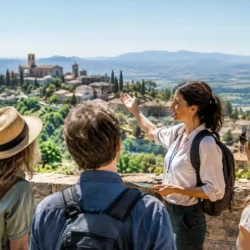
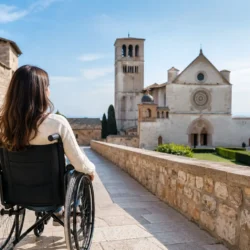
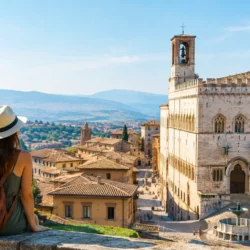
A quiet fresco detail in Assisi, the first scent of olive oil at a family mill, a view across the vineyards below Montefalco – these are the moments that can disappear when a day is rushed. Small group tours Umbria give travelers room to notice them, with an official local guide to turn beautiful places into memorable stories.
Umbria is often called Italy’s green heart, but its appeal is far more specific than a postcard phrase. This is a region of hill towns built in stone, Roman roads beneath modern streets, Franciscan sanctuaries, dramatic cathedrals, and food shaped by the seasons. Traveling in a small group makes that richness feel personal while keeping the day sociable, relaxed, and easy to organize.
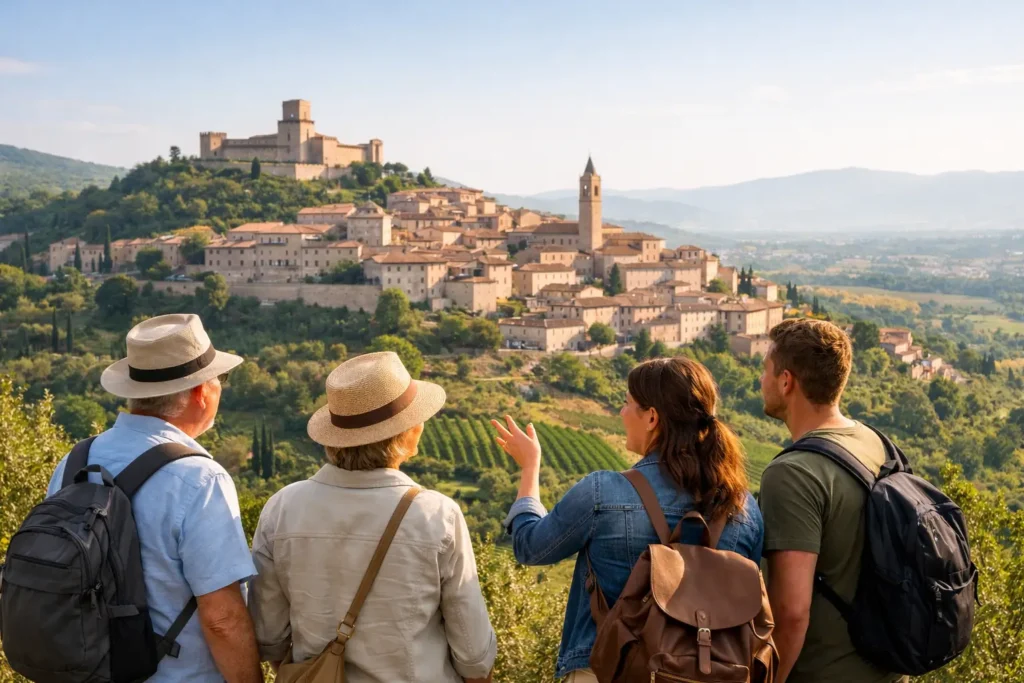
The best reason is simple: scale changes the experience. In a small group, you can hear your guide without an earpiece competing against a crowd, ask the question that occurs to you in front of a painting, and pause when a view, church, or local specialty deserves more attention.
That matters especially in Umbrian historic centers. Assisi, Perugia, Orvieto, Gubbio, Spello, Spoleto, Bevagna, and Montefalco all reward a slower pace. Their stories are found not only in headline monuments, but in medieval lanes, city gates, artisan workshops, overlooked chapels, and the changing character of each piazza.
A professional local guide provides context that maps and guidebooks cannot offer in the moment. Why is Assisi’s Basilica of Saint Francis such a turning point in Italian art? How did Perugia become one of central Italy’s most powerful medieval cities? What lies behind Orvieto’s remarkable cathedral facade? The answers connect buildings to people, politics, faith, and daily life.
Small-group travel also suits the way many visitors experience Umbria. Couples may want a shared activity without joining a coach tour. Families often appreciate a guide who can adapt explanations to different ages and interests. Friends traveling together can enjoy a convivial day without the work of coordinating routes, tickets, and local logistics themselves.
Umbria is compact on a map, but each destination has a distinct personality. Trying to see everything in a few days can leave even the most enthusiastic traveler with only a blur of bell towers and photos. A focused guided experience helps you choose depth over accumulation.
Assisi is essential for many first-time visitors, yet it deserves more than a quick stop at the basilica. An informed visit places Saint Francis within the world that formed him and explains why his legacy continues to draw pilgrims and art lovers from around the globe.
Beyond the celebrated basilica, the town reveals Roman remains, medieval streets, and broad views over the Umbrian valley. A small group can move through these layers at a comfortable pace, balancing major landmarks with the quieter corners that give Assisi its character.
Perugia brings together Etruscan roots, medieval ambition, Renaissance art, and the energy of a university city. Its historic center can be surprising: grand public spaces open onto steep lanes, and parts of the older city lie beneath later construction. A guide helps make sense of a place whose history is quite literally layered.
Orvieto rises above the countryside on volcanic rock, an arrival that still feels theatrical. Its cathedral is the obvious highlight, but it is not the whole story. The city’s underground spaces, papal connections, and Etruscan past add dimension to a visit. For travelers staying near Rome or traveling through central Italy, Orvieto can be an especially rewarding gateway to Umbria.
Spello is known for flower-filled streets and Roman traces, while Bevagna retains the intimate scale of a medieval market town. Gubbio feels more rugged and monumental, with its steep streets and powerful civic architecture. Spoleto combines Roman, medieval, and festival-era culture beneath the imposing Rocca.
Then there is Montefalco, often associated with Sagrantino wine and expansive vineyard views. It is an excellent choice for travelers who want art, village life, and regional flavors in the same day. These smaller destinations are not secondary to the larger towns. Often, they are where visitors feel most closely connected to Umbria’s unhurried rhythm.
In Umbria, tasting is a way of understanding place. Olive groves, vineyards, lentils, truffles, cured meats, cheeses, and handmade pasta are not decorative additions to an itinerary. They reflect terrain, agricultural traditions, and the work of local producers.
An olive-oil tasting or visit to an olive mill can be particularly revealing. Fresh extra-virgin olive oil has a lively, sometimes peppery finish that surprises people accustomed to treating olive oil as a background ingredient. Learning how it is harvested and pressed makes the experience more immediate, especially in the autumn production season.
Wine experiences offer a similar sense of connection. Around Montefalco, powerful Sagrantino and elegant local wines speak to the hillsides around them. Near Orvieto, white wines have a long regional history. A guided tasting can help travelers move beyond labels and learn what they are drinking, without requiring prior wine expertise.
There is a practical trade-off to consider. If food and wine are a main focus, choose a tour designed around a producer visit or tasting rather than trying to add one hurriedly onto a full day of monuments. If your priority is art and architecture, a short local tasting after a walking tour may be the better balance. The strongest itineraries leave room to enjoy both rather than treating either as a checklist item.
Start with where you are staying and how much time you have. Travelers based in Assisi may prefer to spend a morning understanding the town in depth, then leave the afternoon open for a relaxed lunch or independent walk. Visitors with a car can pair nearby towns such as Spello and Montefalco, depending on the tour format and their interests.
Next, consider what you want to remember most. Choose an art and heritage walking tour if you are drawn to churches, frescoes, Roman remains, and local history. Choose a culinary activity if you want to meet producers and taste the region through its ingredients. Outdoor experiences suit travelers who want to see the landscape that connects the towns, farms, and vineyards.
Group size is only one part of the decision. Ask whether the experience is led by an official guide, whether it is available in English, how long it lasts, where it begins, and what is included. Clear details allow you to plan confidently, particularly when you are fitting a tour around train schedules, restaurant reservations, or a multi-stop Italian vacation.
Private tours and small-group tours each have advantages. A private guide offers the greatest flexibility for families, special interests, mobility needs, or a custom pace. A small-group departure can be a more social and cost-conscious choice while still preserving the close attention that larger excursions often lack. Neither is automatically better. The right option depends on the people traveling with you and the kind of day you hope to have.
A well-guided tour should feel organized, not over-scripted. The route may include the major sights, but the most lasting moments can come from a local story prompted by a carved doorway, a recommendation for a traditional lunch, or a pause to watch the light change across the valley.
Comfortable walking shoes are useful in nearly every Umbrian town, where cobbled streets and slopes are part of the charm. In summer, early tours can be more pleasant before the strongest heat. In spring and fall, the landscape is especially inviting, although layered clothing is wise. Winter brings quieter streets and a more contemplative atmosphere, particularly in historic centers.
For travelers who want trusted local insight without giving up the pleasure of independent travel, Umbria.tours offers a simple way to choose experiences by destination and interest. The aim is not to fill every hour. It is to make the hours you choose count.
Leave a little unplanned time after your tour. Sit in a piazza with a coffee, follow the sound of church bells down a side street, or order one more glass of local wine. Umbria has a gentle habit of rewarding travelers who do not hurry away.