Related Posts
How to Taste Olive Oil Like an Umbrian Local
19-09-2026
The first taste is often a surprise. Fresh Umbrian extra-virgin olive oil can be vivid and grassy, with notes of artichoke, almond, and wild herbs, followed by a peppery warmth at the back of the throat. An olive mill visit in Umbria turns that moment into a deeper encounter with the land: the trees, the harvest, the press, and the families who have shaped this essential regional product over generations.
For travelers who want more than a restaurant table tasting, a visit to a local frantoio offers a memorable way to understand Umbria at its most authentic. It is part food experience, part rural heritage, and part lesson in how much care goes into a small pour of excellent oil.
Olive trees are woven into the Umbrian landscape. You see them on the slopes below Assisi, around Spello and Trevi, along quiet roads near Spoleto, and among the vineyards of Montefalco. Their silver-green leaves soften the hillsides throughout the year, but their real significance becomes clear when you meet the people who tend them.
An olive mill visit gives context to a product that is often taken for granted. You learn why olives must be harvested at the right moment, why speed matters after picking, and why a bottle labeled extra virgin does not automatically tell you everything about its quality or flavor. A knowledgeable producer can explain the difference between varieties, growing areas, and pressing methods without making the experience feel technical or intimidating.
It is also a satisfying contrast to busy museum days and city sightseeing. After the frescoes of Assisi or the medieval lanes of Perugia, an hour or two among groves and mill equipment can bring you closer to the everyday rhythms of rural Umbria.
Every mill has its own character. Some are modern facilities with stainless-steel equipment and carefully controlled temperatures. Others combine contemporary production with older stone presses, family photographs, and buildings that have served local growers for decades. The best visits connect the practical process with the stories behind it.
Depending on the season and location, your visit may begin among the olive trees. A producer or guide may point out the shape of the terrain, explain pruning, and describe the local cultivars that give Umbrian oil its distinctive personality. Moraiolo, Frantoio, and Leccino are among the varieties you may hear about, each contributing different aromas and levels of bitterness or spice.
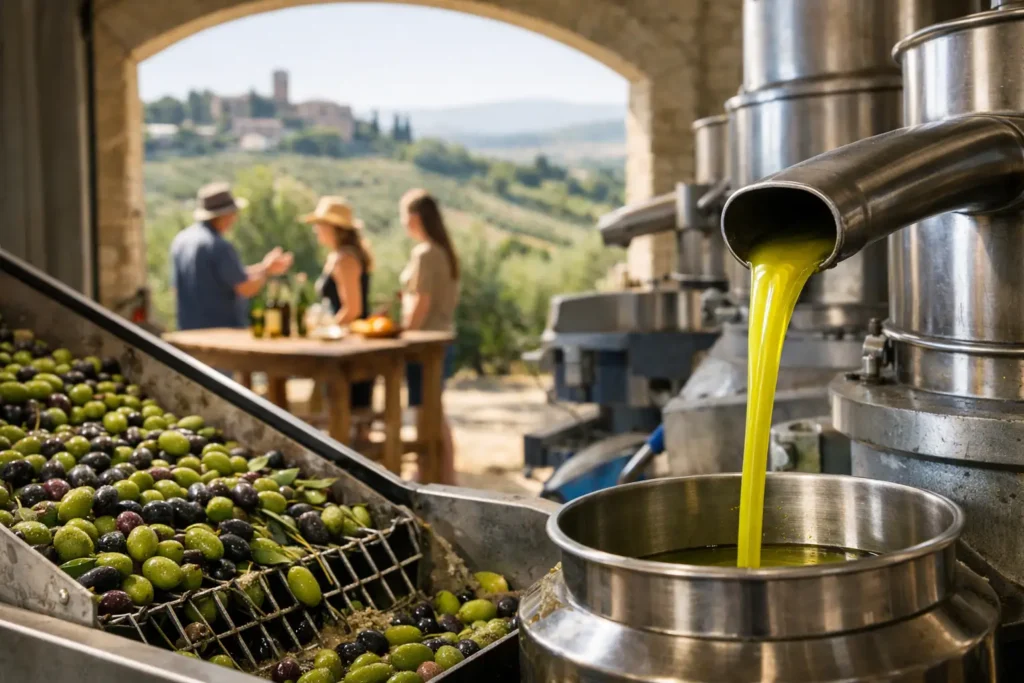
Inside the mill, you can follow the olives from arrival to extraction. Freshly picked fruit is sorted and washed, then crushed into a paste. That paste is mixed slowly before the oil is separated. Modern mills often use a continuous extraction system, designed to preserve freshness and protect the oil from excessive heat and oxygen.
The process is more time-sensitive than many visitors expect. Olives are fruit, not vegetables, and their quality begins to decline once picked. Producers who press quickly after harvest are protecting the flavor and character of the final oil.
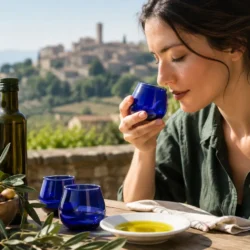
The tasting is usually the heart of the experience. Rather than pouring oil onto bread immediately, a proper introduction may begin with a small glass or cup. Warming the oil in your hands releases its aromas. You may be invited to smell first, then sip a little and notice the sensations on your palate.
A fine extra-virgin olive oil should smell fresh and alive. Green tomato leaf, cut grass, chicory, artichoke, herbs, and almond are all possible notes. Bitterness and pepperiness are not faults. In many Umbrian oils, they are signs of fresh olives and natural phenolic compounds.
Bread often follows, alongside simple local foods such as bruschetta, beans, cheeses, seasonal vegetables, or cured meats. This is where the differences between oils become especially enjoyable. A bolder oil may suit grilled meats, legumes, and soups, while a gentler one can complement fish or delicate vegetables.
Harvest usually takes place from October through November, sometimes extending into early December depending on altitude, weather, and olive variety. This is the most energetic time for an olive mill visit. The groves are active, crates of olives arrive throughout the day, and the scent of freshly pressed oil fills the production area.
A harvest-season visit is rewarding, but it requires flexibility. Mills are working businesses, and the schedule may be shaped by the day’s deliveries and weather conditions. For travelers who enjoy seeing production in motion, that is exactly the appeal. Booking ahead is particularly important at this time of year.
Spring and early fall are excellent alternatives. The hills are beautiful, temperatures are generally comfortable, and producers often have more time to speak in detail about their oils and methods. You will not see the harvest itself, but you can still enjoy a thoughtful tasting and a clearer understanding of the yearly cycle.
Summer visits can work well too, especially if you are pairing the mill with a private tour of Spello, Montefalco, or the countryside around Assisi. Just remember that olive oil is best stored away from heat and light. If you buy bottles to take home, keep them out of a hot car and pack them carefully for your journey.
The right visit depends on what you want from your day. A short tasting at a family-run mill is ideal if your itinerary is already full of towns, churches, and galleries. A longer experience may include a grove walk, lunch, regional wine, or a hands-on cooking element.
For first-time visitors, an English-speaking local guide can make a meaningful difference. Olive oil has its own vocabulary, and producers are often most expressive when speaking about their work in Italian. A guide helps interpret not only the technical details, but also the traditions, family stories, and regional identity behind the bottle.
Consider location as well. If you are staying near Assisi, Spello and the slopes around Trevi can fit naturally into a day of art, villages, and countryside. Around Montefalco, an olive oil visit can pair beautifully with local wine tasting. Near Perugia or Lake Trasimeno, choose an experience that minimizes driving so there is time to enjoy the tasting without rushing.
With Umbria.tours, visitors can combine an olive oil experience with the insight of an official local guide, creating a day that feels well organized while remaining rooted in the people and places of the region.
A good producer will welcome curiosity. Ask which olive varieties are used, when the olives were harvested, and how soon they were pressed. You might also ask whether the oil is a single-variety expression or a blend, and which dishes the producer recommends for it.
If you are buying oil, ask about the harvest date rather than focusing only on the best-before date. Freshness matters. Dark glass or tins are preferable to clear bottles because light can damage the oil over time. A larger tin may offer good value for a longer stay, while smaller bottles are easier to carry home and make thoughtful gifts.
There is no single “best” style of Umbrian oil. Some travelers love the intense, peppery character common in oils made with Moraiolo olives. Others prefer softer, rounder oils for daily cooking. The value of tasting at the source is that you can choose based on your own palate, not just a label.
An olive mill visit is a small detour from the usual itinerary, yet it often becomes one of the stories travelers remember most clearly: the sound of leaves in the grove, the scent of crushed olives, and the bright green oil that makes a simple piece of bread taste like Umbria itself.