How to Plan Vineyard Visits Around Umbria
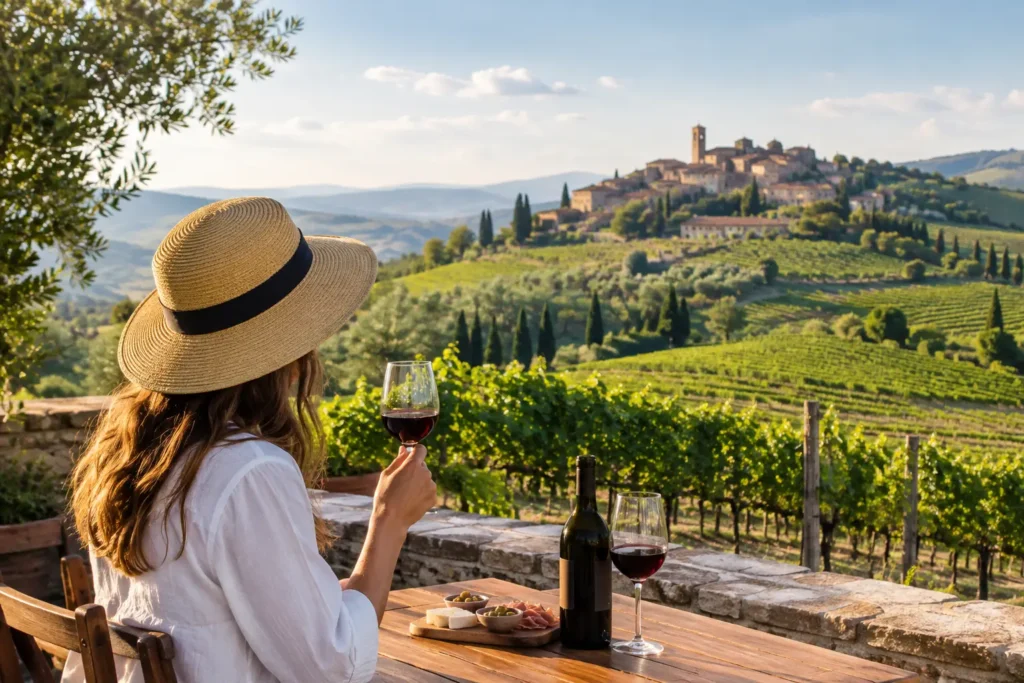
A late-morning tasting in Montefalco, a plate of local cheese and cured meats, then a slow drive through olive groves toward a medieval hill town: this is the kind of day Umbria does beautifully. Knowing how to plan vineyard visits, however, is what turns that appealing picture into a relaxed experience rather than a hurried series of appointments.
Unlike a walk-in bar, many Umbrian wineries are working farms with small teams, seasonal duties, and limited tasting hours. A little preparation gives you better wines, more personal conversation, and enough time to enjoy the landscape between stops.
Start with one wine area, not the whole region
Umbria is compact on a map, but its winding country roads and hilltop towns can make journeys longer than expected. Plan vineyard visits around one area each day, leaving room for a proper lunch, a village stroll, or an unplanned stop at a viewpoint.
For bold reds and memorable cellar visits, Montefalco is an excellent starting point. The area is known for Sagrantino, a structured red with firm tannins and considerable aging potential, as well as the more immediately approachable Montefalco Rosso. Pair a visit here with time in Montefalco itself, or with nearby Bevagna, where Roman remains and artisan workshops add another layer to the day.
Around Torgiano, southeast of Perugia, you can explore one of Umbria’s most established wine areas. Its reds and whites offer a useful introduction to the region’s wine traditions, and the location works particularly well for travelers staying in Perugia or Assisi.
The countryside near Orvieto has a different character. Here, white wines are central, and a vineyard visit can sit naturally alongside the city’s extraordinary cathedral, underground passages, and Etruscan history. It is an appealing choice for travelers who want wine, art, and architecture in the same day.
The Trasimeno area is another rewarding option, especially if your itinerary includes lakeside villages such as Castiglione del Lago or Passignano sul Trasimeno. The scenery is softer and more open, with vineyard views often stretching toward the water. Choose this area if you prefer a slower day with a mix of wine, lake landscapes, and local food.
Choose the kind of vineyard visit you want
Not every winery experience follows the same rhythm. Some focus on a short guided tasting in a modern tasting room. Others include a walk through the vines, a look inside the cellar, and a longer conversation about local grapes, soils, and family history. Neither is automatically better. The right choice depends on how much time you have and what you hope to learn.
If wine is a main interest, look for a visit that includes both vineyard and cellar. Seeing the landscape helps explain why wines from Montefalco, Orvieto, and Torgiano taste so distinct. Ask whether the tasting includes current releases only or also older vintages, and whether food is served alongside the wines.
If you are traveling as a couple or family with varied interests, a tasting with lunch can be more satisfying than several separate winery stops. One well-hosted visit followed by a leisurely meal often creates a more memorable day than trying to taste at three estates before midafternoon.
Small producers can offer intimate, personal experiences, while larger estates may have broader facilities, more structured tours, and a wider range of wines to compare. Consider the trade-off before booking. A boutique winery may feel wonderfully individual but have fewer available appointment times. A larger property may be easier to reach and more flexible for groups.
Book ahead and ask the useful questions
Advance reservations are strongly recommended, particularly from late spring through harvest season and during weekends. In many cases, booking is essential. Do not assume that an open gate or a sign at the roadside means a tasting is available that day.
When you contact a winery or book an experience, confirm the start time, duration, language, and number of wines included. Also ask whether children are welcome, whether there are vegetarian or other dietary options if food is served, and whether the visit is accessible for guests with limited mobility.
It is worth checking the exact meeting point as well. Some estates are reached by unpaved lanes, and GPS directions can occasionally lead drivers to a service entrance rather than the visitor reception. Save the winery phone number before setting out, especially if you are driving through rural areas with variable signal.
For a private group, share your preferences in advance. A host can often tailor the focus toward reds, organic farming, local grape varieties, or food pairings if they know what interests you. Travelers who are new to Italian wine should say so without hesitation. The best hosts make the tasting welcoming rather than technical for its own sake.
Build an itinerary with breathing room
A good vineyard day rarely needs more than two tastings. In fact, one winery visit can be enough when it includes a cellar tour and lunch. Plan at least 90 minutes for a simple tasting and two to three hours for a fuller visit with food or a vineyard walk.
Avoid scheduling appointments back-to-back. Country roads are beautiful, but they are not fast. Allow time for parking, getting oriented, and enjoying the setting. In summer, a late-afternoon tasting can be especially pleasant, when the heat softens and the vines glow in the evening light. In cooler months, a morning cellar visit followed by lunch in a historic town may be the better choice.
Try to connect the vineyard to a place you already want to see. Montefalco pairs naturally with Bevagna or Spello. Torgiano can be combined with Perugia. An Orvieto wine visit fits well before or after exploring the cathedral and historic center. This approach keeps your day rooted in Umbria rather than turning it into a checklist of pours.
Think carefully about transportation
This is the practical detail that deserves the most attention. Tasting wine and driving narrow rural roads are not a good combination. If one person is designated to drive, that person may not be able to enjoy the tasting fully. Public transportation can reach some Umbrian towns, but it is rarely the easiest way to connect several wineries in the countryside.
For many visitors, a private driver, guided wine experience, or pre-arranged transport is the most comfortable option. It removes the stress of navigation and allows everyone to taste responsibly. It also gives you a local perspective on the landscapes, villages, and producers you pass along the way.
If you do rent a car, keep the day modest: one tasting, a long lunch, and perhaps a cultural stop nearby. Never rely on the idea that a small taste does not count. Vineyard hospitality is generous, and the safest plan is to decide how you will return before the first glass is poured.
Taste with curiosity, not pressure
You do not need expert vocabulary to enjoy Umbrian wine. Notice the color, smell the wine before sipping, and pay attention to how it changes with food. Ask what grape varieties are in the glass, how long the wine was aged, and what the producer recommends serving with it at home.
Umbrian hosts are often proud to explain the connection between their wines and local cuisine. Sagrantino is frequently paired with richly flavored meats and aged cheeses, while fresh local whites can be excellent with lake fish, vegetables, and delicate pasta dishes. Olive oil may also appear at the table, offering another expression of the same land.
Buy only what you can comfortably carry or ship according to your travel plans. A special bottle can be a lovely reminder of the day, but there is no obligation to purchase. The purpose of a vineyard visit is to understand a place through its people, vines, and table.
Let the season shape the experience
Spring brings green vineyards, wildflowers, and mild walking weather, though some cellar activities remain quieter after winter. Summer offers long golden evenings and lively towns, but book early and avoid the hottest part of the day. September and October are especially evocative because harvest may be underway, yet this is also one of the busiest periods and schedules can change according to vineyard work.
Winter visits have their own appeal. The vines are bare, the cellars feel intimate, and Umbrian dishes become heartier. You may have more personal time with producers, though opening days and hours can be more limited. If wine is central to your trip, confirm every detail before you travel.
A vineyard visit should leave you with more than a list of labels. Give yourself time to look across the rows of vines, ask one more question, and enjoy the road to the next Umbrian village. Those unhurried moments are often where the region stays with you.