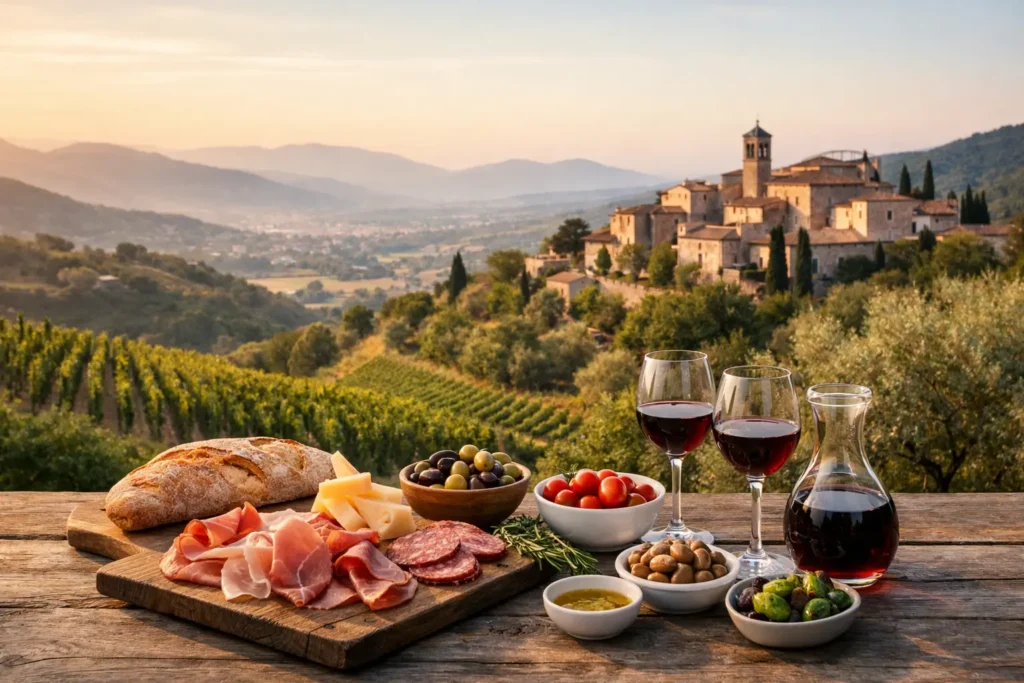
An Umbria Food Tour Through Villages and Valleys
The first taste often arrives before the first course: fresh olive oil poured onto warm bread, green and peppery enough to make conversation pause. An Umbria food tour is not simply a sequence of tastings. It is a way to understand a region shaped by hillside groves, family farms, medieval market towns, and recipes that still follow the rhythm of the seasons.
Umbria sits at the center of Italy, yet its food culture feels wonderfully unhurried. The landscape changes quickly from vineyards around Montefalco to the woods near Norcia, from the fertile plains below Assisi to the hills surrounding Orvieto. Each area brings its own ingredients, methods, and stories to the table. For travelers who want more than a restaurant reservation, guided food experiences offer an enjoyable, practical introduction to the people behind the produce.
What Makes an Umbria Food Tour Different
Umbrian cooking is rooted in excellent ingredients and confident simplicity. A meal may begin with bruschetta dressed in new-season oil, continue with handmade pasta and a slow-cooked meat sauce, and finish with a local cheese or a small glass of passito wine. Nothing needs much decoration when the olive oil, lentils, saffron, pork, grapes, and truffles come from nearby.
This is also a region where food and place are closely connected. In Spello, you may notice the importance of olive trees on the surrounding slopes. In Montefalco, wine leads naturally into the story of the Sagrantino grape and the area’s long agricultural tradition. In Norcia and the Valnerina, cured meats, black truffles, and mountain cheeses speak of forests, grazing land, and skilled preservation.
A good tour gives those flavors context. It can explain why Umbrian extra virgin olive oil has its lively, sometimes spicy character, how a producer reads the harvest, or why a particular wine is paired with game, aged cheese, or rich pasta. That local knowledge turns a pleasant tasting into a lasting memory.
Start With Olive Oil, Umbria’s Everyday Treasure
Olive oil is one of the best places to begin. Umbrians use it generously, but they do not treat it as an anonymous finishing touch. Freshly pressed extra virgin olive oil is tasted on its own, often with bread, so its aromas and balance can be appreciated.
An olive-mill visit is especially rewarding in autumn, when the harvest brings an energy to the countryside and the oil is at its freshest. You can see how olives are brought in, cleaned, crushed, and transformed into oil, then taste the difference between a new oil and one that has settled over time. The peppery sensation at the back of the throat is not a flaw. It is often a sign of freshness and naturally occurring polyphenols.
Outside harvest season, visits and tastings still offer plenty to discover. The best choice depends on your interests. Travelers focused on food production may enjoy a longer visit with a producer, while those with a full sightseeing day in Assisi, Spello, or Perugia may prefer an olive oil tasting that fits neatly into their itinerary.
Wine Country: Montefalco and Beyond
Montefalco is one of Umbria’s essential stops for wine lovers. Known as the “balcony of Umbria” for its broad views over vineyards and valleys, this compact hill town is closely associated with Sagrantino, a deeply colored red grape with distinctive tannins and serious aging potential.
Sagrantino is not a light, casual red, and that is part of its appeal. It works beautifully alongside roasted meats, game, and aged pecorino, but it may feel powerful to visitors who usually prefer softer styles. A tasting guided by someone who knows the area helps make sense of it, from dry Montefalco Sagrantino to the traditional sweet passito version.
The region also produces Montefalco Rosso, often a more approachable introduction for a relaxed lunch or early in a trip. Elsewhere, the Orvieto area is known for white wines that suit antipasti, vegetable dishes, and freshwater fish. Wine experiences are best when they include both the glass and the landscape: vineyards, cellar practices, local food, and the people who have chosen to work the land.
Follow the Seasons to the Table
An Umbrian menu changes with the calendar, so the right food experience depends partly on when you travel. Spring brings tender greens, wild asparagus, and artichokes. Summer is ideal for tomatoes, beans, orchard fruit, and long outdoor lunches beneath the hills.
Autumn is the richest season for many visitors. It is the time for grape harvests, olive pressing, mushrooms, chestnuts, and truffles. White truffle is especially prized, while black truffle appears in many forms across the year, shaved over eggs, pasta, crostini, or simple meat dishes. Its flavor is earthy and unmistakable, and a little goes a long way.
Winter offers its own rewards: hearty soups, legumes, cured pork, roasted meats, and red wines with more depth. Look for lentils from Castelluccio, a small but celebrated ingredient that needs little soaking and cooks quickly. They are often served simply with olive oil, herbs, or sausage, proving that Umbrian food does not need extravagance to feel special.
Make Room for the Towns Between Tastings
A food-focused day is often stronger when it includes a town as well as a farm, winery, or restaurant. The meal becomes more meaningful when it is connected to the history of the place.
In Assisi, a guided walk through the medieval streets and the Basilica of St. Francis can be followed by a leisurely local lunch in the surrounding countryside. Perugia pairs well with market culture, chocolate traditions, and its layered Etruscan and medieval past. Orvieto offers striking cathedral architecture, underground history, and a nearby wine landscape. In Bevagna, Roman traces and small-town character create a fitting setting for regional specialties.
This approach also makes practical sense. Rather than spending an entire vacation traveling from one tasting room to another, you can combine food with art, architecture, religious heritage, and time to simply enjoy the view. For couples, families, and small private groups, a guide can help shape the pace around what matters most: wine, olive oil, truffles, local history, or an easy balance of all four.
How to Plan Your Umbria Food Tour
The first decision is whether you want one focused experience or a full day that combines food and culture. A dedicated winery or olive-mill visit is ideal when you have a particular interest and want to meet a producer. A wider itinerary is better if this is your first time in Umbria or you have limited days in the region.
Private tours offer flexibility with timing, pace, and interests. They are particularly useful for families, friends traveling together, and visitors staying in rural accommodations where transport may be less straightforward. Small-group experiences can be a good option for travelers who enjoy sharing a tasting and conversation with others while keeping the group personal.
It is worth being clear about dietary needs before booking. Vegetarian meals are generally easy to arrange with advance notice, but vegan, gluten-free, and severe allergy requirements may need more planning, especially at smaller family-run establishments. If wine is central to your day, arrange transportation rather than trying to drive between tastings.
Most of all, avoid trying to taste everything in one day. Umbria rewards a slower pace. Choose two or three complementary experiences, leave room for a proper lunch, and allow time to ask questions. An official local guide can connect the flavors on your plate with the villages, churches, workshops, and landscapes you pass along the way.
Taste the Stories Behind the Ingredients
The most memorable meals in Umbria are rarely the most elaborate. They might be a plate of strangozzi with black truffle, a slice of pecorino with honey, porchetta served in a village square, or bread dipped in oil pressed a few miles away. What stays with you is the sense of place: the producer explaining a difficult harvest, the view from a vineyard, the stone lanes outside a family restaurant.
Choose an experience with time for those details. Let the table lead you toward the hills, and let the hills explain what arrives on the table.