Where to Taste Umbrian Wine: 7 Great Stops
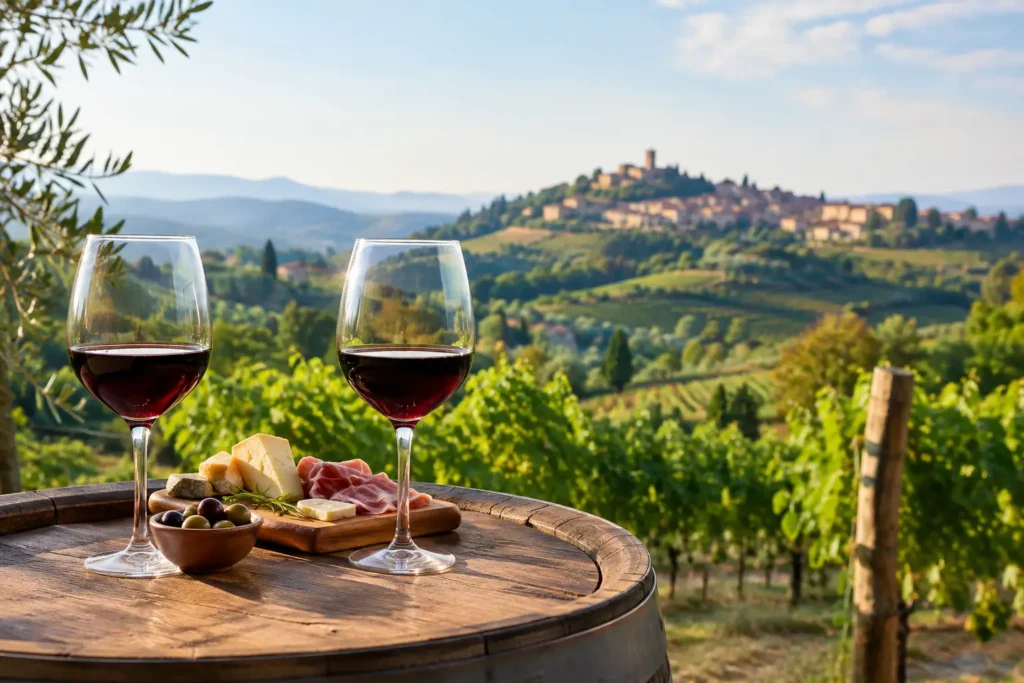
A glass of Montefalco Sagrantino in the town where it is made tells you more than a wine list ever can. The tannins feel firmer, the dark-fruit character seems clearer, and the medieval walls beyond the tasting room place the wine firmly in its landscape. If you are deciding where to taste Umbrian wine, start with the places that connect a distinctive bottle to a village, vineyard, producer, and local table.
Umbria is not a region for rushing through a long checklist of wineries. Its best wine experiences are often small-scale and personal: a family cellar beneath an old farmhouse, a walk among vines before lunch, or a tasting paired with pecorino, cured meats, and olive oil. Planning around a few wine areas also leaves time for the art, hill towns, and quiet countryside that make this part of Italy so rewarding.
Where to taste Umbrian wine by region
Montefalco for Sagrantino and serious reds
Montefalco is the essential stop for travelers interested in Umbrian red wine. Known as the Balcony of Umbria for its broad views across vineyards and olive groves, this compact hill town sits at the heart of the Sagrantino production zone. A tasting here usually introduces three local styles: Montefalco Rosso, the softer and more immediately approachable blend; Montefalco Sagrantino, a powerful red made from the native grape; and Sagrantino Passito, a traditional sweet wine made from dried grapes.
Sagrantino is not a light, casual pour. It is deeply colored, structured, and often marked by blackberry, plum, spice, leather, and firm tannins. Younger examples can feel intense, especially if you are used to smoother, fruit-forward reds. That is precisely why a guided tasting is worthwhile. A knowledgeable host can explain how aging, vintage, and food change the experience, and why this wine is often at its best alongside roasted meats, game, or aged cheese.
Allow enough time to explore Montefalco itself after a cellar visit. The central square is small and inviting, while the museum complex in the former Church of San Francesco gives the town a cultural depth that rewards an unhurried afternoon. Spring and fall are especially pleasant for combining a tasting with time outdoors; summer offers long, golden evenings but calls for reservations and a cooler morning visit.
Bevagna for a slower food-and-wine day
Just a short drive from Montefalco, Bevagna makes an excellent base or companion stop for wine lovers who prefer a less formal rhythm. Its Roman streets and medieval center feel lived-in rather than staged, and the surrounding countryside is dotted with farms, olive groves, and vineyards.
This is a good area to seek an experience that puts wine beside food rather than treating it as a separate activity. Umbrian wines gain a great deal from the table: Montefalco Rosso with pasta in a meat sauce, Grechetto with local cheeses, or a crisp white alongside seasonal vegetable dishes. If your trip falls during the Mercato delle Gaite, Bevagna’s celebrated historical festival, plan well ahead. The atmosphere is memorable, but availability across the town can be limited.
Torgiano for an introduction to Umbrian wine
Torgiano, south of Perugia, is one of the most useful wine destinations for first-time visitors to the region. It is home to another important red denomination, Torgiano Rosso Riserva, and has a long-established reputation for wine culture. Its location also makes it practical for travelers staying in Perugia or arriving from central Italy’s larger transport hubs.
The wines here can offer a different expression of Umbrian red grapes from those found around Montefalco. Sangiovese often plays a central role, bringing cherry fruit and savory notes, while local and international varieties may contribute structure or softness depending on the producer. For visitors who want context as well as a tasting, Torgiano is an especially rewarding choice because wine history, production, and collecting traditions are closely woven into the town’s identity.
A morning in Perugia followed by an afternoon tasting in Torgiano is a sensible itinerary for a short stay. It balances the frescoed rooms, underground passages, and lively streets of Umbria’s regional capital with a more rural encounter just beyond the city.
Orvieto for fresh whites and dramatic scenery
Orvieto rises above the countryside on its volcanic tufa cliff, crowned by one of Italy’s most striking cathedrals. It is also the name of one of central Italy’s historic white wines. For many visitors, Orvieto is the easiest place to understand that Umbrian wine is not only about bold reds.
Orvieto DOC is traditionally made from a blend that may include Grechetto and Trebbiano, among other permitted grapes. Styles range from dry and gently aromatic to softer, slightly sweeter expressions. A dry Orvieto can be an excellent lunchtime wine: fresh, floral, and easy to pair with antipasti, lake fish, delicate pasta dishes, and the region’s vegetables.
The trade-off is time. Orvieto’s cathedral, underground spaces, and cliffside views can easily fill a day, so do not schedule a rushed winery visit on top of a packed sightseeing plan. Choose either a focused tasting in town or allow an extra half-day to visit an estate in the surrounding countryside. Travelers who enjoy white wine, architecture, and dramatic landscapes will find this one of Umbria’s most satisfying combinations.
The hills around Perugia for Grechetto
Grechetto is one of the grapes to look for across Umbria. It can make dry whites with texture and a gentle almond-like finish, often more substantial than the light whites travelers expect from central Italy. Around Perugia and Lake Trasimeno, tastings may reveal both familiar styles and more individual, small-production bottlings.
This is a strong choice if your group includes people with different wine preferences. A well-planned tasting can include fresh whites, rosés, approachable reds, and local bites, without requiring everyone to commit to Sagrantino’s more assertive character. It also works well for families or mixed-age groups when the experience includes a vineyard walk, farm setting, or a nearby village visit rather than a long technical presentation.
Lake Trasimeno for lesser-known local character
The Lake Trasimeno area offers a quieter wine route, particularly appealing to travelers who have already seen the headline towns or want a gentler countryside day. Look for wines made with Gamay del Trasimeno, which is not the French Gamay most visitors may expect, but a local name commonly associated with the Canaiolo grape. The resulting reds can be fragrant, bright, and easier-drinking than Sagrantino.
A tasting near the lake pairs naturally with a leisurely lunch, lakeside views, or a visit to Castiglione del Lago. It is less about ticking off a famous appellation and more about meeting producers who work at a human scale. For some travelers, that is the most memorable kind of wine experience.
Spoleto and the southern valleys for Trebbiano Spoletino
Near Spoleto, ask about Trebbiano Spoletino. Despite its name, it is a distinct grape with real personality, capable of producing lively wines with citrus, herbs, and texture. Some producers make it in a fresh, youthful style; others use skin contact or barrel aging for a fuller, more complex expression.
Spoleto is ideal for travelers who want to combine wine with Roman and medieval heritage. Its cathedral square, fortress, and famous bridge create a day with visual drama, while the surrounding valleys offer a calmer agricultural counterpoint. A local guide can help shape the order of the day so that a tasting feels like a natural part of the journey, not a detour between monuments.
How to choose the right tasting experience
Start with the question of what you want to remember. If the answer is a flagship red wine, choose Montefalco. If you want a polished introduction close to Perugia, consider Torgiano. For a white-wine day tied to major sightseeing, Orvieto is hard to surpass. Lake Trasimeno and the hills around Spoleto suit travelers who enjoy discovering lesser-known grapes and quieter landscapes.
Book ahead, particularly from late spring through harvest season. Many Umbrian wineries are working farms, not walk-in tasting bars, and visits are often scheduled around vineyard and cellar work. Confirm the language of the tasting, transportation arrangements, visit length, and whether food is included. A tasting with a substantial lunch may be ideal on a relaxed day, while a shorter cellar visit works better when you also want to see Assisi, Perugia, or another major destination.
If you plan to drive, keep the tasting modest and designate a driver. Better still, arrange transport or join an organized local experience. It allows everyone to taste properly, ask questions, and enjoy the countryside without watching the clock.
Make wine part of your Umbrian story
The most satisfying Umbrian tastings are rarely about collecting the most labels. They are about noticing how a wine changes when it is poured where the grapes grow, served with local food, and explained by someone who knows the hills beyond the cellar door. Leave room in your itinerary for that conversation, then carry home a bottle that brings a particular village back to the table.