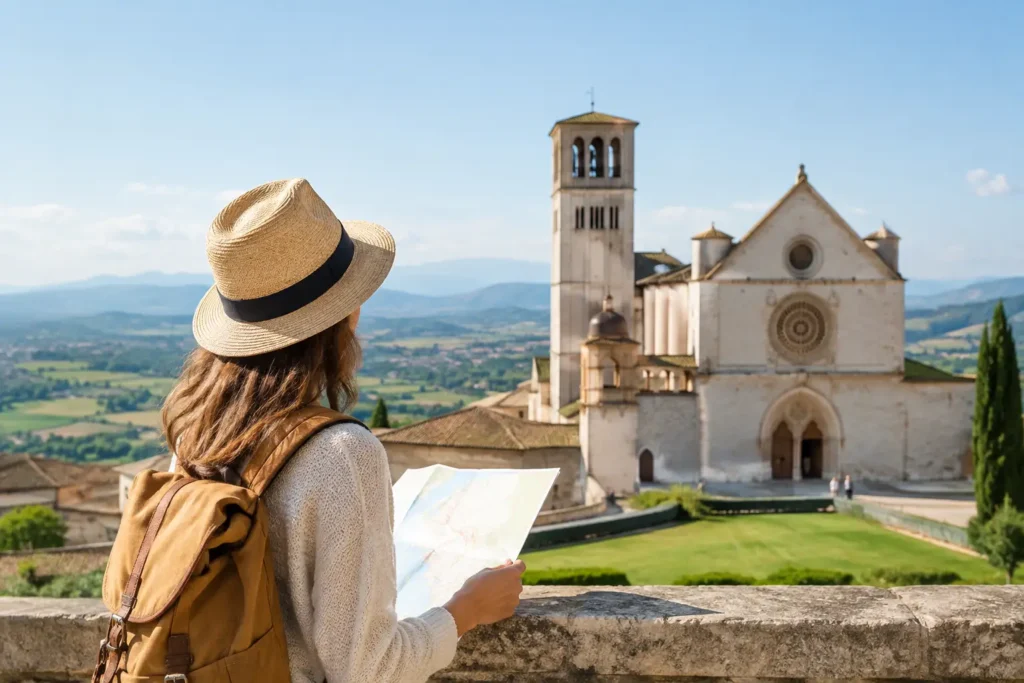
Assisi Guide Reviews and What to Look For
A visit to Assisi can be moving before you have even crossed the first piazza. The pale stone streets rise toward the Basilica of St. Francis, church bells carry across the valley, and every corner seems to hold a fragment of medieval life. Yet Assisi guide reviews often reveal the difference between simply seeing these places and understanding why they matter. A strong local guide gives shape to the experience, connecting masterpieces, saints, civic history, and the everyday character of the town.
For travelers with limited time in Umbria, reviews are more than reassurance before booking. They are useful clues about how a tour actually feels on the day: whether the guide is engaging, the route is sensible, the stories are clear, and the pace leaves room to absorb the extraordinary setting.
What Assisi guide reviews should tell you
The most helpful reviews are specific. A brief comment such as “wonderful tour” is encouraging, but it does not tell you whether the tour suits your interests. Look instead for accounts that mention what the guide explained, how the group moved through the town, and what a visitor remembered afterward.
In Assisi, knowledgeable guiding is particularly valuable because the town is layered with meaning. It is a place of Roman remains, medieval power, Franciscan spirituality, important fresco cycles, and broad views over the Umbrian plain. A good review may mention that a guide made the Basilica of St. Francis easier to understand, pointed out details in Giotto’s frescoes, or explained the relationship between Saint Francis and the city that grew around his legacy.
Those details matter. Art and religious heritage can feel distant when presented as dates and names alone. The best guides make them approachable without oversimplifying them. They help visitors see why a change in a painting style was revolutionary, how a medieval pilgrimage shaped the town, or why a small chapel has significance far beyond its size.
Look for evidence of local knowledge
Assisi is compact, but it is not a destination to rush. The basilica, Piazza del Comune, the Temple of Minerva, Rocca Maggiore, Santa Chiara, and the quieter lanes each tell a different part of the story. Reviews that praise a guide for sharing lesser-known details are often a good sign that the tour went beyond a standard list of landmarks.
Local knowledge is not only about hidden streets. It can mean knowing when a monument is especially busy, choosing a route that works for the season, or explaining a local tradition with accuracy and warmth. An official local guide brings professional training as well as familiarity with the destination, which is especially valuable in a place where art history and faith are closely intertwined.
Pay attention to comments about questions, too. Travelers often arrive with very different interests: one person may be fascinated by Franciscan history, another by architecture, another by photography, and another by the practical realities of medieval life. Reviews that describe a guide adapting explanations or answering thoughtful questions suggest a more personal experience.
Pace matters as much as knowledge
Assisi is built on a hill, and its beauty comes with slopes, stone paving, steps, and occasional uneven surfaces. Reviews can help you judge whether a walking tour is likely to fit your group, especially if you are traveling with children, older relatives, or anyone who prefers a gentler pace.
The right pace depends on the kind of visit you want. A first-time visitor may prefer a focused introduction that covers the essential monuments in a few well-planned hours. A returning visitor, or someone drawn to sacred art, may value more time in the basilica and quieter corners of the historic center. Neither choice is inherently better, but the itinerary should be clear about its rhythm and priorities.
Look for comments that mention ample time to look around, opportunities to ask questions, or a guide who kept the group comfortable. These are practical signs of good planning. A guide who knows Assisi well can prevent unnecessary backtracking and create pauses where the landscape, art, or atmosphere deserves more than a passing glance.
Private or small-group tours?
Reviews often make the contrast clear. Private tours offer the greatest flexibility: you can set the pace, focus on your own interests, and build in time for a coffee, a longer museum visit, or a particular church. They are a strong choice for families, couples celebrating a special trip, and groups with different mobility needs.
Small-group tours offer a different pleasure. The shared curiosity of fellow travelers can bring energy to the conversation, while a properly limited group still allows you to hear the guide and ask questions. They can also be a practical option for independent travelers who want professional insight without arranging a private experience.
When reading reviews, consider the reviewer’s circumstances. A fast-moving couple on a day trip from Rome may praise an energetic itinerary that would not suit a multigenerational family. Likewise, a guest seeking a deeply spiritual visit may value a different approach from someone primarily interested in medieval art. Find reviewers whose travel style resembles your own.
Notice how reviews describe the guide
The best comments about guides tend to use concrete language. Words such as friendly, enthusiastic, patient, and professional are welcome, but look for the moments behind them. Did the guide bring the story of Saint Francis to life? Did they make a complex fresco cycle understandable? Did they point out features visitors would have missed on their own? Did they create a relaxed atmosphere without losing sight of the schedule?
A warm personality is part of a memorable tour, but it should be paired with sound interpretation. Assisi has powerful religious importance for many visitors, so good guiding requires sensitivity as well as knowledge. The tone should respect the sacred places while welcoming people of every background, including those who are visiting for art, history, or the beauty of Umbria.
It is also worth noticing whether reviews mention language clarity. For English-speaking visitors, clear, natural explanations make an enormous difference, particularly when a guide is discussing theology, patronage, political conflict, or artistic technique. The point is not a scripted lecture. It is a conversation that helps the town feel vivid and intelligible.
Read between the lines on logistics
A review can reveal useful practical information even when it is not written as planning advice. References to an easy meeting point, a punctual start, or well-organized entry arrangements suggest that the operator has considered the details that protect your vacation time.
Before booking, check the stated duration, meeting location, whether entrance fees are included, and the level of walking involved. If you are combining Assisi with Perugia, Spello, Montefalco, or an olive oil experience, leave enough time between activities. Assisi deserves unhurried attention, and trying to fit too much into one day can reduce the pleasure of each stop.
Season also changes the experience. Summer brings longer days and a lively atmosphere, but also heat and busy periods around the major religious sites. Spring and fall are often ideal for walking, while winter can offer a quieter, more contemplative Assisi. Reviews posted in the same season as your trip can provide especially relevant insight about crowds and pacing.
Choose reviews that reflect the experience you want
The aim is not to find a tour with the most glowing adjectives. It is to find a guide and format that match your reasons for coming to Assisi. A thoughtful review will help you recognize whether a tour is centered on Franciscan heritage, art and architecture, a broad introduction to the town, or a custom private visit.
At Umbria.tours, official local guides lead visitors through the places, stories, and details that give Assisi its lasting power. Whether you choose a private walk or a small-group experience, the most rewarding tour is one that leaves you with more than photographs: a clearer sense of the people, beliefs, and artistry that shaped this remarkable hill town.
As you compare Assisi guide reviews, trust the ones that describe a real moment of discovery. That may be a guide drawing your eye to a small painted detail, explaining the view from a medieval square, or giving you a quiet minute inside the basilica. Those are the moments that stay with you long after the stone streets of Assisi have disappeared from view.